Zoox Reinforces Robotaxi Safety Strategy with Smoke Detection Software Recall
The software update highlights how autonomous mobility companies are reshaping risk management, regulatory compliance, and public trust through continuous AI improvements.

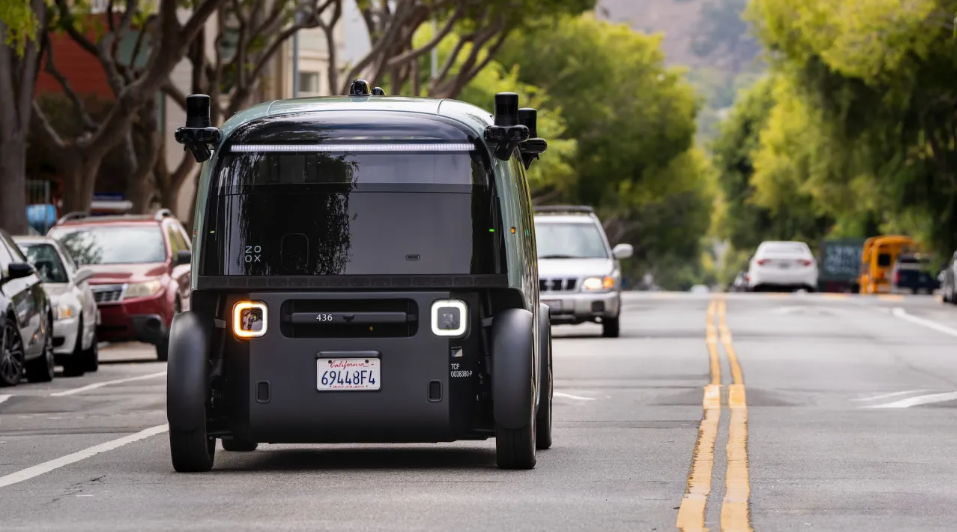
Amazon-owned autonomous mobility company Zoox has introduced a fleet-wide software recall after one of its robotaxis encountered operational difficulties while approaching an emergency fire scene obscured by heavy smoke. Rather than representing a traditional mechanical vehicle recall, the action reflects the increasingly software-defined nature of autonomous transportation, where critical safety improvements can be deployed rapidly through over-the-air updates.
The incident occurred on June 20 when an unoccupied Zoox robotaxi approached an active emergency area where dense smoke significantly reduced visibility. According to information submitted to U.S. regulators, the emergency scene had not yet been fully isolated with traffic cones. The vehicle entered the affected area, applied heavy braking while attempting to maneuver away from the hazard, and eventually came to a complete stop. A remote operations specialist then guided the vehicle in reverse, allowing emergency responders to secure the location before traffic resumed. Zoox reported that no passengers were inside the vehicle and that no injuries were associated with the event.
Following its internal investigation, Zoox deployed an updated version of its autonomous driving software across its fleet of approximately 105 robotaxis. The company explained that the revised software expands the vehicle's capability to recognize emergency environments by improving its ability to identify and appropriately respond to heavy smoke under specific operating conditions. This enhancement aims to reduce the likelihood of autonomous vehicles entering hazardous situations where visibility is significantly compromised.
From a technology strategy perspective, the recall illustrates how autonomous vehicle manufacturers increasingly rely on continuous software evolution rather than hardware replacement to improve operational safety. Machine perception systems must interpret highly dynamic environments that include smoke, flashing emergency lights, temporary traffic management, and rapidly changing road conditions. Each new operational scenario contributes additional data that strengthens future AI decision-making models and perception algorithms.
The event also reinforces the growing importance of safety governance within the autonomous mobility industry. Regulatory agencies in the United States have intensified their focus on how driverless vehicles interact with emergency personnel after documenting multiple cases involving robotaxis that failed to respond appropriately to firefighters, police officers, ambulances, traffic cones, or other temporary emergency infrastructure. These concerns have encouraged developers to accelerate investments in edge-case detection and emergency-scene recognition technologies.
Economically, proactive software recalls represent an investment in long-term market credibility. Although such recalls may generate short-term operational costs, they help reduce future legal exposure, protect brand reputation, strengthen regulatory relationships, and increase public confidence—factors considered essential for expanding commercial autonomous ride-hailing services. For companies competing in the robotaxi market, demonstrating transparent safety improvements has become an important competitive differentiator alongside technological innovation.
The development also reflects a broader transformation in automotive brand identity. Autonomous mobility companies are increasingly positioning themselves not simply as vehicle manufacturers but as AI-driven software organizations whose products continuously evolve throughout their operational lifecycle. Regular software enhancements have become a defining characteristic of this new mobility ecosystem, allowing companies to respond rapidly to emerging operational challenges without requiring traditional vehicle recalls.
As autonomous transportation expands globally, the industry's future competitiveness will depend not only on sensor quality or artificial intelligence capabilities but also on the speed, transparency, and reliability with which developers identify operational risks and implement corrective improvements. Zoox's latest software recall demonstrates how software engineering, safety culture, and regulatory collaboration are becoming central pillars in building public trust in next-generation autonomous transportation systems.
News You Should See
2026 Nobel Medicine Prize Honors Scientists Behind Optogenetics Breakthrough
Oil Prices Edge Lower as Stronger Middle East Exports and G7 Reserves Ease Supply Concerns
Trump Offers U.S. Assistance to Russia After Death at Siberian Plague Research Institute
Trump Takes Economic Message to Nebraska as GOP Faces Rising Cost-of-Living Pressure
U.S. Appeals Court Weighs Trump Administration’s $2.6 Billion Harvard Funding Fight
U.S. Midterm Elections Begin With Resilient Jobs Market and Persistent Cost Pressures
Latest News
The 2026 Nobel Prize in Physiology or Medicine honors Karl Deisseroth, Peter Hegemann and Georg Nagel for pioneering research behind optogenetics and its impact on neuroscience.
Oil prices edged lower as stronger Middle Eastern exports and a planned G7 release of 100 million barrels eased immediate supply concerns, while Gulf security risks and the Strait of Hormuz kept markets alert.
President Donald Trump said the United States would help Russia if needed after a laboratory worker died at a Siberian plague research institute, as Russian authorities imposed precautionary quarantine measures.
Trump’s Nebraska campaign stop highlights rising fuel and grocery costs, beef prices and growing economic pressure on Republicans ahead of the November midterm elections.
A U.S. appeals court is reviewing the Trump administration’s effort to cut Harvard’s federal research funding, with more than $2.6 billion at stake.
The U.S. enters the 2026 midterm elections with unemployment at 4.2%, while higher living and energy costs create economic pressure for households and businesses.
US services growth eased in September as input prices climbed to their highest level since July 2022, with fuel costs, supply-chain disruptions and strong demand increasing pressure on businesses.
Rising Treasury yields are increasing U.S. borrowing costs as Washington manages record debt, persistent inflation and strong economic demand, narrowing its policy options.
A EGP 16 million corporate partnership will establish and equip a bone marrow transplant unit at Cairo’s Coptic Hospital, supporting access to specialized treatment for patients.