Yulu Raises $93 Million as India’s Quick-Commerce Economy Accelerates Electric Mobility
The Indian mobility startup is scaling its electric fleet fourfold while expanding into faster scooters, e-commerce logistics and bike taxis.

India’s rapid shift toward quick commerce is creating a new infrastructure opportunity beyond warehouses, delivery platforms and digital marketplaces. As consumers increasingly expect groceries, electronics and other products to arrive within minutes, the economics of the delivery workforce are becoming just as important as the technology powering the orders.
Yulu is positioning itself around that infrastructure layer. The Bengaluru-based electric mobility company has raised $93 million in a Series C round to expand its fleet, develop faster electric vehicles and enter additional logistics applications. The financing consists of $63 million in equity led by GEF Capital Partners and $30 million in debt. Around $5.5 million of the equity was used to purchase shares from seed investors whose funds were approaching the end of their investment periods.
The transaction reportedly values Yulu at approximately $170 million post-money. Existing investors Bajaj Auto and Magna International did not participate in the round after waiving their pre-emptive rights, allowing GEF to acquire its targeted ownership stake. Yulu's management expects the financing to be its final equity raise before a potential public listing, with future expansion expected to rely primarily on debt and lease financing.
That financing strategy reveals an important change in the company's maturity. Yulu is no longer presenting itself simply as a startup searching for product-market fit. It is attempting to build a capital-intensive mobility infrastructure business in which vehicle financing, fleet utilization and recurring rental revenue become central components of the growth model.
The company currently operates approximately 50,000 electric vehicles and says its fleet supports more than 750,000 deliveries every day while covering around 1.6 million zero-emission miles each week. The new capital is intended to increase the fleet to 200,000 vehicles over the next two years.
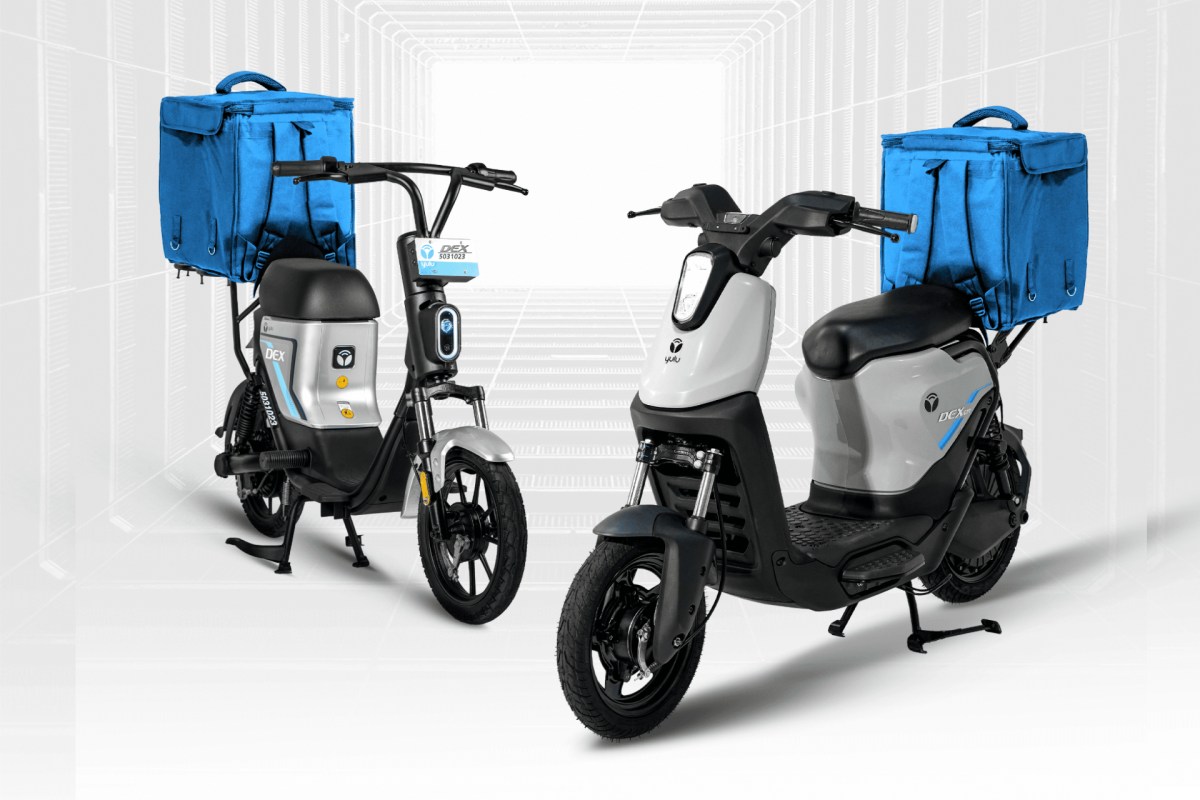
The scale-up is closely linked to the changing economics of India's gig economy. Instead of requiring delivery workers to purchase their own vehicles, Yulu provides electric two-wheelers through weekly subscription plans. This lowers the initial financial barrier to entering delivery work while giving the company a recurring revenue stream tied directly to vehicle utilization.
Approximately 95% of Yulu's current revenue comes from renting electric bikes to gig workers through weekly subscriptions, while the remainder comes from its station-based rental operation in Bengaluru. The company has also abandoned an earlier strategy of selling vehicles directly to consumers, choosing instead to concentrate on fleet-based mobility services.
This focus gives Yulu a clearer position in the market. Rather than competing primarily for individual consumers seeking personal transportation, the company is building around a business customer base indirectly represented by thousands of delivery workers who require reliable, affordable vehicles for professional use.
The strategy also benefits from the structural growth of India's quick-commerce sector. Rapid delivery models depend on dense networks of workers operating within relatively small geographic areas. That creates a strong need for lightweight, economical vehicles that can be deployed quickly and kept in continuous use.
Yulu's business model therefore sits between mobility and logistics. The company provides the vehicle infrastructure while delivery workers use that infrastructure to serve multiple platforms. Yulu says it works with almost every major quick-commerce, food-delivery and e-commerce platform, including Amazon and Walmart-owned Flipkart, although the individual delivery workers—not the platforms—are the company's direct rental customers.
This distinction is strategically significant. It reduces Yulu's dependence on any single delivery platform and allows the company to position itself as a neutral mobility provider within a fragmented logistics ecosystem. If one platform gains or loses market share, demand for delivery vehicles can potentially remain intact as long as the broader delivery economy continues expanding.
The company's next phase will also broaden its addressable market. Yulu is introducing a higher-speed, full-sized electric scooter called Yulu Express, designed for longer-distance e-commerce deliveries, bike taxis and express parcel services. Around one-third of the planned 200,000-vehicle fleet is expected to consist of this new model. About 500 units are already operating in Bengaluru and undergoing trials in three additional cities.
The move represents more than a product upgrade. Yulu's original low-speed fleet was optimized for short-distance urban deliveries and shared mobility. The Express model allows the company to compete for use cases where range, speed and payload capacity matter more.
That expansion could materially increase revenue per vehicle, but it also introduces new operational requirements. Faster vehicles can serve wider delivery areas and more demanding logistics routes, yet they also require different maintenance, financing and regulatory considerations. Yulu will need to demonstrate that the economics of these vehicles remain attractive at scale.
The company currently operates across 12 Indian cities, with direct operations in Bengaluru, Mumbai, Delhi-NCR and Hyderabad and franchise partnerships in eight additional markets. It aims to reach approximately 20 cities within the next year, with Chennai and Pune identified as important expansion targets.
Geographic expansion is particularly important because Yulu's economics depend on local delivery density. A fleet vehicle becomes more valuable when it can remain in use for a large portion of the day. Entering a new city therefore requires more than simply deploying vehicles; the company needs sufficient delivery demand, charging and maintenance capabilities, suitable operating partners and a reliable pool of riders.
The company's history helps explain this model. Yulu was originally founded in 2017 as a bike-sharing business serving urban commuters. During the COVID-19 pandemic, however, the acceleration of food and grocery delivery exposed a much larger commercial opportunity. Delivery workers needed inexpensive vehicles that could operate continuously, and Yulu shifted its business toward serving that demand.
That pivot is one of the company's strongest strategic assets. Rather than remaining committed to its original consumer mobility model, Yulu identified a higher-frequency use case and redesigned its business around it.
The financial trajectory suggests that the shift has produced substantial growth. Yulu says its revenue increased sevenfold between fiscal 2023 and fiscal 2026. The company also achieved positive EBITDA in the previous financial year and expects to move toward profitability before interest and taxes next year.
These milestones are particularly important because electric mobility businesses often face difficult capital economics. Vehicles require significant upfront investment, while profitability depends on utilization, maintenance, financing costs and residual value. Yulu's subscription model attempts to convert those physical assets into recurring revenue-producing infrastructure.
The decision to increasingly use debt and leasing for future fleet expansion reflects this asset-based model. If individual vehicles generate predictable cash flows, financing them through debt rather than continuously issuing equity can reduce dilution and potentially improve capital efficiency. At the same time, it increases the importance of maintaining high utilization and disciplined fleet management.
The competitive environment will also become more complex as Yulu expands beyond its established low-speed segment. India's electric mobility market includes vehicle manufacturers, ride-hailing companies, delivery platforms and other fleet operators. Yulu's differentiation will therefore depend less on simply owning electric vehicles and more on its ability to combine vehicle availability, subscription economics, operational technology and geographic density.
Its brand positioning is evolving accordingly. Yulu is moving from the image of an urban bike-sharing company toward that of an infrastructure provider for India's on-demand economy. The company's own comparison of its role to the "AWS of mobility" captures this ambition: instead of selling a consumer transportation product, it wants to provide the underlying mobility capacity that allows digital commerce and gig work to function efficiently.
This positioning could become increasingly valuable as quick commerce expands. The competitive battle among delivery platforms is not only about who can acquire consumers or build the fastest ordering application. It is also about who can build a reliable supply network capable of fulfilling thousands of orders at low cost.
Electric two-wheelers can play a critical role in that equation because they offer lower operating costs and zero tailpipe emissions compared with conventional combustion vehicles. For delivery workers operating many hours each day, fuel and maintenance economics can directly affect their earnings and the profitability of the overall delivery ecosystem.
The environmental dimension also strengthens Yulu's institutional appeal. The company reports more than a million zero-emission miles every week, making its fleet relevant to businesses seeking to reduce the carbon intensity of last-mile logistics.
However, environmental positioning alone is unlikely to determine long-term success. The central question remains whether electric mobility can deliver superior economics for workers, platforms and fleet operators simultaneously. Yulu's subscription model is designed to address that issue by reducing the upfront cost for riders while keeping the company responsible for fleet availability and maintenance.
The next stage will test whether the model can scale without losing those economic advantages. Increasing the fleet from 50,000 to 200,000 vehicles is a substantial operational challenge. It will require capital, manufacturing capacity, maintenance infrastructure, charging solutions, software systems and sufficient demand across multiple cities.
The planned IPO also changes the strategic horizon. If Yulu can continue growing revenue while improving profitability and reducing its dependence on equity financing, a public listing could provide access to a broader pool of capital for fleet expansion. But public markets will also place greater scrutiny on utilization rates, margins, cash generation and the economics of each vehicle.
The company's decision to make this financing its expected final equity round before a listing signals confidence that the underlying business can increasingly fund its own physical expansion. That will be one of the most important indicators to watch as Yulu moves into its next stage.
Ultimately, Yulu's $93 million financing reflects a broader transformation in India's digital economy. Quick commerce is not simply creating demand for faster apps and more warehouses; it is reshaping the physical infrastructure required to move goods through cities.
Yulu's strategy is to own a critical part of that infrastructure without becoming a delivery platform itself. By providing electric vehicles through recurring subscriptions, expanding into higher-speed logistics and financing fleet growth through a combination of equity, debt and leasing, the company is attempting to become an essential mobility layer for India's on-demand economy.
If the strategy succeeds, Yulu's long-term value may be determined less by the number of bikes it operates than by how deeply its fleet becomes embedded in the logistics networks supporting India's rapidly evolving commerce market.
News You Should See
2026 Nobel Medicine Prize Honors Scientists Behind Optogenetics Breakthrough
Oil Prices Edge Lower as Stronger Middle East Exports and G7 Reserves Ease Supply Concerns
Trump Offers U.S. Assistance to Russia After Death at Siberian Plague Research Institute
Trump Takes Economic Message to Nebraska as GOP Faces Rising Cost-of-Living Pressure
U.S. Appeals Court Weighs Trump Administration’s $2.6 Billion Harvard Funding Fight
U.S. Midterm Elections Begin With Resilient Jobs Market and Persistent Cost Pressures
Latest News
The 2026 Nobel Prize in Physiology or Medicine honors Karl Deisseroth, Peter Hegemann and Georg Nagel for pioneering research behind optogenetics and its impact on neuroscience.
Oil prices edged lower as stronger Middle Eastern exports and a planned G7 release of 100 million barrels eased immediate supply concerns, while Gulf security risks and the Strait of Hormuz kept markets alert.
President Donald Trump said the United States would help Russia if needed after a laboratory worker died at a Siberian plague research institute, as Russian authorities imposed precautionary quarantine measures.
Trump’s Nebraska campaign stop highlights rising fuel and grocery costs, beef prices and growing economic pressure on Republicans ahead of the November midterm elections.
A U.S. appeals court is reviewing the Trump administration’s effort to cut Harvard’s federal research funding, with more than $2.6 billion at stake.
The U.S. enters the 2026 midterm elections with unemployment at 4.2%, while higher living and energy costs create economic pressure for households and businesses.
US services growth eased in September as input prices climbed to their highest level since July 2022, with fuel costs, supply-chain disruptions and strong demand increasing pressure on businesses.
Rising Treasury yields are increasing U.S. borrowing costs as Washington manages record debt, persistent inflation and strong economic demand, narrowing its policy options.
A EGP 16 million corporate partnership will establish and equip a bone marrow transplant unit at Cairo’s Coptic Hospital, supporting access to specialized treatment for patients.