Woman Declared Cancer-Free After Groundbreaking CRISPR Immunotherapy Trial
After exhausting all traditional treatments, Emma Dimery found hope—and a cure—through a revolutionary gene-editing immunotherapy trial.

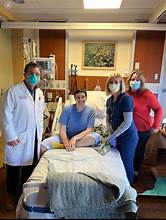
Two years ago, Emma Dimery faced a devastating diagnosis: stage 4 colon cancer, deemed incurable. Today, she is healthy and cancer-free—thanks to a last-resort clinical trial that may be redefining cancer treatment.
At just 23 years old, Dimery, a Minnesota resident, began experiencing abdominal pain and abnormal bloodwork. A colonoscopy revealed two tumors—one softball-sized, the other golf ball-sized. Despite undergoing multiple surgeries, chemotherapy, radiation, and combination therapies, her treatment-resistant cancer continued to spread.
“I was basically treading water,” Dimery shared. For years, she endured bi-weekly immunotherapy, hoping for a breakthrough. “I had exhausted every standard—and even some non-standard—treatments.”
That breakthrough came with a clinical trial at the University of Minnesota, led by Dr. Emil Lou, a medical oncologist and research scientist. The trial tested an experimental genetic therapy described as the next frontier of immunotherapy.
Unlike traditional immunotherapies that target the outside of cancer cells, this therapy focused on intracellular targets—structures inside the cancer cells that suppress the immune system's response. Using CRISPR-Cas9 gene editing technology, often called “genetic scissors,” researchers modified cancer cells in the lab to enhance the body’s ability to recognize and destroy tumors.
These engineered cells were then infused back into patients. In Dimery’s case, the results were astonishing. After just one infusion, she was declared cancer-free—a response that Dr. Lou called “remarkable” and “almost unheard-of” for metastatic colorectal cancer.
“This is what we call a clinical complete response,” Lou explained, noting that such outcomes occur in less than 10% of advanced colorectal cancer cases.
Dimery, now 35, has remained cancer-free for over two years. While she hesitates to use the word “cure,” she acknowledges the transformation: “Until now, the best I could hope for was remission. But now, I feel like I’m living again.”
Her case was presented at the American Association for Cancer Research (AACR) Annual Meeting in Chicago, sparking hope among researchers. “Emma is exceptional,” said Lou, “but the goal is to replicate her results in more patients.”
The story also sheds light on the surge in early-onset colon cancer. In 2023, 1 in 10 colorectal cancer diagnoses were in patients under 50. Experts predict these numbers will double by 2030.
Despite having effective screening tools like blood tests, stool tests, and colonoscopies, many young people remain undiagnosed until late-stage. “It’s alarming how often we see stage 4 cases in people with few or no symptoms,” Lou said.
Dimery emphasized the importance of awareness, genetic testing, and clinical trial access: “It’s so important to stay informed. I had the right kind of cancer for this treatment. Others might, too.”
News You Should See
Matawan Council Race: Where the Candidates Stand as Early Voting Continues
Trump Suggests Venezuela Could Become the 51st U.S. State at Texas Rally
Davos Healthcare Announces Five-Star Recognition for 651 Hospitals Worldwide
Wall Street Rallies as AI Optimism Offsets Interest Rate and Energy Risks
Susan Collins Faces a Defining Senate Fight as Maine Voters Reassess Republican Leadership
Federal Reserve Confronts Persistent Inflation and Policy Uncertainty at October Meeting
Latest News
Matawan voters are choosing between four candidates for two Borough Council seats. Here are their positions on property taxes, development, public spaces and the water utility as early voting continues.
President Donald Trump suggested Venezuela could become the 51st U.S. state during a Texas rally, linking the remark to Venezuelan oil arriving at Texas refineries.
Davos Healthcare has recognized 651 hospitals across 77 countries through its Global Elite Five-Star Medallion program, using AI-supported analysis of 1.5 million public records to assess more than 16,000 hospitals.
US stocks advanced on October 27 as renewed AI optimism lifted technology shares. Investors weighed corporate earnings, Meta’s $97.5 billion equity fundraising, elevated oil prices and the Federal Reserve’s interest rate outlook.
Susan Collins and Troy Jackson face a competitive Maine Senate race shaped by economic concerns, policy disputes and $199 million in campaign advertising ahead of the November 2026 midterms.
The Federal Reserve's October meeting puts inflation, borrowing costs, mortgage rates and central bank independence in focus as investors assess the outlook for U.S. monetary policy.
A U.S. appeals court questions Trump’s bid to set aside 20,000 California mail ballots over suspected noncitizen links ahead of the 2026 midterms.
Police pursued individuals reportedly connected to a jewelry store incident in Marseille’s Cinq-Avenues neighborhood as helicopters flew overhead. Authorities have not confirmed arrests, injuries, theft or property damage.
TN News correspondent Khaled Shokair documents street protests in France, showing police lines, demonstrators, road obstructions and visible haze as key details remain unconfirmed.