Wispr Secures $280 Million to Expand Beyond AI Dictation
Wispr تجمع 280 مليون دولار لتوسيع أعمالها في الذكاء الاصطناعي بعيداً عن الإملاء الصوتي

Wispr is entering a new phase of its growth strategy after securing $280 million in Series B financing at a $2 billion valuation. Led by Menlo Ventures, the round brings the company’s total funding to $361 million and gives it additional financial capacity to move beyond its original positioning as an AI-powered dictation company.
The timing of the financing reflects a significant shift in the market for AI voice productivity tools. Dictation is becoming increasingly competitive, with multiple startups offering similar products while developers are also introducing free or lower-priced alternatives for prosumers. For Wispr, continued dependence on a single voice-input category could therefore create increasing pressure on pricing, differentiation and customer retention.
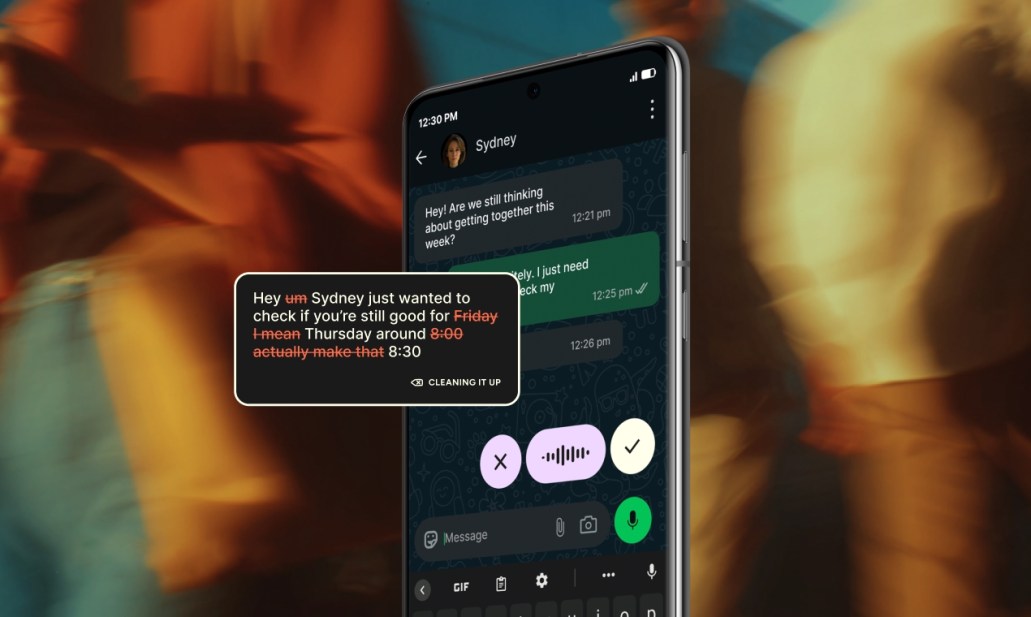
The company’s response is to broaden its product portfolio and transform voice input from a standalone feature into a wider productivity interface. Its newly launched meeting note-taker represents an important step in that direction, positioning Wispr against established products in the meeting intelligence market. The tool can already generate summaries and action items, while its longer-term potential includes connecting with other applications, updating information, creating documents and preparing email drafts.
This strategy could give Wispr a broader commercial opportunity than dictation alone. Instead of competing exclusively on transcription accuracy and speed, the company is attempting to build a layer that connects spoken input with workplace workflows. Such a model can increase the value of the product by turning captured speech into actions and business outputs rather than treating transcription as the final destination.
Product quality remains central to that strategy. Alongside the funding announcement, Wispr introduced Canto, a new speech-understanding model that the company says is designed to reduce error rates from around 30% to below 10%. The move is particularly important because user feedback had recently highlighted concerns about a decline in the quality of Wispr Flow’s dictation output. Improving accuracy is therefore not only a technical objective but also a prerequisite for maintaining trust as the company expands into more demanding business applications.
Wispr has also been widening its geographic and distribution footprint. Since launching its Android application last November, the company has expanded go-to-market operations in markets including India and the United Kingdom. It is additionally working with hardware makers, including the Oasis ring, to enable quieter voice interaction through connected devices. These initiatives suggest that Wispr is pursuing an ecosystem strategy in which its technology can operate across software and hardware rather than being confined to a single application.
The competitive challenge is becoming broader at the same time. In dictation, Wispr faces products such as Willow, Monologue, Aqua and Superwhisper, while its meeting product enters a field that includes Granola, Fireflies and Read AI. The company’s ability to differentiate will therefore depend increasingly on integration, workflow automation, product reliability and the breadth of its interface strategy rather than on dictation alone.
The latest investment also strengthens Wispr’s institutional position. Existing investors including Notable Capital, NEA, Neo Ventures, 8VC and MVP Ventures participated again, while new investors such as Acrew, Forerunner, Goodwater, Peak XV, Together Fund and PLUS Capital joined the round. The continued participation of previous backers alongside new capital indicates that investors are supporting a broader expansion thesis rather than simply funding incremental development of the existing dictation product.
Another strategic component is Wispr Interface Labs, announced last month under Ariya Rastrow, who previously worked on Amazon Alexa during its early development. The initiative signals that the company views its long-term opportunity as extending beyond speech recognition toward new forms of human-computer interaction.
From a branding perspective, this transition could be particularly significant. A company known primarily for dictation must redefine its identity if it wants to compete across meetings, productivity and emerging interfaces. The challenge is to preserve the recognition built around voice while establishing Wispr as a broader AI interaction platform.
The $2 billion valuation therefore represents more than a financing milestone. It places greater expectations on Wispr to convert capital into a scalable product ecosystem, expand internationally, strengthen reliability and establish defensible positions in several adjacent AI markets. Its next stage will depend on whether the company can turn voice technology into a broader productivity infrastructure while maintaining enough differentiation in increasingly crowded categories.
News You Should See
2026 Nobel Medicine Prize Honors Scientists Behind Optogenetics Breakthrough
Oil Prices Edge Lower as Stronger Middle East Exports and G7 Reserves Ease Supply Concerns
Trump Offers U.S. Assistance to Russia After Death at Siberian Plague Research Institute
Trump Takes Economic Message to Nebraska as GOP Faces Rising Cost-of-Living Pressure
U.S. Appeals Court Weighs Trump Administration’s $2.6 Billion Harvard Funding Fight
U.S. Midterm Elections Begin With Resilient Jobs Market and Persistent Cost Pressures
Latest News
The 2026 Nobel Prize in Physiology or Medicine honors Karl Deisseroth, Peter Hegemann and Georg Nagel for pioneering research behind optogenetics and its impact on neuroscience.
Oil prices edged lower as stronger Middle Eastern exports and a planned G7 release of 100 million barrels eased immediate supply concerns, while Gulf security risks and the Strait of Hormuz kept markets alert.
President Donald Trump said the United States would help Russia if needed after a laboratory worker died at a Siberian plague research institute, as Russian authorities imposed precautionary quarantine measures.
Trump’s Nebraska campaign stop highlights rising fuel and grocery costs, beef prices and growing economic pressure on Republicans ahead of the November midterm elections.
A U.S. appeals court is reviewing the Trump administration’s effort to cut Harvard’s federal research funding, with more than $2.6 billion at stake.
The U.S. enters the 2026 midterm elections with unemployment at 4.2%, while higher living and energy costs create economic pressure for households and businesses.
US services growth eased in September as input prices climbed to their highest level since July 2022, with fuel costs, supply-chain disruptions and strong demand increasing pressure on businesses.
Rising Treasury yields are increasing U.S. borrowing costs as Washington manages record debt, persistent inflation and strong economic demand, narrowing its policy options.
A EGP 16 million corporate partnership will establish and equip a bone marrow transplant unit at Cairo’s Coptic Hospital, supporting access to specialized treatment for patients.