Why Gen Z Is Falling in Love with Vintage Watches — And It’s Not About Time
From nostalgia and identity to fashion statements, Gen Z is redefining the purpose of watches in the digital age.

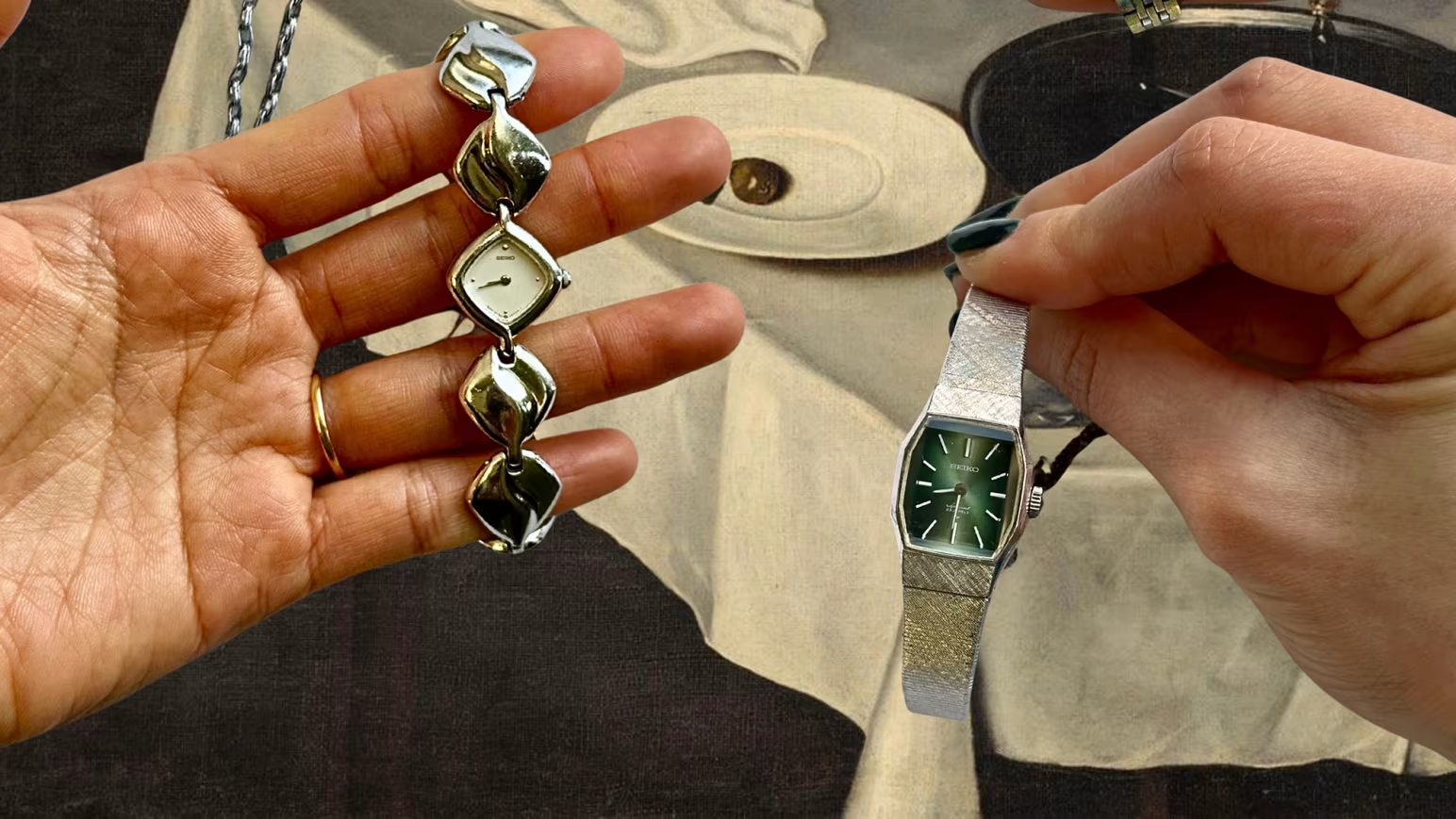
In an era where time is visible on every screen imaginable—from smartphones to smart appliances—the idea of wearing a watch might seem outdated. Yet, surprisingly, a growing number of Gen Z consumers are embracing vintage watches with enthusiasm that goes far beyond simply telling time.
For many young collectors, watches are no longer practical tools but deeply personal objects that carry meaning, history, and identity. Raised in a world saturated with digital convenience, Gen Z is now gravitating toward tangible, physical items that offer a sense of authenticity. A vintage watch, with its mechanical intricacy and timeless design, represents something that cannot be replicated by a screen.
Take the case of young collectors who have spent thousands of dollars building watch collections despite having constant access to digital clocks. Their fascination lies not in necessity but in storytelling. Each watch reflects a moment in history, a design philosophy, or even the personality of its previous owner. Wearing such a piece feels like carrying a fragment of the past into the present.
This emotional connection is one of the key drivers behind the trend. Many Gen Z buyers are drawn to watches passed down through family members, often seeing them as heirlooms that bridge generations. Even those purchasing independently often seek designs reminiscent of earlier decades, from the elegant minimalism of mid-century dress watches to the bold experimentation of the 1970s.
Data from resale platforms and retailers confirms this shift. Younger buyers are not only entering the market but are also willing to spend significantly on individual pieces. Interestingly, they are gravitating toward classic styles rather than modern, tech-driven designs. Slim profiles, simple dials, and understated materials are increasingly preferred over flashy or overly complex options.
Another defining characteristic of this movement is the shift in how watches are perceived. For Gen Z, a watch is often closer to jewelry than a functional device. Some buyers prioritize aesthetics so strongly that they are willing to purchase non-working watches simply for their design value. In this sense, the watch becomes a wearable piece of art rather than a tool.
Social media and celebrity culture have also played a major role in shaping these preferences. Influential figures experimenting with smaller, more traditionally feminine watch designs have encouraged younger audiences to challenge conventional norms. As a result, gender boundaries in watch design are becoming increasingly irrelevant, with individuals freely choosing styles based on personal taste rather than labels.
This openness reflects a broader cultural shift. Gen Z is less concerned with traditional status symbols and more interested in uniqueness and individuality. Rather than purchasing widely recognized luxury brands simply for prestige, many are exploring independent makers or lesser-known vintage pieces that feel more distinctive.
At the same time, sustainability is subtly influencing buying behavior. Vintage watches align with the growing preference for secondhand and circular consumption, allowing buyers to own something unique without contributing to new production. Even when sustainability is not the primary motivation, it adds another layer of appeal.
Ultimately, the resurgence of vintage watches among Gen Z highlights a deeper desire for connection in a fast-paced, digital world. These timepieces offer more than functionality—they provide a sense of permanence, craftsmanship, and emotional resonance.
Ironically, in a generation that has never needed a watch to tell time, watches have become more meaningful than ever.
News You Should See
Helicopters Over Marseille as Police Pursue Suspects After Jewelry Store Is Targeted
France Protests: TN News Correspondent Documents Police Lines and Crowds in the Streets
Police Presence and Road Barricades Documented in French Protest Footage
France on Edge: Violence, Racism and Political Polarization Raise Fears of a Deeper Divide
DOJ Orders California Counties to Verify Suspected Noncitizen Ballots Ahead of Midterms
Never Stop Making Du’a: Allah’s Door Is Never Closed
Latest News
Police pursued individuals reportedly connected to a jewelry store incident in Marseille’s Cinq-Avenues neighborhood as helicopters flew overhead. Authorities have not confirmed arrests, injuries, theft or property damage.
TN News correspondent Khaled Shokair documents street protests in France, showing police lines, demonstrators, road obstructions and visible haze as key details remain unconfirmed.
Footage from France shows crowds, police officers, road barricades, debris and smoke. The gathering's location, date, cause, and any injuries or arrests remain unconfirmed.
A deadly shooting near Paris, protest-related violence and concerns about France’s 2027 presidential election are intensifying debates over racism, public safety, political polarization and social cohesion.
The U.S. Justice Department has ordered at least 18 California counties to review voter records and set aside ballots linked to suspected noncitizens within 48 hours, escalating a dispute with state officials ahead of the November 3 midterm elections.
Mohamed Amen’s Friday khutbah explores persistent du’a, patience during uncertainty, emotional resilience, and the importance of trusting Allah while pursuing practical solutions.
Procter & Gamble expects commodity, energy and transportation costs to reduce fiscal 2027 profit by $1.4 billion. Quarterly sales rose 4% to $23.28 billion, beating analyst expectations.
A ruptured chemical tank in Toledo, Ohio, prompted evacuations, school closures and an industrial shutdown. Authorities have reduced the restricted zone as the release slows and cleanup preparations continue.
A federal judge has ordered Donald Trump to give a deposition by December 11, 2026, in his $10 billion lawsuit against the BBC, with possible sanctions for noncompliance as the discovery deadline approaches.