Why Are People Mourning Dinosaurs Millions of Years Later?
Social media users express emotional connection with prehistoric creatures

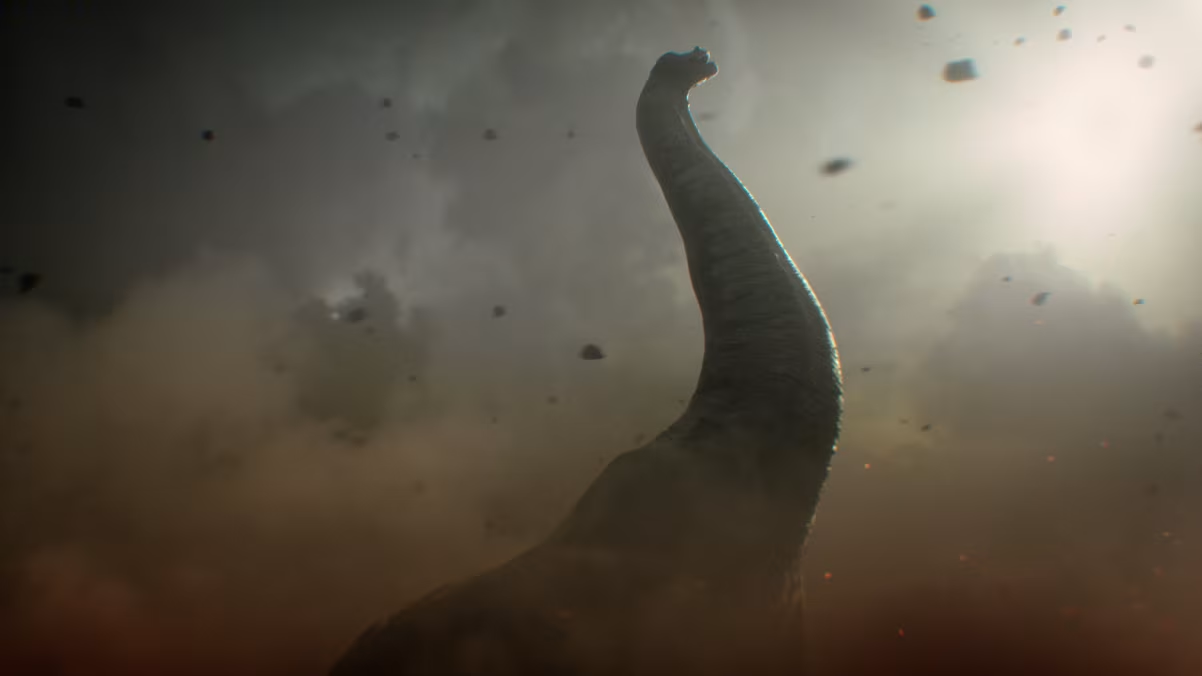
Millions of years after their extinction, dinosaurs are once again capturing human emotions — but this time, not through fear or fascination, but through grief.
A growing trend on social media shows users expressing sadness over the extinction of dinosaurs, often using emotional video edits featuring scenes from shows like The Dinosaurs. These clips, paired with melancholic music, portray dinosaurs as lost beings whose world ended too soon.
For many viewers, the idea that dinosaurs once ruled the Earth — only to disappear suddenly — feels deeply tragic. Comments like “The world was supposed to be theirs” reflect a surprising emotional attachment to creatures that humans never actually knew.
This emotional response is not entirely new. Humans have long projected their own feelings onto dinosaurs — imagining them as monsters, companions, or even symbols of power and failure.
Scientific discoveries have also changed how we see them. Dinosaurs are no longer viewed as slow or unintelligent creatures. Instead, research suggests they were active, complex, and highly adapted — making their sudden extinction, likely caused by a massive asteroid impact, feel even more devastating.
This shift in perspective raises a deeper question: if even the most dominant species on Earth can disappear suddenly, what does that mean for humanity?
Cultural influences have played a huge role in shaping this perception. From Jurassic Park, directed by Steven Spielberg, to modern documentaries, dinosaurs have been reimagined as intelligent, social, and dynamic creatures.
Experts suggest that this wave of sympathy may reflect something bigger — a sense of “extinction anxiety.” In a world facing climate change and global crises, people may see parallels between the dinosaurs’ fate and their own uncertain future.
At the same time, there’s a quieter, more hopeful perspective. Birds — the living descendants of dinosaurs — still exist today in billions, reminding us that extinction is not always the end of a story, but sometimes part of evolution and survival.
News You Should See
P&G Raises Fiscal 2027 Cost Warning as Oil and Freight Expenses Threaten Profits
Chemical Tank Leak in Toledo Triggers Evacuations and Industrial Disruptions
Judge Sets December 11 Deadline for Trump Deposition in BBC Defamation Case
Iowa Senate Race Tests How Far Republicans Can Separate Themselves From Trump
California State Workers Strike Over Pay, Healthcare and Return-to-Office Rules
Streaming’s October Showdown: How Disney, Netflix and Major Entertainment Brands Compete for Audiences
Latest News
Procter & Gamble expects commodity, energy and transportation costs to reduce fiscal 2027 profit by $1.4 billion. Quarterly sales rose 4% to $23.28 billion, beating analyst expectations.
A ruptured chemical tank in Toledo, Ohio, prompted evacuations, school closures and an industrial shutdown. Authorities have reduced the restricted zone as the release slows and cleanup preparations continue.
A federal judge has ordered Donald Trump to give a deposition by December 11, 2026, in his $10 billion lawsuit against the BBC, with possible sanctions for noncompliance as the discovery deadline approaches.
Iowa’s 2026 Senate race pits Republican Ashley Hinson, balancing Trump support with economic concerns, against Democrat Josh Turek, who emphasizes bipartisanship amid rising campaign spending.
Thousands of California state workers struck on October 21 over a proposed three-year pay increase, healthcare costs and a four-day office attendance requirement as contract negotiations continued.
October 2026 brings major entertainment releases across Disney+, Netflix, HBO Max, Hulu, Prime Video and Peacock. Explore how familiar franchises, exclusive programming, new music and video games shape competition for streaming audiences.
Saudia advises travelers to book flights through Al Qassim Airport for Riyadh connections, offering free hourly shuttle buses in both directions until further notice.
An AP-NORC poll shows Democratic confidence in accurate vote counting falling to 55%, while Republican confidence rises to 38%, highlighting election integrity concerns ahead of the 2026 US midterms.
Donald Trump campaigns in North Carolina ahead of the November 2026 midterms as low approval ratings, rising fuel costs, Democratic early-voting gains and funding disparities challenge Republican efforts to retain control of Congress.