Who Decides How Much Screen Time Our Children Get at School? NYC Council Examines Classroom Technology
New York City Council examines classroom screen time, digital device use and technology guidance in public schools.

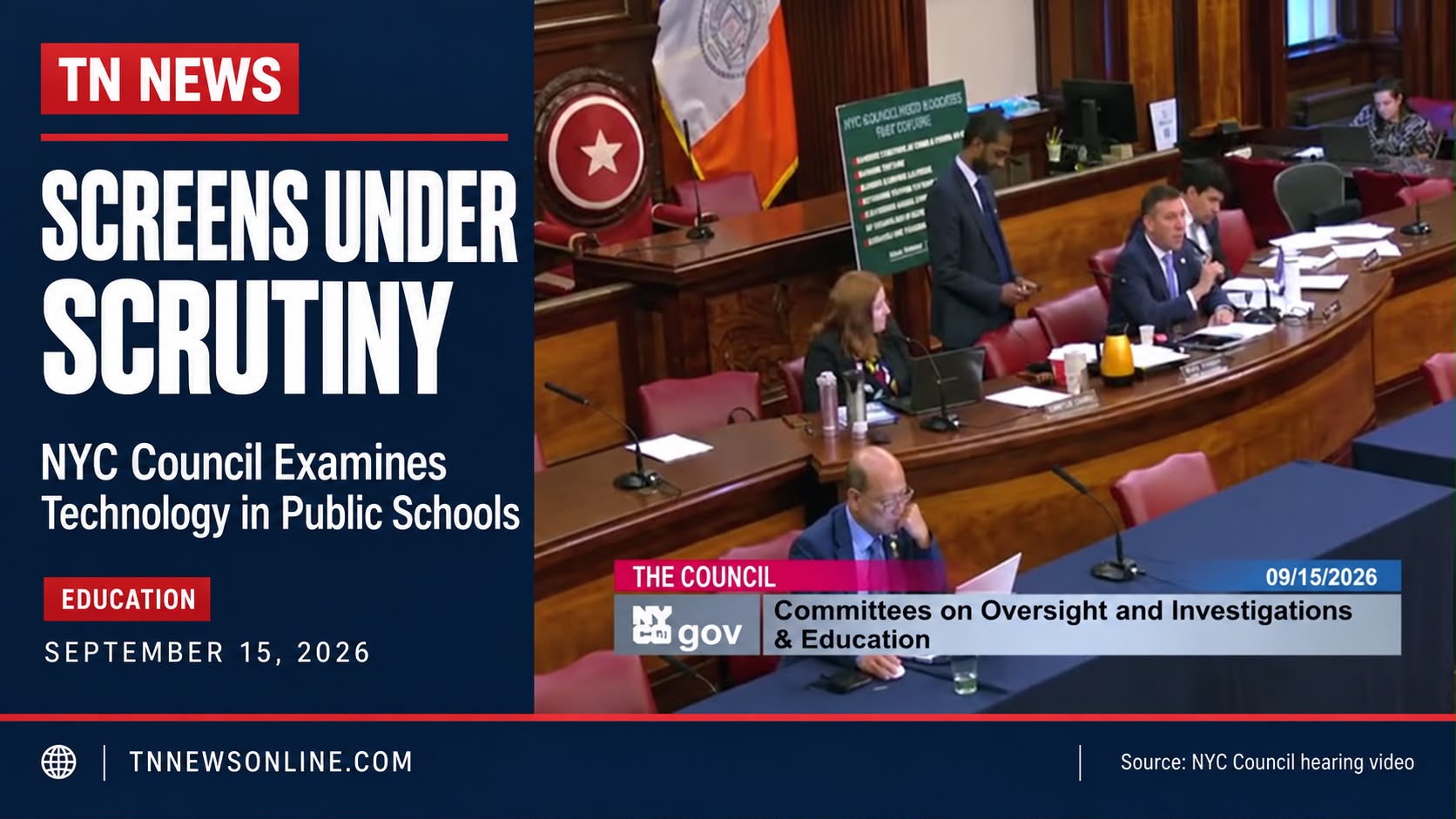
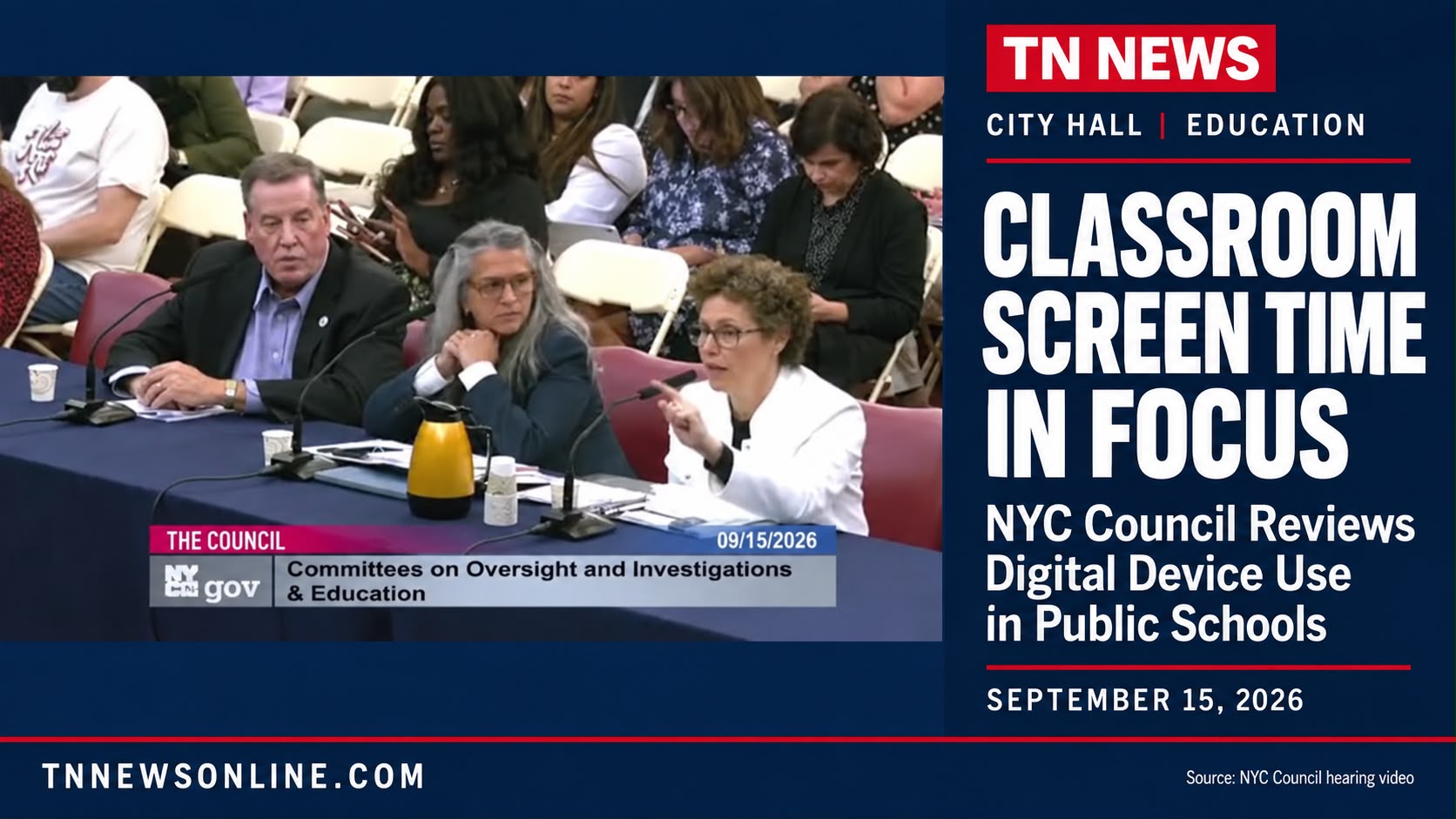
For families across New York City, the debate over classroom technology comes down to a practical question: Is the time children spend on school screens helping them learn?
That question provides the backdrop to a September 15, 2026, joint hearing of the New York City Council’s Committees on Oversight and Investigations and Education, which examined screen time and digital device use in public schools. Official hearing record
For TN News, the story’s significance lies in what these decisions mean for students and their families. Parents deserve to understand which digital tools their children use, why schools choose them, and how their educational value is measured.
Ahead of the hearing, committee chairs Shekar Krishnan and Eric Dinowitz called for restrictions on student access to YouTube and reduced individual device use in elementary grades. Their proposals also included eliminating gamified learning apps and returning to paper-based standardized testing, according to The Wall Street Journal. Details of the proposals
The discussion comes as New York City Public Schools implements technology guidance for the 2026–27 school year. The guidance prohibits routine individual screen use from 2-K through second grade and recommends daily limits of 30 minutes for grades three through five and 45 minutes for grades six through eight.
Exceptions include assessments, approved instructional activities, and assistive technologies. Necessary tools remain available for students with disabilities and English language learners—a particularly relevant consideration for families whose children depend on technology to access lessons and participate in class. Official school guidance
From TN News’ perspective, any policy should be judged by its impact on the student’s daily experience. Does it support understanding, independent thinking, and meaningful interaction with teachers? Can parents get clear answers about the tools being used and the alternatives available?
These questions also call for clear communication between schools and families. A policy’s value depends partly on whether parents understand how it applies to their own child, including any learning or accessibility needs.
Readers should also distinguish between proposals and decisions already in effect. The September 15 session was an oversight hearing; its official record does not establish that a new YouTube ban was enacted. The additional restrictions advocated by Council members remain separate from the school system’s published guidance. Council proceedings
The measure of success should be a better education: classrooms where children develop their abilities, teachers have effective tools, and families remain informed partners in the decisions shaping their children’s school day.
News You Should See
2026 Nobel Medicine Prize Honors Scientists Behind Optogenetics Breakthrough
Oil Prices Edge Lower as Stronger Middle East Exports and G7 Reserves Ease Supply Concerns
Trump Offers U.S. Assistance to Russia After Death at Siberian Plague Research Institute
Trump Takes Economic Message to Nebraska as GOP Faces Rising Cost-of-Living Pressure
U.S. Appeals Court Weighs Trump Administration’s $2.6 Billion Harvard Funding Fight
U.S. Midterm Elections Begin With Resilient Jobs Market and Persistent Cost Pressures
Latest News
The 2026 Nobel Prize in Physiology or Medicine honors Karl Deisseroth, Peter Hegemann and Georg Nagel for pioneering research behind optogenetics and its impact on neuroscience.
Oil prices edged lower as stronger Middle Eastern exports and a planned G7 release of 100 million barrels eased immediate supply concerns, while Gulf security risks and the Strait of Hormuz kept markets alert.
President Donald Trump said the United States would help Russia if needed after a laboratory worker died at a Siberian plague research institute, as Russian authorities imposed precautionary quarantine measures.
Trump’s Nebraska campaign stop highlights rising fuel and grocery costs, beef prices and growing economic pressure on Republicans ahead of the November midterm elections.
A U.S. appeals court is reviewing the Trump administration’s effort to cut Harvard’s federal research funding, with more than $2.6 billion at stake.
The U.S. enters the 2026 midterm elections with unemployment at 4.2%, while higher living and energy costs create economic pressure for households and businesses.
US services growth eased in September as input prices climbed to their highest level since July 2022, with fuel costs, supply-chain disruptions and strong demand increasing pressure on businesses.
Rising Treasury yields are increasing U.S. borrowing costs as Washington manages record debt, persistent inflation and strong economic demand, narrowing its policy options.
A EGP 16 million corporate partnership will establish and equip a bone marrow transplant unit at Cairo’s Coptic Hospital, supporting access to specialized treatment for patients.