When the Night Stays Bright: How Artificial Light May Reshape Heart Health
A large UK study links greater nighttime light exposure to measurable changes in cardiac structure and function, raising new questions about sleep environments, urban design, and cardiovascular prevention.

Artificial light has become one of the defining features of modern life. Cities remain illuminated long after sunset, electronic screens accompany people into their bedrooms, and even the smallest LEDs from chargers, televisions, and household devices can interrupt complete darkness. For decades, this constant availability of light has been viewed primarily as a symbol of technological progress, convenience, safety, and urban development.
A growing body of scientific research, however, is beginning to reveal another side of this modern environment. Light at night may not simply affect how easily people fall asleep. It may also influence biological processes connected to cardiovascular health and, potentially, the way the heart changes over time.
New research involving more than 11,000 participants suggests that greater exposure to light during the night is associated with measurable differences in the structure and function of the heart. The findings do not establish that nighttime light directly causes heart disease, but they add important evidence to the growing discussion about environmental stress, disrupted biological rhythms, and cardiovascular risk.
The research, published in the European Heart Journal and reported by Medical News Today, examined data from 11,071 participants in the UK Biobank. Participants wore wrist-mounted devices for seven days to measure their exposure to light, allowing researchers to estimate how much illumination they experienced during nighttime hours.
Approximately three years later, the participants underwent cardiac magnetic resonance imaging, or MRI. This gave researchers an opportunity to examine the heart in detail and assess differences in its size, structure, and function.
The researchers compared people who experienced more than 3 lux of light during the night with individuals exposed to almost no nighttime light. Lux is a measurement used to describe illuminance. For comparison, a very dark outdoor night can have illumination below 1 lux, while many indoor environments and artificial light sources can produce significantly higher levels.
The results suggested that people exposed to more light at night showed differences across several areas of the heart.
One of the most notable findings involved the left ventricle, one of the heart's most important pumping chambers. Higher nighttime light exposure was associated with a thicker left ventricular wall and less space within the chamber. Researchers also observed evidence that the heart muscle had a reduced ability to flex effectively during each heartbeat.
Changes were not limited to one part of the heart. Differences were also observed in the right ventricle and the left atrium, indicating that the association between nighttime light and cardiac changes may involve multiple chambers.
The overall pattern was consistent with what scientists describe as cardiac remodeling. This is a process in which the heart gradually changes its size, shape, structure, or function in response to stress, injury, or increased workload.
Cardiac remodeling is not always immediately harmful. In some situations, changes in the heart can initially represent an adaptive response to new physical demands. Over time, however, unfavorable remodeling can contribute to declining cardiac function and may increase the risk of conditions such as heart failure.
The importance of the new findings lies partly in the possibility that nighttime light may represent an environmental factor capable of influencing this process before cardiovascular disease becomes clinically apparent.
This changes the way nighttime illumination can be viewed from a public health perspective. Light pollution has traditionally been discussed in relation to astronomy, energy consumption, wildlife, urban aesthetics, and environmental quality. The emerging evidence suggests that human cardiovascular health may also need to become part of that conversation.
The potential connection between nighttime light and the heart is closely linked to the body's circadian system.
Human biology is designed around regular cycles of light and darkness. Light acts as one of the strongest signals used by the body to regulate its internal clock. During the day, exposure to light supports alertness and helps synchronize biological processes. At night, darkness contributes to the signals that prepare the body for sleep and influence the production of hormones and other physiological processes.
When artificial light continues into the hours normally associated with darkness, these biological signals may become disrupted.
Circadian disruption can influence sleep duration, sleep quality, hormone production, metabolism, blood pressure, and the regulation of multiple systems throughout the body. Because the cardiovascular system is closely connected to many of these processes, scientists have increasingly investigated whether repeated disruption of the natural day-night cycle could contribute to long-term cardiovascular risk.
The researchers involved in the latest study suggested that shorter sleep may account for a substantial proportion of the adverse association between nighttime light exposure and cardiovascular health.
In other words, nighttime light may affect the heart indirectly by interfering with sleep.
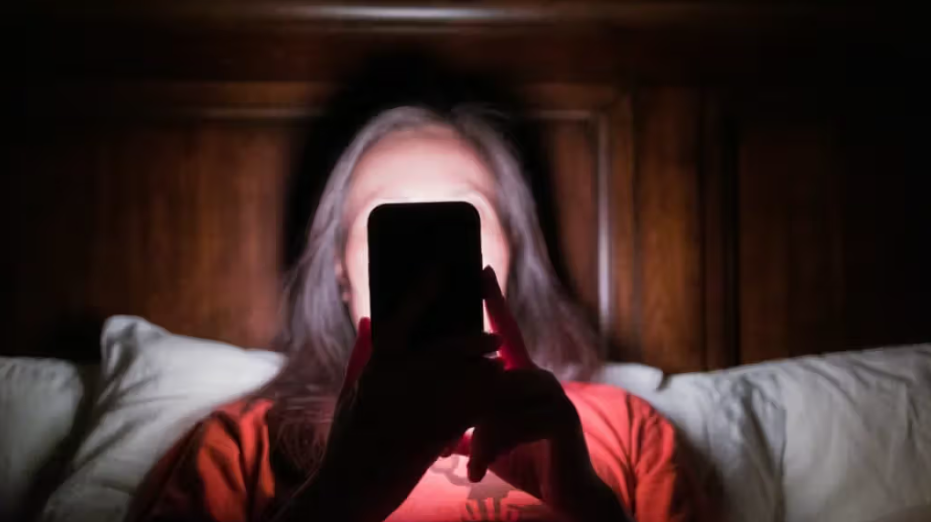
A brightly illuminated room, light entering through windows, screens used before sleep, or small electronic lights left on overnight can all potentially contribute to an environment that makes it more difficult for the body to experience the biological conditions normally associated with nighttime.
Reduced sleep duration and poor sleep quality have already been associated with a range of health concerns. The new research therefore adds another dimension by examining whether the effects of nighttime environmental exposure may also become visible in the physical characteristics and performance of the heart.
The findings should still be interpreted carefully.
The study was observational, meaning that researchers examined associations between nighttime light exposure and cardiac changes without directly assigning people to live in bright or dark environments. As a result, the research cannot prove that nighttime light itself caused the observed differences.
People exposed to greater amounts of light at night may also differ from those who sleep in darker environments in other important ways.
Nighttime illumination can be connected to urban living, working schedules, shift work, sleep habits, socioeconomic conditions, and the use of electronic devices. Each of these factors may independently influence health.
The researchers also measured light exposure over a relatively short seven-day period and examined participants' hearts approximately three years later. This makes it difficult to determine exactly how long-term exposure patterns influence the heart or whether reducing nighttime light could reverse or prevent the observed changes.
These limitations are important because they prevent the findings from being interpreted as a simple cause-and-effect relationship.
Nevertheless, the consistency of the results has attracted scientific attention.
According to cardiovascular expert Thomas Münzel, the measured effects were relatively modest in absolute terms but were consistent, appeared to increase with greater exposure, and were observed across multiple chambers of the heart.
Compared with people who had no nighttime light exposure above 3 lux, individuals in the highest exposure group showed approximately 2.4% greater left ventricular mass and 1.5% greater wall thickness. They also showed a 1.9% lower myocardial contraction fraction and reductions of around 3% in several measures of cardiac strain.
Changes were also observed in the right ventricle and the left atrium.
Although these percentages may appear relatively small, the significance lies in their consistency and their appearance across multiple aspects of cardiac structure and function.
The broader research context is also important.
In a parallel analysis involving more than 73,000 participants followed for approximately eight to ten years, greater nighttime light exposure was associated with a 29% higher risk of heart failure, a 24% higher risk of myocardial infarction, a 33% higher risk of stroke, and a 26% higher risk of cardiovascular mortality.
These findings remain observational and do not establish that light exposure directly caused these outcomes. Established cardiovascular risks such as smoking and hypertension remain substantially more important at the individual level.
However, the research raises the possibility that nighttime light could represent a previously underestimated and potentially modifiable environmental contributor to cardiovascular risk.
This possibility carries implications beyond individual bedrooms.
Modern cities are designed around continuous illumination. Streetlights, office buildings, advertising displays, transportation systems, residential developments, and commercial areas all contribute to the nighttime light environment.
From an economic and design perspective, lighting has traditionally been associated with visibility, safety, productivity, and urban identity.
Cities invest heavily in illuminated architecture, public spaces, commercial signage, and infrastructure because light helps define how an environment is experienced after dark.
The new research introduces an additional challenge for designers, urban planners, architects, and policymakers: how can societies maintain safety and functionality while reducing unnecessary biological exposure to artificial light?
This question could influence the future strategy of urban lighting.
Rather than simply increasing illumination, cities may increasingly need to consider the quality, direction, spectrum, timing, and intensity of light.
Experts have suggested that better-designed lighting systems could reduce unnecessary nighttime exposure without compromising public safety.
Shielded lighting can direct illumination toward the areas where it is needed instead of allowing it to spread into homes and bedrooms. Warmer-spectrum lighting may provide another alternative, while appropriately dimmed systems can reduce excessive brightness during periods when full illumination is unnecessary.
This approach represents a shift in design philosophy.
The goal is no longer simply to create brighter cities. It may become increasingly important to create smarter nighttime environments that provide visibility while respecting human biological rhythms.
The economic implications could also be significant.
Urban lighting consumes energy, requires infrastructure investment, and contributes to the visual identity of commercial and residential spaces. Reducing unnecessary illumination could potentially support energy efficiency while also addressing environmental and public health concerns.
For lighting companies and technology brands, this may create a growing market for adaptive systems capable of responding to time, activity, location, and human needs.
Smart lighting technologies already allow users and cities to adjust brightness and color temperature. As research on circadian health develops, these capabilities could become increasingly important elements of product design and brand positioning.
The relationship between technology and nighttime light also extends into the consumer electronics industry.
Smartphones, tablets, televisions, laptops, and wearable devices have become part of many people's evening routines. Screens are only one source of nighttime illumination, but they represent a highly personal and increasingly difficult-to-separate source.
Technology companies have responded by introducing features such as dark modes, night modes, reduced brightness settings, and warmer display colors.
These features are often marketed as tools for comfort or visual convenience. As scientific understanding of nighttime light and circadian health expands, however, the relationship between product design and biological impact may become a more important consideration.
The issue is therefore not simply whether consumers should use technology at night.
It is also whether technology can be designed to better understand the biological context in which it is used.
A device that automatically adjusts its brightness, spectrum, notifications, and display behavior according to time and sleep patterns could become part of a broader strategy for reducing unnecessary nighttime stimulation.
This creates an interesting connection between health research and brand identity.
Companies in the technology, smart home, lighting, and wellness industries increasingly compete by presenting products as tools that support healthier lifestyles.
Sleep tracking, smart lighting, wellness platforms, and connected home devices are already being positioned around ideas such as recovery, balance, personalization, and preventive health.
Research linking nighttime environments with cardiovascular outcomes could strengthen the importance of this positioning.
For brands, however, the opportunity also carries responsibility.
Observational findings should not be transformed into exaggerated claims that simply switching off a light will prevent heart disease.
The current evidence does not support such a conclusion.
The more credible strategy is to recognize that sleep environments are part of a wider set of factors influencing health.
Maintaining a dark room is a relatively low-cost and low-risk practice that may support healthy circadian rhythms and better sleep. Whether it directly reduces long-term cardiovascular disease remains a question that requires further research.
Researchers have therefore emphasized practical measures that people can consider without presenting them as guaranteed medical interventions.
Turning off unnecessary lights in the bedroom is one option.
Closing curtains to reduce outdoor illumination can help limit light entering the room.
Blackout curtains and eye masks may provide additional protection for people who cannot control external sources of light.
Small LED indicators on chargers, electronics, and other household devices can also be covered or turned away from the sleeping area.
Warmer and dimmer lighting during the evening may reduce unnecessary exposure before bedtime.
Reducing screen use immediately before sleep can also help decrease one common source of artificial light, although electronic devices are only one part of the broader nighttime environment.
For clinicians, the findings suggest that questions about the sleep environment could become a useful addition to discussions about cardiovascular health.
A healthcare professional may ask whether outdoor light enters the bedroom, whether a television or electronic screen remains active overnight, whether small standby lights are present, whether the individual works night or rotating shifts, and whether sleep is frequently interrupted.
These questions require no specialized equipment and may help identify simple environmental factors affecting sleep.
Another important issue concerns the threshold at which nighttime light becomes harmful.
The study used nighttime exposure above 3 lux during a person's five least-active hours as one of its reference points. Experimental research has shown that relatively low levels of light can influence melatonin production.
However, scientists do not currently have a specific level of nighttime illumination below which cardiovascular risk is known to disappear.
The practical message suggested by experts is therefore not to target a particular number but to reduce unnecessary light exposure as much as reasonably possible.
For the sleeping environment, darker conditions appear preferable to continued illumination.
The broader importance of this research may lie in how it changes the definition of cardiovascular prevention.
For decades, heart health strategies have focused primarily on individual behavior and medical factors such as diet, exercise, smoking, cholesterol, blood pressure, and diabetes.
These remain essential.
But environmental factors are increasingly entering the discussion.
Air pollution, noise, disrupted sleep, extreme temperatures, and other features of modern environments have all become subjects of cardiovascular research.
Nighttime light may now be joining that list.
This represents an important shift in how health risk is understood.
Not every cardiovascular influence begins with a personal decision or a medical diagnosis. Some risks may be built into the environments where people live, work, travel, and sleep.
From a design perspective, this creates a new responsibility for the industries that shape those environments.
Architecture, urban planning, lighting engineering, consumer electronics, and smart home technology may all have a role in determining how much artificial light reaches people after dark.
The future of health-conscious design may therefore require a more integrated approach.
A well-designed environment could consider energy use, visual comfort, safety, environmental sustainability, sleep, and biological rhythms at the same time.
The latest findings do not prove that nighttime light directly causes heart disease, and further research will be needed to determine whether reducing exposure can prevent or reverse changes in cardiac structure and function.
Randomized trials examining interventions such as blackout curtains, warmer lighting, reduced brightness, and dark-sky strategies would provide stronger evidence.
For now, the research offers an important reminder about the relationship between modern convenience and human biology.
Artificial light has transformed the way societies function. It has extended working hours, increased mobility, enabled nighttime commerce, shaped urban identities, and made technology available around the clock.
But the human body continues to operate according to biological rhythms that evolved around cycles of daylight and darkness.
The challenge for the future may not be to eliminate artificial light.
Instead, it may be to design and use it more intelligently.
The emerging science around nighttime illumination suggests that darkness itself may be an overlooked part of a healthy environment.
For individuals, creating a darker sleep space is relatively simple and inexpensive.
For cities and industries, however, the implications are much broader.
The way buildings are illuminated, the design of streets, the behavior of electronic devices, and the identity of smart technologies may all need to evolve as health research reveals more about the biological consequences of living in a world that rarely becomes completely dark.
The next generation of design may therefore treat darkness not as the absence of technology, but as a feature worth protecting.
As research continues, nighttime light could become an increasingly important meeting point between cardiovascular science, environmental policy, product design, urban economics, and brand strategy.
News You Should See
2026 Nobel Medicine Prize Honors Scientists Behind Optogenetics Breakthrough
Oil Prices Edge Lower as Stronger Middle East Exports and G7 Reserves Ease Supply Concerns
Trump Offers U.S. Assistance to Russia After Death at Siberian Plague Research Institute
Trump Takes Economic Message to Nebraska as GOP Faces Rising Cost-of-Living Pressure
U.S. Appeals Court Weighs Trump Administration’s $2.6 Billion Harvard Funding Fight
U.S. Midterm Elections Begin With Resilient Jobs Market and Persistent Cost Pressures
Latest News
The 2026 Nobel Prize in Physiology or Medicine honors Karl Deisseroth, Peter Hegemann and Georg Nagel for pioneering research behind optogenetics and its impact on neuroscience.
Oil prices edged lower as stronger Middle Eastern exports and a planned G7 release of 100 million barrels eased immediate supply concerns, while Gulf security risks and the Strait of Hormuz kept markets alert.
President Donald Trump said the United States would help Russia if needed after a laboratory worker died at a Siberian plague research institute, as Russian authorities imposed precautionary quarantine measures.
Trump’s Nebraska campaign stop highlights rising fuel and grocery costs, beef prices and growing economic pressure on Republicans ahead of the November midterm elections.
A U.S. appeals court is reviewing the Trump administration’s effort to cut Harvard’s federal research funding, with more than $2.6 billion at stake.
The U.S. enters the 2026 midterm elections with unemployment at 4.2%, while higher living and energy costs create economic pressure for households and businesses.
US services growth eased in September as input prices climbed to their highest level since July 2022, with fuel costs, supply-chain disruptions and strong demand increasing pressure on businesses.
Rising Treasury yields are increasing U.S. borrowing costs as Washington manages record debt, persistent inflation and strong economic demand, narrowing its policy options.
A EGP 16 million corporate partnership will establish and equip a bone marrow transplant unit at Cairo’s Coptic Hospital, supporting access to specialized treatment for patients.