When Appearance Becomes a Cost: How Extreme Heat Is Reshaping Britain’s Food Economy
Weather-driven changes in crop size, colour and form are exposing the economic limits of supermarket appearance standards and raising wider questions about food waste and national resilience.

Britain’s latest agricultural pressures are revealing an overlooked economic weakness in the food supply chain: the commercial value of fresh produce can depend as much on its appearance as on its nutritional quality. Following an exceptionally hot and dry summer, farmers say significant quantities of otherwise usable fruit and vegetables have been affected by changes in size, shape and colour, making some crops unsuitable for conventional supermarket retail.
The issue has moved beyond the question of individual crop losses and into a broader debate about how Britain designs, evaluates and markets fresh food. Farmers argue that current appearance requirements are no longer sufficiently flexible for a food system facing increasingly volatile weather conditions. They are calling for retailers and policymakers to reconsider standards that can exclude edible British-grown produce simply because it does not conform to familiar visual expectations.
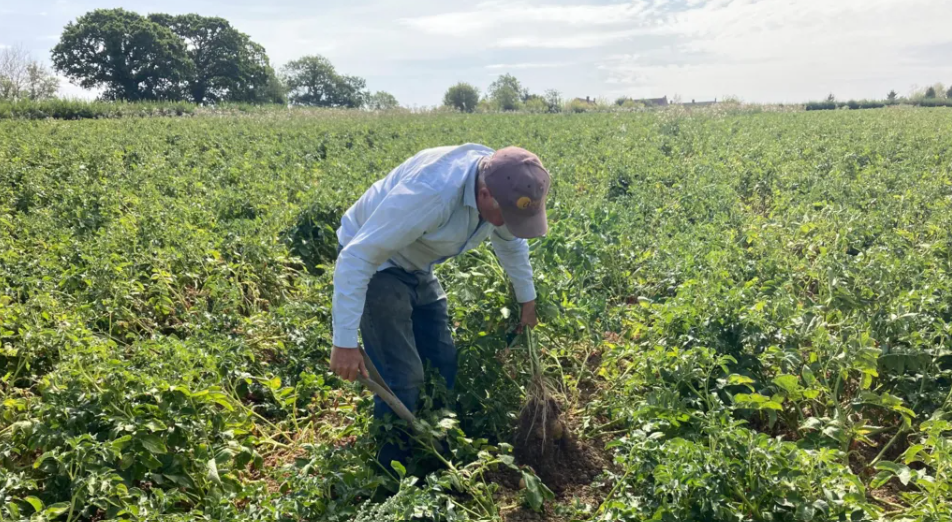
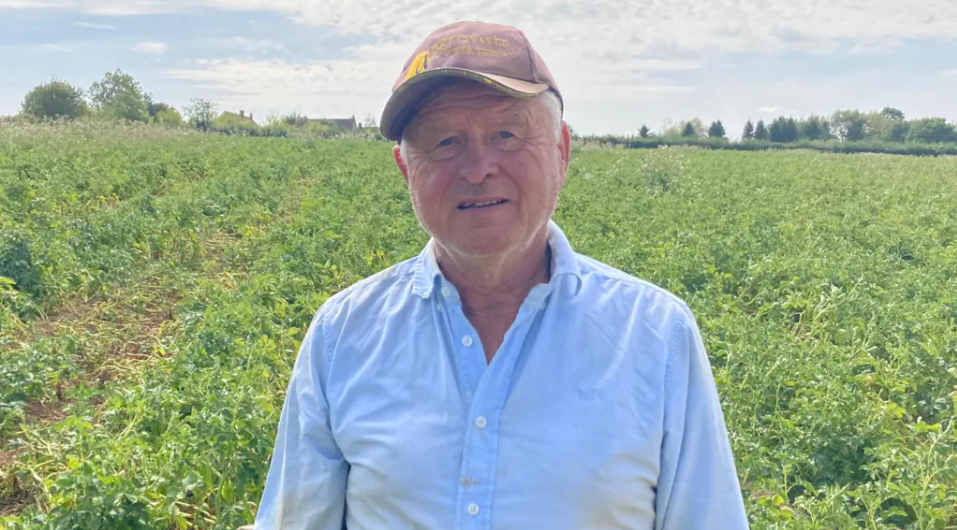
One of the clearest examples comes from potato grower James Pullen in Tintinhull, near Yeovil. Pullen estimates that the conditions could reduce his potato sales by approximately £200,000. He described this year's crop as devastating, explaining that some potatoes have been bruised, while others have failed to develop properly.
In a normal season, Pullen said potato yields average around 25 tonnes per acre. This year, he expects his average to fall to approximately 20 tonnes per acre. The concern is particularly significant because the current season follows previous periods of dry weather. Although farmers have experienced two consecutive dry years before, Pullen said the prospect of another dry summer would be critical, adding that he could not remember experiencing three consecutive dry summers during his lifetime.
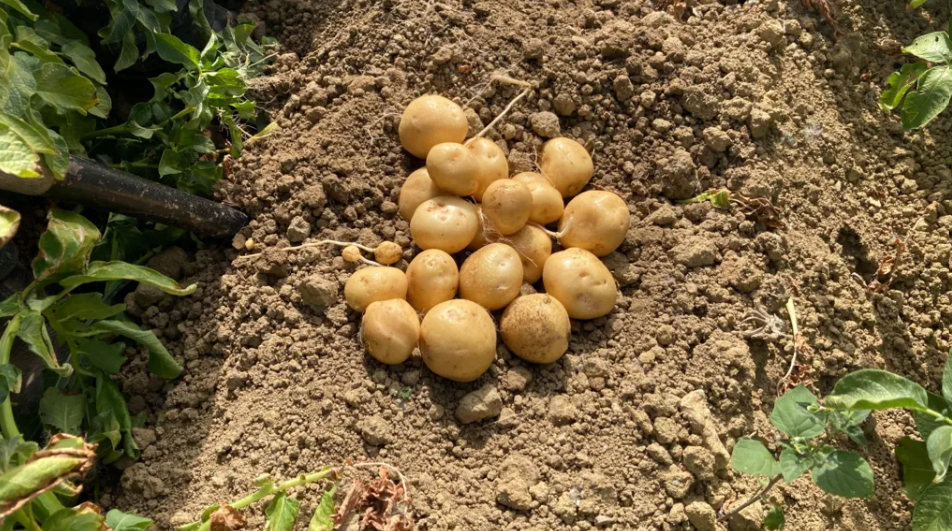
The problem is not limited to the total volume harvested. The commercial specifications applied to individual products can determine whether part of that harvest has any meaningful retail value. Pullen mainly grows Electra potatoes, which need to reach a diameter of 45mm to meet retailer requirements. He estimates that around 20% of this year's crop is only about 40mm in diameter, leaving a substantial portion below the size specification required for conventional supermarket sales.
This creates a layered economic problem. Produce that does not meet retail specifications is not necessarily unusable, but its destination changes. Potatoes that remain suitable for consumption may be directed towards processing, while green or damaged potatoes can be diverted to animal feed. The farmer therefore faces not only lower agricultural productivity but also a reduction in the potential value generated by each tonne of produce.
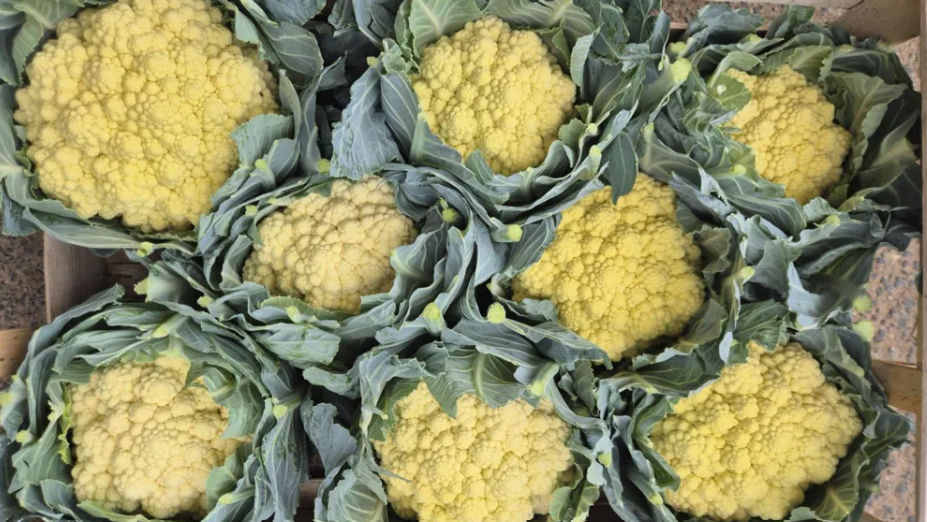
The same pattern is appearing across other crops. Cauliflowers, for example, require substantial quantities of water to develop the white appearance traditionally expected by shoppers. With stronger sunlight reaching the plants under current conditions, some cauliflower heads are turning yellow rather than maintaining the conventional white colour.
From a branding perspective, the colour difference illustrates how strongly consumer expectations have become connected to the visual identity of food. A cauliflower is commercially presented not simply as an edible vegetable, but as a product with a recognisable visual specification. When that specification changes, even without making the food unsafe or inedible, the product can lose its place within a conventional retail system.
Somerton and Glastonbury MP Sarah Dyke has argued that retailers should reconsider what she describes as rigid appearance standards. She said it was unreasonable for perfectly usable British-grown food to be rejected because a cauliflower is slightly yellow or because a cucumber does not have the expected shape.
Dyke's argument extends beyond cosmetic standards. She has also called for stronger protections for farmers against unfair trading practices, greater investment in agricultural water infrastructure, and legislation through a proposed Good Food Bill aimed at strengthening the UK's food security.
These demands highlight the connection between agricultural infrastructure and retail design. If farms are increasingly exposed to drought and extreme heat, the resilience of the food system cannot depend solely on maintaining historical production conditions. Water availability, supply-chain flexibility, purchasing policies and product specifications all become interconnected components of food security.
Retailers, however, face a competing commercial consideration. Andrew Opie, director of food and sustainability at the British Retail Consortium, said retailers have to balance their support for British farmers with customers' expectations regarding the products they purchase. He acknowledged that extreme weather, including drought, can reduce crop yields and create upward pressure on prices.
The retail sector's response is therefore likely to involve a combination of supply-chain management and changes in product presentation. Retailers can source from alternative suppliers when domestic production is disrupted, while also expanding ranges that include unusually sized produce. This approach suggests that the market may not need to abandon visual standards completely, but could instead broaden the definition of what constitutes an acceptable product.
Such a shift could have strategic implications for supermarket brands. For decades, consistency has been a central component of fresh-food merchandising: consumers are trained to associate quality with uniform size, shape and colour. Yet a changing climate is making that uniformity more difficult and expensive to maintain. A retail strategy that accepts greater natural variation could therefore become not only an environmental response but also a new form of brand positioning around authenticity, resilience and reduced waste.
The economic consequences extend beyond individual farms. If usable crops are systematically rejected, the resources invested in producing them — including land, water, labour, energy and transportation — generate less economic value. At the same time, retailers may need to purchase replacement supplies from alternative producers or markets, potentially increasing costs and contributing to price pressures.
Paul Keene of Primrose Vale Farm Shop in Gloucestershire said his crops had also been affected. Produce that cannot be sold is being left in the fields to become compost. While composting can return organic material to the agricultural cycle, it does not recover the full commercial value of the crop or the labour and resources invested in producing it.
The situation has also drawn concern from organisations working with surplus food. Kate Benson of Wivey Kitchen, which prepares community meals from surplus food in Wiveliscombe, said she found it depressing to see supermarkets reject agricultural produce. Her organisation accepts surplus food and turns it into meals for people who need them.
Benson's position introduces another dimension to the debate: consumer education. She argues that a yellow cauliflower or a knobbly cucumber remains perfectly edible. If consumers become more comfortable with natural variation, retailers may have greater commercial freedom to sell products that currently fall outside conventional appearance categories.
The challenge, therefore, is not simply to persuade supermarkets to accept imperfect vegetables. It is to reconsider the relationship between agricultural production, retail specifications and consumer perception. The visual identity of food has economic consequences, and changing that identity may require a coordinated adjustment across farmers, retailers, policymakers and consumers.
The UK Department for Environment, Food and Rural Affairs said the country's food system remained resilient and secure and that it did not expect recent dry weather to affect national food security. The department said it was working to strengthen food supply chains through a new Farming Roadmap and continued cooperation with the National Drought Group.
Nevertheless, the farmers' experience demonstrates that national food security can be affected long before supermarket shelves become visibly empty. Financial losses at farm level, reduced yields, rejected produce, increased sourcing costs and changing consumer expectations can all weaken the efficiency of the food system without immediately appearing as a national shortage.
The current situation therefore raises a broader strategic question for Britain's food economy: should the definition of a successful agricultural product continue to be based primarily on visual uniformity, or should the market adapt its design standards to reflect the realities of a more climate-sensitive food system?
A more flexible approach could allow supermarkets to preserve food that is nutritionally sound while reducing avoidable waste and protecting part of the economic value created by farmers. It could also encourage a different brand identity for fresh produce — one that treats natural variation not as a defect, but as evidence of seasonal and environmental reality.
For farmers such as Pullen, however, the issue remains immediate and financial. With a significant proportion of his potatoes falling below the 45mm retail threshold and expected yields declining from around 25 tonnes to approximately 20 tonnes per acre, the economic consequences are already measurable. His estimated £200,000 reduction in potato sales illustrates how weather conditions and retail specifications can combine to turn a physical change in a crop into a substantial commercial loss.
As Britain confronts increasingly unpredictable agricultural conditions, the debate over yellow cauliflowers, undersized potatoes and irregular cucumbers ultimately becomes a debate about the design of the country's food economy itself: what consumers are taught to recognise as quality, how retailers define marketable products, and whether food policy can evolve quickly enough to prevent climate-related disruptions from becoming a deeper food-security challenge.
News You Should See
2026 Nobel Medicine Prize Honors Scientists Behind Optogenetics Breakthrough
Oil Prices Edge Lower as Stronger Middle East Exports and G7 Reserves Ease Supply Concerns
Trump Offers U.S. Assistance to Russia After Death at Siberian Plague Research Institute
Trump Takes Economic Message to Nebraska as GOP Faces Rising Cost-of-Living Pressure
U.S. Appeals Court Weighs Trump Administration’s $2.6 Billion Harvard Funding Fight
U.S. Midterm Elections Begin With Resilient Jobs Market and Persistent Cost Pressures
Latest News
The 2026 Nobel Prize in Physiology or Medicine honors Karl Deisseroth, Peter Hegemann and Georg Nagel for pioneering research behind optogenetics and its impact on neuroscience.
Oil prices edged lower as stronger Middle Eastern exports and a planned G7 release of 100 million barrels eased immediate supply concerns, while Gulf security risks and the Strait of Hormuz kept markets alert.
President Donald Trump said the United States would help Russia if needed after a laboratory worker died at a Siberian plague research institute, as Russian authorities imposed precautionary quarantine measures.
Trump’s Nebraska campaign stop highlights rising fuel and grocery costs, beef prices and growing economic pressure on Republicans ahead of the November midterm elections.
A U.S. appeals court is reviewing the Trump administration’s effort to cut Harvard’s federal research funding, with more than $2.6 billion at stake.
The U.S. enters the 2026 midterm elections with unemployment at 4.2%, while higher living and energy costs create economic pressure for households and businesses.
US services growth eased in September as input prices climbed to their highest level since July 2022, with fuel costs, supply-chain disruptions and strong demand increasing pressure on businesses.
Rising Treasury yields are increasing U.S. borrowing costs as Washington manages record debt, persistent inflation and strong economic demand, narrowing its policy options.
A EGP 16 million corporate partnership will establish and equip a bone marrow transplant unit at Cairo’s Coptic Hospital, supporting access to specialized treatment for patients.