Washington Redirects $52 Million in Military Aid Toward the Americas
The Trump administration is shifting military financing from Europe and the Middle East toward Panama, Peru, Ecuador and Colombia, signaling a new geographic priority for U.S. foreign policy.

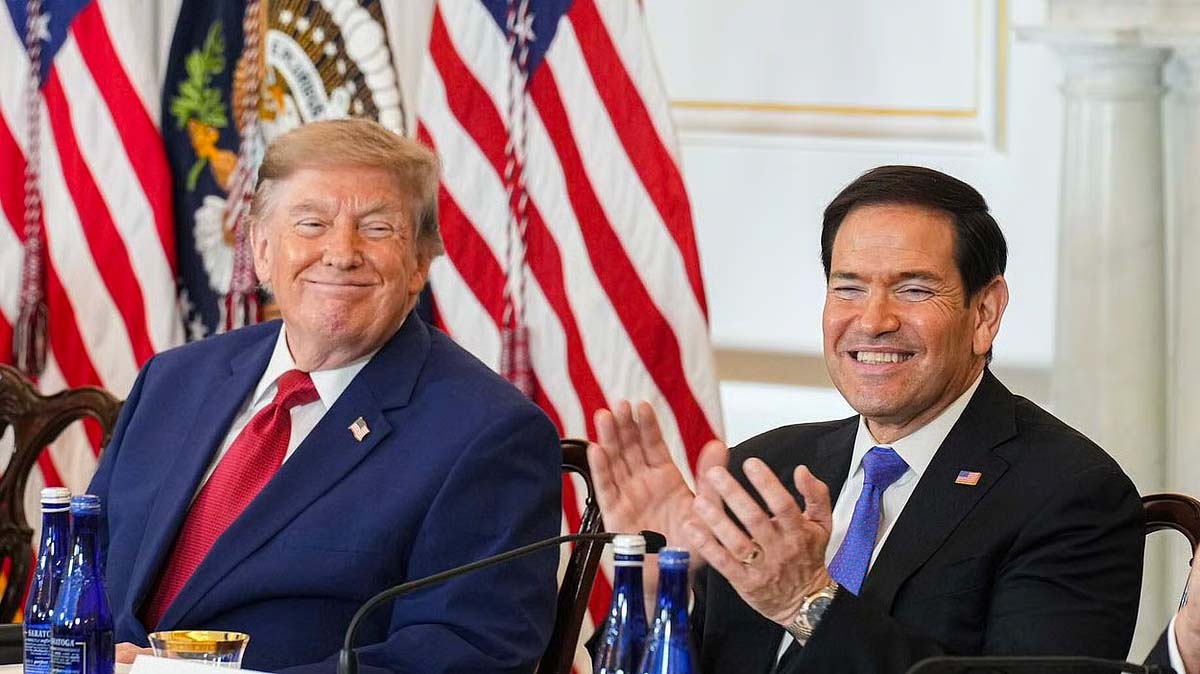
The most significant aspect of Washington’s decision to redirect $52 million in military financing is not the size of the amount itself, but what the movement of that money says about the changing geography of U.S. foreign-policy priorities.
The Trump administration is moving funding from Slovakia, North Macedonia, Tunisia and Iraq toward Panama, Peru, Ecuador and Colombia. The decision places the Western Hemisphere more firmly at the center of Washington’s security calculations and connects military assistance with issues the administration has identified as priorities, particularly drug trafficking, illegal immigration and the security of the Panama Canal.
This is effectively a reallocation of strategic attention. Foreign military financing is not simply a government-to-government transfer. It allows recipient countries to purchase American military equipment from U.S. defense contractors, meaning that decisions about where the money goes can influence both diplomatic relationships and the commercial geography of the American defense industry.
For the countries receiving the additional financing, the value extends beyond the immediate budget. Panama, Peru, Ecuador and Colombia are being positioned within a security framework in which Washington wants stronger regional cooperation. Secretary of State Marco Rubio’s recent visits to Colombia, Ecuador and Peru, accompanied by pledges of additional support, reinforce the impression that financial assistance is being combined with direct diplomatic engagement.
The commercial dimension is particularly important. When U.S. military financing is used to acquire American defense equipment, public funds can translate into demand for U.S. manufacturers. A shift in geographic priorities can therefore affect future procurement opportunities, supplier relationships and the competitive position of American defense companies in regional markets.
At the same time, the decision carries a clear message for Europe. Slovakia and North Macedonia, both NATO members, are among the countries from which funding is being redirected. The move follows a broader pattern in which the administration has reduced or reconsidered some U.S. financial and military commitments in Europe while pressing NATO members to take greater responsibility for their own defense spending.
That does not mean Washington is abandoning military financing for the four affected countries. The State Department said the shift does not eliminate their access to such financing, although the exact remaining amounts were not immediately clear. The immediate change is therefore one of allocation rather than a complete withdrawal.
The Western Hemisphere, meanwhile, is being treated as a more direct strategic arena. The administration has linked the new financing to combating narcoterrorism and supporting security around the Panama Canal, while also warning against the establishment of strategic footholds by U.S. rivals. China’s growing presence in Latin America is clearly part of that broader strategic context.
The significance of this approach lies in the combination of security, economics and diplomacy. Instead of treating military assistance as a separate foreign-policy instrument, Washington is increasingly using it as part of a broader system of incentives: countries that cooperate closely with U.S. priorities can become more important recipients of American security resources, while other regions may receive a smaller share of the available financing.
There is also a branding dimension to the policy. By emphasizing the Western Hemisphere, the administration is reinforcing an image of Washington as a power seeking to reassert a stronger regional role. The administration has itself connected this strategy to a renewed emphasis on the Monroe Doctrine, giving the policy a historical and geopolitical identity that goes beyond individual aid packages.
For Latin American governments, the new approach could create opportunities for stronger security partnerships and greater access to American defense resources. But it also places those relationships within a more explicitly strategic framework. Cooperation may increasingly be measured not only by military needs, but also by alignment with Washington’s priorities on organized crime, migration, regional security and competition with external powers.
For American defense companies, the redistribution could open additional channels into Latin American markets. The immediate $52 million is limited, but the larger significance lies in whether this becomes a recurring pattern of directing procurement-related financing toward countries considered strategically important to Washington.
The longer-term question is whether this policy produces a durable regional security architecture or primarily a series of bilateral arrangements. The answer will depend on how consistently the United States maintains its commitments, how recipient governments respond and whether the administration continues shifting resources from other regions.
What is clear is that the map of U.S. military assistance is being used as a map of strategic priorities. The movement of $52 million from Europe and the Middle East toward the Americas is therefore less about the individual figure and more about where Washington believes its security interests, diplomatic influence and defense partnerships should be concentrated next.
News You Should See
2026 Nobel Medicine Prize Honors Scientists Behind Optogenetics Breakthrough
Oil Prices Edge Lower as Stronger Middle East Exports and G7 Reserves Ease Supply Concerns
Trump Offers U.S. Assistance to Russia After Death at Siberian Plague Research Institute
Trump Takes Economic Message to Nebraska as GOP Faces Rising Cost-of-Living Pressure
U.S. Appeals Court Weighs Trump Administration’s $2.6 Billion Harvard Funding Fight
U.S. Midterm Elections Begin With Resilient Jobs Market and Persistent Cost Pressures
Latest News
The 2026 Nobel Prize in Physiology or Medicine honors Karl Deisseroth, Peter Hegemann and Georg Nagel for pioneering research behind optogenetics and its impact on neuroscience.
Oil prices edged lower as stronger Middle Eastern exports and a planned G7 release of 100 million barrels eased immediate supply concerns, while Gulf security risks and the Strait of Hormuz kept markets alert.
President Donald Trump said the United States would help Russia if needed after a laboratory worker died at a Siberian plague research institute, as Russian authorities imposed precautionary quarantine measures.
Trump’s Nebraska campaign stop highlights rising fuel and grocery costs, beef prices and growing economic pressure on Republicans ahead of the November midterm elections.
A U.S. appeals court is reviewing the Trump administration’s effort to cut Harvard’s federal research funding, with more than $2.6 billion at stake.
The U.S. enters the 2026 midterm elections with unemployment at 4.2%, while higher living and energy costs create economic pressure for households and businesses.
US services growth eased in September as input prices climbed to their highest level since July 2022, with fuel costs, supply-chain disruptions and strong demand increasing pressure on businesses.
Rising Treasury yields are increasing U.S. borrowing costs as Washington manages record debt, persistent inflation and strong economic demand, narrowing its policy options.
A EGP 16 million corporate partnership will establish and equip a bone marrow transplant unit at Cairo’s Coptic Hospital, supporting access to specialized treatment for patients.