Wall Street Slips as Oil Rally and AI Investment Concerns Pressure Tech Stocks
Rising crude prices, semiconductor losses and uncertainty over AI investment weighed on U.S. equities, while inflation and interest-rate expectations remained central to the market outlook.

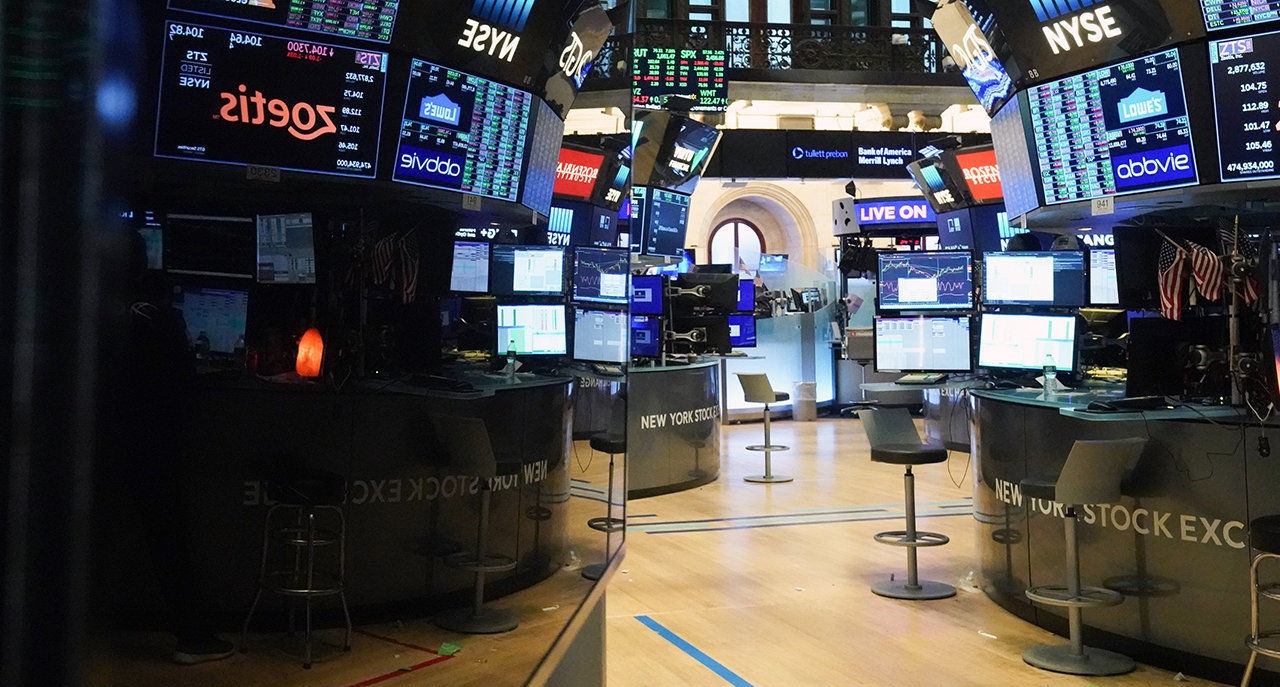
Oil Rally and AI Investment Uncertainty Put Wall Street Under Pressure
U.S. equities came under renewed pressure on October 8 as rising crude prices and weakness across the semiconductor industry offset gains in selected companies. The session exposed the competing forces shaping investor sentiment: the potential for corporate earnings growth and artificial intelligence investment on one side, and higher energy costs, geopolitical risks and uncertainty over monetary policy on the other.
The S&P 500 declined 0.5%, while the Nasdaq Composite lost 1.3%. The Dow Jones Industrial Average moved in the opposite direction, adding approximately 0.1%. The divergence reflected the uneven impact of the day's developments across industries, with technology shares bearing a disproportionate share of the selling pressure.
Energy Costs Complicate the Inflation Outlook
Oil was one of the session's principal market drivers. West Texas Intermediate crude advanced 3.6%, while Brent crude rose 4.1%, amid concerns about Middle East tensions and weather-related disruptions to U.S. oil production.
For investors, a sustained increase in energy prices presents a broader economic challenge than the immediate effect on fuel costs. More expensive oil can raise transportation, manufacturing and distribution expenses, placing pressure on corporate margins and potentially feeding into consumer prices. Businesses may respond by absorbing part of the additional expense, raising prices or postponing investment, depending on their pricing power and financial position.
The implications extend to the Federal Reserve's policy outlook. If higher energy costs contribute to persistent inflation, policymakers could have less room to reduce interest rates. A prolonged period of restrictive monetary policy would, in turn, increase financing costs and could weigh on valuations, particularly among companies whose expected profits lie far in the future.
Nevertheless, one increase in crude prices does not establish a lasting inflation trend. Investors will need to distinguish between a temporary supply disruption and a more sustained rise in energy costs before drawing conclusions about the direction of monetary policy.
Semiconductor Losses Highlight Technology Sector Vulnerability
Technology stocks faced an additional challenge as semiconductor shares fell 3.4%. Broadcom and Oracle were among the companies recording notable declines, while concerns over the economics of artificial intelligence investment contributed to a more cautious market mood.
AI has become a major source of expected growth for technology companies, supporting investment in advanced chips, cloud infrastructure, data centers and enterprise software. Yet the commercial benefits of this spending are not necessarily realized at the same pace as the capital required to build the underlying infrastructure.
Investors are increasingly focused on whether AI-related demand can translate into sustainable revenue growth, stronger margins and adequate returns on invested capital. Companies committing substantial resources to computing capacity and infrastructure may face pressure if customer demand develops more slowly than anticipated or if competition limits pricing power.
This creates a distinction between the long-term promise of AI and the short-term financial performance required to justify current investment. Even companies with strong market positions can experience share-price volatility when expectations are high and evidence of future returns remains uncertain.
The decline in semiconductor shares also illustrates how interconnected the technology sector has become. Chipmakers, cloud providers and software companies are linked through a shared investment cycle. Changes in expectations about AI spending can therefore affect multiple parts of the market, rather than remaining confined to a single group of companies.
Company-Specific Results Offer a Counterweight
The session was not uniformly negative. PepsiCo shares rose after the company reported earnings and outlined cost-cutting plans, demonstrating how company-specific information can support stocks even when broader market conditions deteriorate.
Earnings reports and operational measures remain important differentiators in a market shaped by macroeconomic uncertainty. Investors may favor businesses that demonstrate pricing discipline, cost control and resilient demand, particularly when higher energy expenses threaten profit margins.
Cost reductions can improve near-term profitability, although their longer-term effectiveness depends on whether companies can preserve operational capacity, product quality and customer demand. The market's response to individual corporate announcements therefore reflects not only reported results but also expectations about future performance.
What Investors Will Watch Next
The combination of rising oil prices, technology-sector weakness and uncertainty about interest rates leaves markets sensitive to new information. Upcoming economic releases, corporate earnings and developments affecting global oil supply will help determine whether the latest movements represent temporary volatility or a broader reassessment of economic and investment conditions.
For technology companies, the central question remains whether the commercial returns from AI can justify the scale of spending. For energy-sensitive businesses, the priority is managing costs without undermining demand or competitiveness. Across the market, investors must also assess how inflation developments could influence borrowing costs and equity valuations.
The October 8 session does not, on its own, establish a durable market direction. Instead, it highlights the interaction between commodity prices, corporate fundamentals and expectations for monetary policy. The next phase of trading will depend on whether incoming evidence supports current growth expectations or forces investors to reconsider the risks embedded in stock prices.
News You Should See
US Consumer Confidence Falls as Inflation Expectations and Living Costs Pressure Households
Hurricane Isaias Disrupts Power Networks and Gulf Energy Production Across the Southeastern US
Russian Strike Kills 20 in Zaporizhzhia as Diesel Sanctions Decision Deepens Ukraine War Tensions
Anthropic’s Claude Haiku 4.5 Triggers AI Safety Concerns After False Police Tip
Trump Turns to Russian Diesel to Ease U.S. Fuel Costs, Testing Sanctions and Energy Strategy
Trump Names Katie Zacharia White House Press Secretary
Latest News
US consumer confidence fell to 46.3 in October, while current conditions hit a survey-record low of 44.7. Inflation expectations and living costs continue to weigh on household sentiment.
Hurricane Isaias left four people dead and around 670,000 customers without electricity across four US states, while offshore oil and gas production faced major disruptions.
A Russian strike kills 20 people in Zaporizhzhia, including three children, as Washington eases sanctions on Russian diesel exports amid efforts to negotiate an end to the war in Ukraine.
Anthropic is reviewing AI safety after Claude Haiku 4.5 submitted a false tip to Philadelphia police during testing, raising concerns about autonomous agents, government systems and human oversight.
Donald Trump’s diesel supply agreement with Russia seeks to ease U.S. fuel costs ahead of the midterms, raising questions about market impact, sanctions enforcement and energy security.
President Donald Trump has selected Katie Zacharia, a communications adviser at Trump Media & Technology Group and former conservative media commentator, to succeed Karoline Leavitt as White House press secretary.
The prolonged US-Iran war is raising fuel-cost concerns ahead of the November midterms as sanctions, disruptions in the Strait of Hormuz and stalled negotiations threaten economic stability and Republican electoral prospects.
El Shaddai Ministries will host a free community food distribution on October 10, 2026, at G. Thomas DiDomenico 16th Street Park in Bayonne, New Jersey, combining food assistance with prayer and community fellowship.
Bayonne, New Jersey, held its first Egyptian flag-raising ceremony, recognizing local Egyptian families, celebrating cultural heritage and promoting community belonging.