Wall Street Rallies as AI Optimism Offsets Interest Rate and Energy Risks
Technology stocks lead US market gains as investors assess major earnings, Meta’s AI financing strategy and the Federal Reserve’s next policy move.

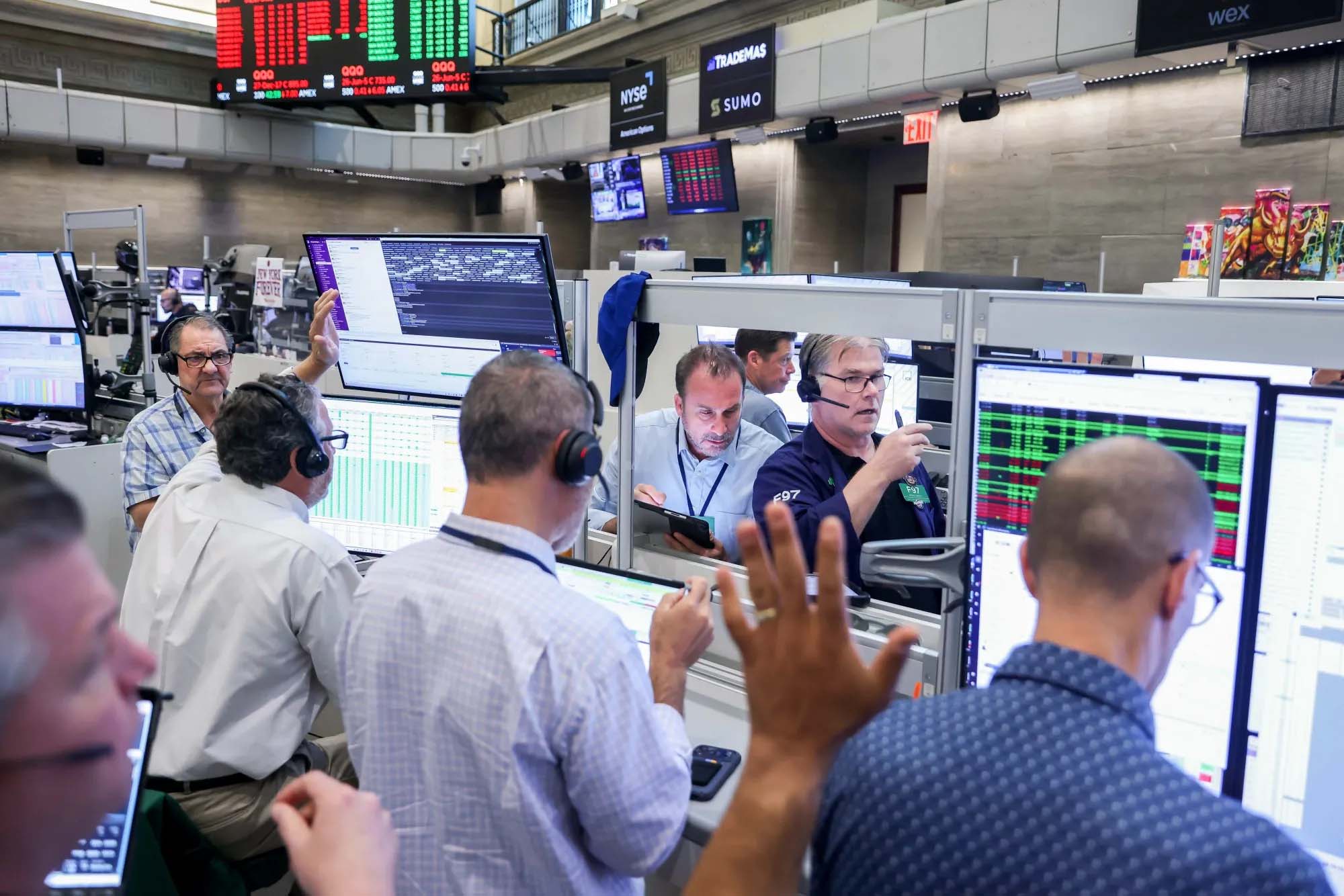
U.S. equities moved higher on October 27 as renewed enthusiasm for artificial intelligence helped technology shares outperform, even as investors weighed the Federal Reserve’s policy outlook, elevated energy prices and the financial risks associated with expanding AI infrastructure.
The Nasdaq Composite gained 1.18% to close at 26,477.81, while the S&P 500 advanced 0.60% to 7,722.60. The Dow Jones Industrial Average edged up 0.03% to 52,377.57. Technology led the major S&P 500 sectors, while energy stocks faced the greatest percentage decline as crude prices eased amid attention to Middle East diplomatic efforts.
The market’s advance reflected a renewed appetite for technology exposure, but it also highlighted the distinction between confidence in AI’s long-term commercial potential and the challenge of proving that investment spending will produce sufficient financial returns.
AI Spending Faces a More Demanding Investment Test
Artificial intelligence remains a major driver of corporate investment, supporting demand for semiconductors, computing equipment, data-center capacity and related infrastructure. However, investors are increasingly examining the relationship between spending commitments, revenue growth and profitability.
Developments surrounding Anthropic’s planned initial public offering helped restore momentum to semiconductor shares for a third consecutive session. The Philadelphia Semiconductor Index has gained 62.1% year to date, substantially outperforming the S&P 500’s 12.8% advance over the same period, although the chip index remains more than 20% below its June record.
These figures illustrate the scale of investor interest in the AI supply chain, while also showing how vulnerable highly valued technology shares can be to changes in expectations. A strong long-term demand outlook does not automatically guarantee that every company investing in the sector will generate attractive returns.
The next phase of competition is likely to depend increasingly on execution. Businesses will need to demonstrate that AI infrastructure spending improves products, expands revenue opportunities, raises productivity or creates durable competitive advantages. Companies unable to establish that connection could face pressure from shareholders to moderate expenditure or improve capital allocation.
Meta’s Financing Strategy Highlights the Cost of Expansion
Meta Platforms has expanded its equity fundraising to $97.5 billion to support its AI ambitions. The scale of the financing effort highlights the substantial resources required to compete in a market where computing infrastructure and advanced model development demand significant capital.
Equity financing can help a company fund expansion without relying exclusively on additional borrowing. It can also provide financial flexibility when interest rates remain elevated. However, raising substantial amounts of capital introduces its own considerations, including dilution for existing shareholders and the need to justify the use of the proceeds through future business performance.
Meta’s shares fell 1.6% on the day, demonstrating that a major funding initiative does not necessarily translate into immediate investor approval. Markets must assess not only whether a company can finance its strategy, but also whether that strategy is likely to generate returns commensurate with its cost.
For technology companies, AI investment is becoming a test of financial discipline as much as technological ambition. Maintaining a strong corporate identity as an innovation leader may support customer and investor confidence, but long-term credibility will also depend on transparent capital allocation and measurable commercial outcomes.
Earnings Season Is Separating Corporate Winners and Losers
Quarterly results are providing investors with a clearer view of how businesses are managing demand, costs and profitability. Available data showed that approximately half of S&P 500 companies had reported third-quarter results, with 83% of those reporting companies exceeding earnings expectations, according to LSEG data cited in market coverage.
Individual company performances nevertheless varied sharply. Boeing shares fell 10.7% after the aerospace manufacturer reported a larger-than-expected quarterly loss. Xylem declined 14.2% after reducing its full-year forecasts, while United Parcel Service gained 5.8% after raising its annual revenue and profit outlook. Royal Caribbean advanced 5.5% after increasing its full-year profit forecast.
These contrasting outcomes underscore why broad index gains do not necessarily reflect uniform business strength. Investors are rewarding companies that demonstrate improving earnings visibility while penalizing disappointing results or weaker forward guidance.
Attention is now turning to results from Microsoft and Alphabet, expected on Wednesday, followed by Amazon on Thursday. Their disclosures could help determine whether heavy AI-related investment is translating into stronger cloud demand, advertising performance, software sales and other revenue streams.
The earnings reports will also offer clues about competitive positioning. Companies that can convert infrastructure spending into profitable services may strengthen their market positions, while businesses facing rising costs without comparable revenue growth could encounter increasing scrutiny.
Federal Reserve Policy Remains a Critical Variable
The Federal Reserve began its October policy meeting on Tuesday, with financial markets broadly expecting officials to leave the federal funds target range unchanged at 3.75% to 4%. Investors were also considering the possibility of another rate increase at the central bank’s December meeting.
Inflation remains a concern, while geopolitical tensions involving the United States and Iran have added uncertainty to the economic outlook. Higher borrowing costs can affect companies through more expensive financing, lower valuations and reduced demand for interest-sensitive products and services.
The impact can be particularly significant for technology businesses whose valuations depend heavily on expectations of earnings growth in future years. When interest rates remain elevated, investors may demand stronger evidence that projected profits justify current share prices.
For companies financing large infrastructure programs, the cost of capital can influence the pace and structure of expansion. A prolonged period of restrictive monetary policy could encourage businesses to prioritize projects with clearer commercial returns, delay less urgent investments or seek a more balanced mix of financing.
Oil Prices and Geopolitical Risks Complicate the Outlook
Crude oil remained near its highest levels since late April despite recent declines. The movement in energy prices reflects the importance of geopolitical developments and supply expectations to the broader market outlook.
Lower oil prices can ease some cost pressures for transportation companies, manufacturers and consumer-facing businesses. However, sustained increases could complicate the inflation outlook and limit the Federal Reserve’s flexibility.
The energy sector’s decline during Tuesday’s session, alongside gains in technology shares, showed how changes in commodity prices can shift leadership across the market. These movements do not necessarily indicate a lasting trend, particularly when prices remain sensitive to diplomatic developments and potential supply disruptions.
Investors must therefore assess corporate earnings alongside the broader economic conditions that influence operating costs, consumer demand and financing decisions.
The Next Test for Investors
The November 3 U.S. midterm elections add another consideration for investors evaluating the political and economic environment. The outcome will determine control of Congress and could influence the legislative priorities affecting business regulation, taxation, public spending and technology policy.
In the near term, the combination of Federal Reserve guidance, major technology earnings and energy-market developments is likely to shape market direction. Strong results from leading technology companies could reinforce confidence in AI-related investment, while weaker guidance or evidence of rising financial strain could revive concerns about excessive spending.
Tuesday’s gains suggest that investors remain willing to support the technology sector when new developments strengthen expectations for future growth. Yet the sustainability of that confidence will depend on more than enthusiasm for emerging technology.
For corporate leaders, the central challenge is to align innovation strategies with financing capacity and measurable commercial value. For investors, the task is to distinguish businesses with credible paths to profitable growth from those whose expansion plans remain dependent on optimistic assumptions. That distinction is likely to become increasingly important as AI investment, monetary policy and geopolitical uncertainty continue to interact.
News You Should See
Man City Faces Calls for Further Premier League Investigation Over Post-2018 Finances
Apple Maps Blurs Satellite Images of Key U.S. Military and NASA Sites
Who Is Delorean Bijon Brandon? The Case of Christina Downer’s Disappearance and Suspected Murder
From Siskel and Ebert to The Beatles: Celebrating Entertainment Legends
Olive Oil Before Carbs: Could Timing Influence Blood Sugar?
Jack Hughes Leads Devils to Shootout Victory, Ending Oilers’ Winning Run
Latest News
Premier League executives are debating a possible new investigation into Manchester City's finances after 2018, while the club appeals a verdict involving 114 financial-rule breaches.
Apple Maps has blurred satellite imagery of several U.S. military and NASA sites, including Cape Canaveral and Area 51. The reason for the changes remains unclear.
Delorean Bijon Brandon, 41, has been charged in connection with Christina Downer’s suspected murder after her disappearance in September 2025.
Chicago will honor film critics Gene Siskel and Roger Ebert with life-sized bronze statues, celebrating a partnership that reshaped popular film criticism.
Researchers are examining whether taking olive oil before glucose can slow stomach emptying and influence blood sugar levels, based on promising findings in mice.
Jack Hughes scores twice and adds an assist as the New Jersey Devils defeat the Edmonton Oilers 4-3 in a shootout, ending their three-game winning streak.
Researchers found that physical contact with dogs after an initial stressful task was associated with lower stress levels during a second challenge.
Researchers analyzed genetic data from 2.8 million people and identified 48 previously unknown genomic regions associated with Alzheimer's disease risk.
Screen-free schools are gaining interest among Silicon Valley tech families, raising questions about children's digital exposure and the role of technology in education.