Voyager 1 Approaches One-Light-Day Milestone, Pushing the Limits of Deep-Space Exploration
Nearly five decades after launch, NASA’s spacecraft continues its journey beyond the solar system as engineers work to preserve its limited power and maintain communication.

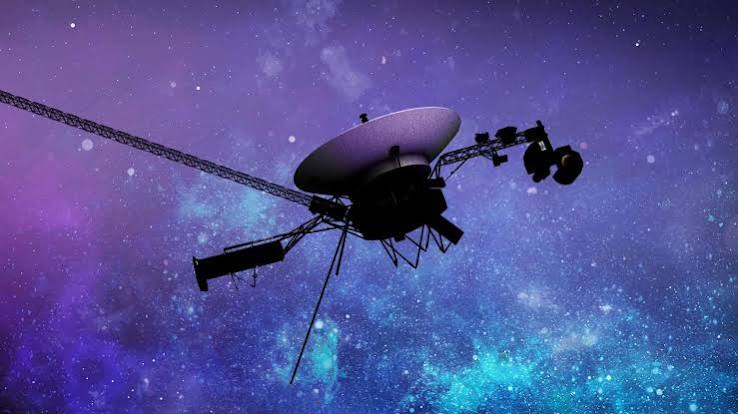
Nearly half a century after leaving Earth, NASA’s Voyager 1 is preparing to reach a distance that illustrates just how far human exploration has extended into space. The spacecraft is expected to cross the one-light-day threshold on November 18, 2026, marking a significant moment in the history of deep-space missions.
Launched in September 1977, Voyager 1 is projected to be approximately 16.09 billion miles (25.89 billion kilometers) from Earth when it reaches this milestone. At that distance, the time required for communication becomes a defining feature of the mission.
A light-day is the distance light travels in 24 hours. Consequently, a signal transmitted from Earth to Voyager 1 will need roughly one day to reach the spacecraft. Any response will take approximately another day to return, making a complete communication exchange a process of about 48 hours.
Keeping a 49-Year-Old Spacecraft Operating
Maintaining Voyager 1 has become an increasingly complex engineering challenge as its available electrical power continues to decrease. To extend the mission, NASA engineers have recently completed an initiative aimed at reducing the spacecraft’s energy consumption.
The team replaced three onboard devices with more energy-efficient alternatives. This adjustment is intended to preserve the remaining power supply and help keep the spacecraft’s scientific instruments operating for as long as possible.
The effort reflects the importance of managing limited resources on a mission that has continued far beyond its original launch era.
Communication Challenges Along the Way
Voyager 1’s long journey has not been without technical difficulties. In October, NASA temporarily lost contact with the spacecraft during scheduled communication attempts on October 18 and 19. Communication was restored on October 20, allowing engineers to resume monitoring and examine the interruption.
The precise cause of the disruption has not yet been determined. The engineering team continues to assess the spacecraft’s systems to support reliable communication in the years ahead.
A Unique Window into Interstellar Space
Voyager 1 and its twin, Voyager 2, hold a special place in space exploration. They are the only spacecraft to have directly investigated interstellar space beyond the heliosphere, the vast region influenced by the Sun.
Reaching the one-light-day distance will not represent a change in the spacecraft’s scientific destination, but it will demonstrate the extraordinary scale of its journey. More importantly, keeping Voyager 1 active allows scientists to continue receiving information from a region of space that remains beyond the direct reach of other spacecraft.
As engineers work to extend its operational life, Voyager 1 stands as an enduring example of how long-term scientific planning and technological innovation can preserve a mission across generations.
News You Should See
Man City Faces Calls for Further Premier League Investigation Over Post-2018 Finances
Apple Maps Blurs Satellite Images of Key U.S. Military and NASA Sites
Who Is Delorean Bijon Brandon? The Case of Christina Downer’s Disappearance and Suspected Murder
From Siskel and Ebert to The Beatles: Celebrating Entertainment Legends
Olive Oil Before Carbs: Could Timing Influence Blood Sugar?
Jack Hughes Leads Devils to Shootout Victory, Ending Oilers’ Winning Run
Latest News
Premier League executives are debating a possible new investigation into Manchester City's finances after 2018, while the club appeals a verdict involving 114 financial-rule breaches.
Apple Maps has blurred satellite imagery of several U.S. military and NASA sites, including Cape Canaveral and Area 51. The reason for the changes remains unclear.
Delorean Bijon Brandon, 41, has been charged in connection with Christina Downer’s suspected murder after her disappearance in September 2025.
Chicago will honor film critics Gene Siskel and Roger Ebert with life-sized bronze statues, celebrating a partnership that reshaped popular film criticism.
Researchers are examining whether taking olive oil before glucose can slow stomach emptying and influence blood sugar levels, based on promising findings in mice.
Jack Hughes scores twice and adds an assist as the New Jersey Devils defeat the Edmonton Oilers 4-3 in a shootout, ending their three-game winning streak.
Researchers found that physical contact with dogs after an initial stressful task was associated with lower stress levels during a second challenge.
Researchers analyzed genetic data from 2.8 million people and identified 48 previously unknown genomic regions associated with Alzheimer's disease risk.
Screen-free schools are gaining interest among Silicon Valley tech families, raising questions about children's digital exposure and the role of technology in education.