Vinicius Jr. and the New Transfer Battle Between Real Madrid, Mourinho and Al Hilal
The Brazilian winger’s future is becoming a strategic issue as Real Madrid weigh contract ambitions against growing interest from Saudi Arabia and Mourinho’s potential influence.

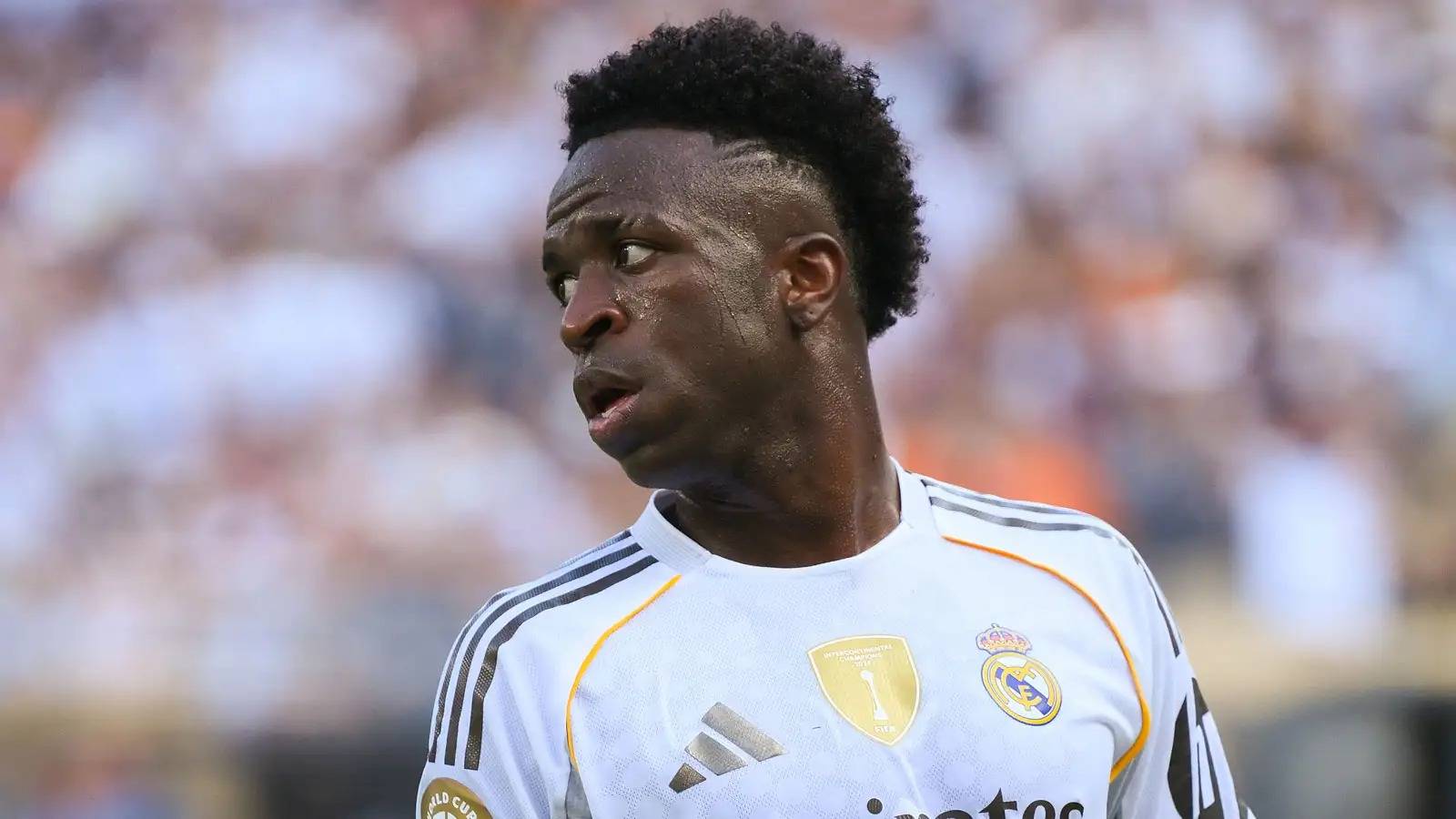
Vinicius Jr.’s future is becoming one of the most strategically significant stories in the transfer market, not simply because of the Brazilian winger’s importance to Real Madrid, but because any decision surrounding him could carry major sporting, financial and branding consequences.
Real Madrid’s position is shaped by the player’s status as one of the club’s most recognizable attacking figures. Vinicius has developed from a highly rated young signing into a central component of the team’s global identity, making his future more complicated than a conventional contract negotiation.
For the Spanish club, retaining him would protect continuity in an attacking structure built around elite young talent while preserving a player whose international profile contributes to the club’s commercial reach. A departure, by contrast, would potentially generate a major transfer return but would also require Real Madrid to replace both production on the pitch and visibility off it.
That equation becomes more complicated as Saudi football continues to pursue established global stars. Al Hilal’s reported interest in Vinicius reflects the broader evolution of the Saudi transfer market, where recruitment is increasingly being used to strengthen both sporting competitiveness and the international positioning of clubs.
A potential move to Saudi Arabia would therefore be measured on several levels. For Al Hilal, acquiring Vinicius would represent a significant sporting statement and could strengthen the club’s global brand through one of the most recognizable young players in world football. For the player, such a move could offer a different financial and professional environment at a stage when his market value remains exceptionally high.
Real Madrid, however, has a different incentive structure. The club has historically sought to combine sporting success with the long-term appreciation of elite assets. Players who become global stars can generate value through performances, commercial partnerships, shirt sales, digital engagement and international audiences.
Vinicius fits directly into that model.
His importance also means that the issue cannot be separated from Real Madrid’s wider succession planning. The club has invested heavily in a younger generation of attacking players and continues to operate under a model in which emerging stars are expected to become central figures for years rather than seasons. Keeping Vinicius would therefore help maintain continuity while allowing the club to develop the next stage of its sporting project around a player already proven at the highest level.
The Saudi interest introduces a different competitive dynamic. Saudi clubs have demonstrated an increasing willingness to challenge European teams for globally recognized players, creating a new negotiating environment in which financial capacity can significantly alter the traditional hierarchy of the transfer market.
That does not necessarily mean every approach will succeed. Real Madrid retains substantial sporting and commercial reasons to resist a major departure, particularly when the player is still positioned as a central figure in the club’s long-term plans.
The broader market impact is significant. If a player of Vinicius’ profile were to make a high-value move to Saudi Arabia, it could strengthen the perception that the Saudi Pro League is capable of competing directly for players at the peak of their careers rather than focusing primarily on veterans approaching the final stages of their careers.
That shift would have implications for European clubs, agents and players. European clubs could face greater pressure to evaluate the financial value of retaining elite players, while players may increasingly view Saudi clubs as credible alternatives rather than secondary destinations.
The presence of Jose Mourinho in the wider transfer landscape adds another layer to the story. Mourinho has extensive experience managing elite players and operating in high-pressure transfer environments, and his influence within Saudi football has contributed to the league’s growing visibility among international stars.
Meanwhile, the interest surrounding Ollie Watkins illustrates how clubs such as Al Hilal can maintain alternative recruitment strategies. Pursuing multiple attacking options reduces dependence on a single negotiation and gives the club greater flexibility as European teams assess whether to sell important players.
Ultimately, the Vinicius situation is about more than one potential transfer. It represents the intersection of Real Madrid’s long-term asset management, Saudi Arabia’s ambition to expand its football ecosystem and the changing economics of global player recruitment.
For Real Madrid, the key question is whether the sporting and commercial value of retaining Vinicius outweighs the extraordinary financial returns that a potential sale could generate. For Al Hilal, the question is whether securing a player of his stature can accelerate the club’s transition into a truly global sports brand.
The answer could influence not only Vinicius’ next destination but also the direction of the international transfer market itself.
News You Should See
2026 Nobel Medicine Prize Honors Scientists Behind Optogenetics Breakthrough
Oil Prices Edge Lower as Stronger Middle East Exports and G7 Reserves Ease Supply Concerns
Trump Offers U.S. Assistance to Russia After Death at Siberian Plague Research Institute
Trump Takes Economic Message to Nebraska as GOP Faces Rising Cost-of-Living Pressure
U.S. Appeals Court Weighs Trump Administration’s $2.6 Billion Harvard Funding Fight
U.S. Midterm Elections Begin With Resilient Jobs Market and Persistent Cost Pressures
Latest News
The 2026 Nobel Prize in Physiology or Medicine honors Karl Deisseroth, Peter Hegemann and Georg Nagel for pioneering research behind optogenetics and its impact on neuroscience.
Oil prices edged lower as stronger Middle Eastern exports and a planned G7 release of 100 million barrels eased immediate supply concerns, while Gulf security risks and the Strait of Hormuz kept markets alert.
President Donald Trump said the United States would help Russia if needed after a laboratory worker died at a Siberian plague research institute, as Russian authorities imposed precautionary quarantine measures.
Trump’s Nebraska campaign stop highlights rising fuel and grocery costs, beef prices and growing economic pressure on Republicans ahead of the November midterm elections.
A U.S. appeals court is reviewing the Trump administration’s effort to cut Harvard’s federal research funding, with more than $2.6 billion at stake.
The U.S. enters the 2026 midterm elections with unemployment at 4.2%, while higher living and energy costs create economic pressure for households and businesses.
US services growth eased in September as input prices climbed to their highest level since July 2022, with fuel costs, supply-chain disruptions and strong demand increasing pressure on businesses.
Rising Treasury yields are increasing U.S. borrowing costs as Washington manages record debt, persistent inflation and strong economic demand, narrowing its policy options.
A EGP 16 million corporate partnership will establish and equip a bone marrow transplant unit at Cairo’s Coptic Hospital, supporting access to specialized treatment for patients.