Vietnam Travel Guide: What Every First-Time Visitor Should Know
From climate and visas to local etiquette, transportation and food, Vietnam rewards travelers who plan beyond the usual tourist route

Vietnam is one of Southeast Asia’s most diverse travel destinations, combining rapidly growing cities, historic towns, dramatic mountains, tropical coastlines and a food culture that has become globally recognizable. But the country’s geographical length and regional differences mean that a successful trip requires more planning than simply choosing a few famous attractions.
One of the first issues travelers should consider is climate. Vietnam stretches for roughly 1,650 kilometers from north to south, creating significant differences in weather between regions. The north, including Hanoi, Sapa and Ha Long Bay, can experience cool conditions, while the south remains much more tropical. Central and northern areas can also experience periods of heavy rain, storms and flooding, making seasonal planning particularly important.
This means there is no single "best time" to visit the entire country. The ideal period depends on the destinations included in the itinerary. Travelers attempting to combine northern mountains, central heritage sites and southern cities should expect changing conditions and pack accordingly.
Entry requirements are another issue that should be handled before booking flights. Visa rules depend on nationality and length of stay, while Vietnam offers visa-free access to citizens of a number of countries and an expanded electronic visa system for many other travelers. Requirements can change, so checking the applicable rules before departure is essential.
Vietnam's geography also influences transportation. The country is long and relatively narrow, with Hanoi and Ho Chi Minh City separated by around 1,100 kilometers. Travelers can move between major destinations by air, train and bus, while boats and motorcycles provide additional options in specific regions. The Reunification Express offers an especially distinctive way to travel between the country's major urban centers while seeing parts of the coastline and countryside along the route.
For visitors with limited time, flying between distant regions can save substantial hours. Travelers with more flexibility may find that slower overland journeys provide a better understanding of Vietnam's landscapes and communities.
Urban travel requires another adjustment: traffic. Vietnam's major cities can be energetic, crowded and dominated by motorcycles. Crossing busy roads requires patience and awareness rather than assuming that traffic will behave as it does in many Western cities.
The same principle applies to everyday interactions. Travelers should approach local customs with respect, particularly when visiting temples, pagodas and other religious spaces. Clothing should be more conservative in sacred locations, while asking permission before photographing people can help avoid cultural misunderstandings.
Food is another central part of the Vietnamese travel experience. Street food is not simply a budget alternative to restaurants; it is deeply embedded in everyday life. Dishes such as pho and banh mi represent only a small part of the country's culinary diversity, with regional cooking traditions adding substantial variation from north to south.
Travelers should therefore resist treating Vietnamese cuisine as a single standardized product. Hanoi, Hue, Hoi An and Ho Chi Minh City each offer different culinary experiences, and exploring local dishes can become one of the most rewarding parts of an itinerary.
Vietnam's tourism proposition is similarly diverse.
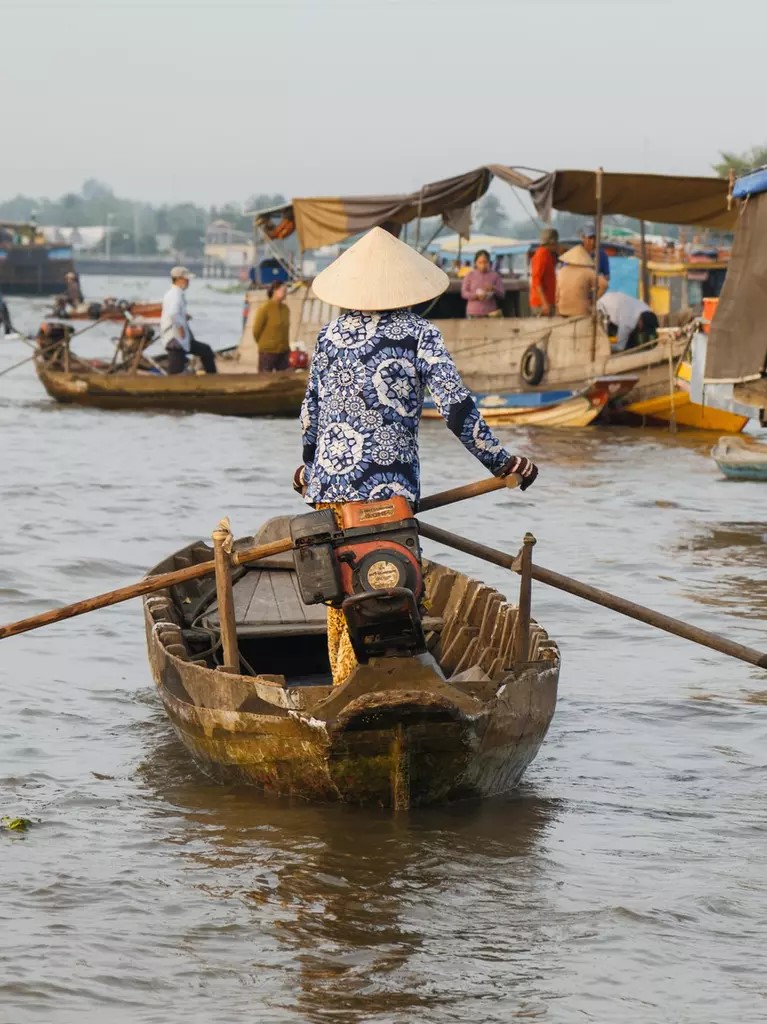
A first-time visitor might combine Hanoi's historic neighborhoods with a cruise around Ha Long Bay, continue toward the cultural heritage of central Vietnam, and then travel south toward Ho Chi Minh City and the Mekong Delta. Others may prioritize beaches such as Phu Quoc or explore mountainous destinations such as Ha Giang and Sapa.
The breadth of options is one of Vietnam's greatest tourism strengths, but it can also create a planning problem. Trying to see everything in a short trip can turn the journey into a sequence of airports, buses and hotel check-ins.
A more effective strategy is to build an itinerary around regions.
Travelers interested in history and culture can concentrate on Hanoi, Hue and Hoi An. Beach-focused visitors can prioritize the central coast or Phu Quoc. Adventure travelers may prefer the northern mountains, while those interested in rural life can explore the Mekong Delta.
This regional approach also has an economic dimension.
Vietnam's tourism industry benefits when visitors move beyond a handful of internationally famous attractions. Longer itineraries can distribute spending across accommodation providers, restaurants, transportation companies, guides, local markets and smaller communities.
That creates an opportunity for destinations outside the most heavily visited corridors to develop more specialized tourism products.
At the same time, increasing popularity creates pressure. Vietnam's best-known destinations already attract large numbers of domestic and international visitors, making crowd management and responsible tourism increasingly important.
Travelers can help reduce that pressure by considering less crowded alternatives. Vietnam has a growing range of destinations where visitors can experience mountains, beaches, cultural heritage and local communities without following the most heavily traveled routes.
Cost is another reason Vietnam remains attractive to international travelers. Compared with many major destinations in Asia, the country can offer relatively accessible accommodation, food and transportation, although costs vary considerably depending on travel style, season and destination.
The value proposition is particularly strong when visitors combine local restaurants, public transportation and independent experiences rather than relying exclusively on premium hotels and organized tours.
Yet affordability should not be confused with simplicity.
A low-cost trip still requires attention to transportation schedules, weather, entry requirements, local etiquette and the distances between destinations.
One of the biggest mistakes a first-time visitor can make is underestimating Vietnam's size.
The distance between Hanoi and Ho Chi Minh City means that a trip attempting to cover the entire country needs either significant time or domestic flights. Travelers who want a slower experience may be better served by concentrating on one or two regions.
Vietnam also rewards flexibility.
Weather can alter plans, transportation can take longer than expected, and some of the most memorable experiences may happen outside the original itinerary. Leaving room for spontaneous discoveries can make the journey more enjoyable.
The country's appeal ultimately comes from the combination of contrasts.
Modern cities exist alongside traditional communities. Mountain landscapes can be reached from tropical coastlines, while centuries-old architecture sits within rapidly developing urban environments. This mixture gives Vietnam a distinctive identity within Southeast Asia.
For the tourism industry, that diversity is a powerful competitive advantage. Vietnam can market itself simultaneously to beach travelers, food enthusiasts, history lovers, adventure seekers, families and luxury tourists.
For visitors, however, that variety means preparation matters.
Understanding regional weather, checking entry requirements, choosing transportation based on available time, respecting local customs and building an itinerary around realistic distances can dramatically improve the experience.
Vietnam is not a destination that needs to be rushed.
Its strongest tourism asset may be the ability to offer very different experiences within a single country. The travelers most likely to appreciate that advantage are those who plan around the country's geography rather than trying to compress it into a checklist.
News You Should See
2026 Nobel Medicine Prize Honors Scientists Behind Optogenetics Breakthrough
Oil Prices Edge Lower as Stronger Middle East Exports and G7 Reserves Ease Supply Concerns
Trump Offers U.S. Assistance to Russia After Death at Siberian Plague Research Institute
Trump Takes Economic Message to Nebraska as GOP Faces Rising Cost-of-Living Pressure
U.S. Appeals Court Weighs Trump Administration’s $2.6 Billion Harvard Funding Fight
U.S. Midterm Elections Begin With Resilient Jobs Market and Persistent Cost Pressures
Latest News
The 2026 Nobel Prize in Physiology or Medicine honors Karl Deisseroth, Peter Hegemann and Georg Nagel for pioneering research behind optogenetics and its impact on neuroscience.
Oil prices edged lower as stronger Middle Eastern exports and a planned G7 release of 100 million barrels eased immediate supply concerns, while Gulf security risks and the Strait of Hormuz kept markets alert.
President Donald Trump said the United States would help Russia if needed after a laboratory worker died at a Siberian plague research institute, as Russian authorities imposed precautionary quarantine measures.
Trump’s Nebraska campaign stop highlights rising fuel and grocery costs, beef prices and growing economic pressure on Republicans ahead of the November midterm elections.
A U.S. appeals court is reviewing the Trump administration’s effort to cut Harvard’s federal research funding, with more than $2.6 billion at stake.
The U.S. enters the 2026 midterm elections with unemployment at 4.2%, while higher living and energy costs create economic pressure for households and businesses.
US services growth eased in September as input prices climbed to their highest level since July 2022, with fuel costs, supply-chain disruptions and strong demand increasing pressure on businesses.
Rising Treasury yields are increasing U.S. borrowing costs as Washington manages record debt, persistent inflation and strong economic demand, narrowing its policy options.
A EGP 16 million corporate partnership will establish and equip a bone marrow transplant unit at Cairo’s Coptic Hospital, supporting access to specialized treatment for patients.