Venezuela’s La Guaira Housing Collapse Raises Questions Over Reconstruction and Safety
The destruction of public housing towers after June’s powerful earthquakes has exposed long-term risks in land selection, construction oversight and disaster planning.

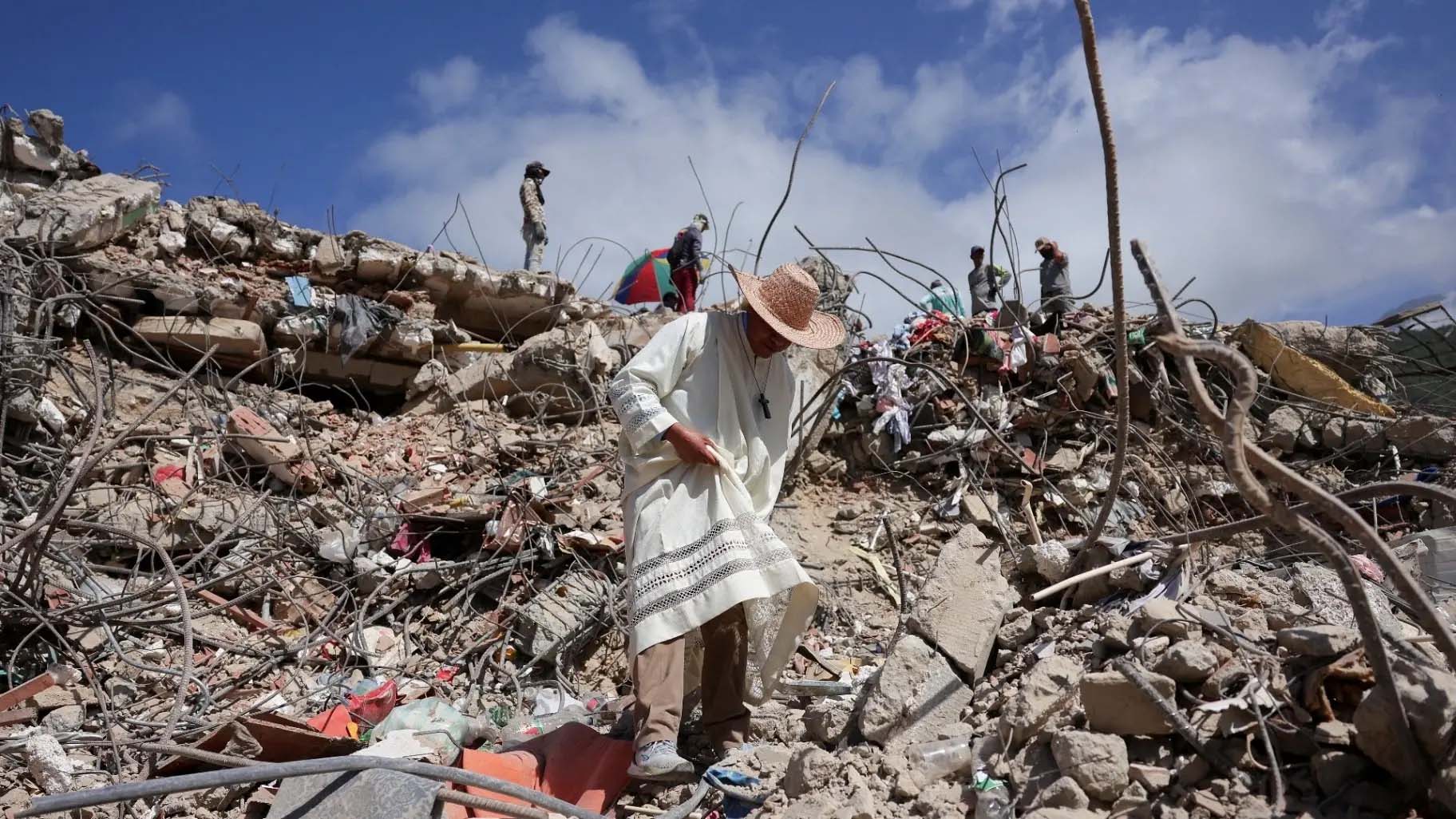
The destruction of public housing towers in Venezuela’s coastal state of La Guaira has turned a long-running housing strategy into a wider test of construction policy, disaster planning and the economics of reconstruction.
The immediate trigger was the pair of powerful earthquakes that struck Venezuela on June 24, measuring 7.2 and 7.5 in magnitude. At least 14 apartment towers in La Guaira collapsed, while the disaster killed more than 6,500 people and left more than 17,000 homeless, according to an Associated Press investigation published by The Washington Post.
The scale of the damage, however, cannot be understood solely through the intensity of the earthquakes. The investigation traces the vulnerability of the affected housing developments to decisions made after the devastating floods and mudslides of 2010, when more than 100,000 people were displaced across Venezuela.
The government responded with an accelerated public-housing program that placed thousands of apartments along the coastal strip of La Guaira. The area offered a practical answer to an urgent housing shortage, but its physical characteristics presented a difficult engineering environment. The land consisted largely of loose material deposited by earlier floods and mudslides, while the San Sebastian Fault runs offshore and beneath the state.
Those conditions made site selection a central component of the risk equation. Engineers and scientists had previously warned that the area’s history of flooding and landslides could increase the consequences of future earthquakes. The government nevertheless expanded housing construction there as part of the Great Housing Mission Venezuela, a flagship public program associated with the government of former President Hugo Chávez.
The construction program eventually produced 43 towers in La Guaira, 39 of them in Caraballeda. The developments provided homes to people who had been displaced by earlier disasters, giving the projects an immediate social and political value. But residents also reported basic operational problems after moving in, including unreliable water supplies, malfunctioning elevators and sanitation concerns.
The disaster has now shifted attention from the initial value of delivering housing quickly to the long-term cost of maintaining safe and resilient housing. The central question for reconstruction is no longer simply how many homes can be built, but where they should be built, what engineering standards should govern them and how those standards can be independently verified.
The earthquake itself also introduced an important technical factor. Researchers identified a near-fault pulse that delivered exceptionally strong and rapid movement to structures in the affected area. Buildings between 10 and 20 floors can be particularly vulnerable when their natural movement coincides with seismic waves, a phenomenon known as resonance. In such circumstances, structures can sway farther and for longer periods, placing additional stress on structural components.
Researchers from Stanford University and other institutions reconstructed the ground motion using security-camera footage after local seismic instruments failed to provide the necessary measurements. Their analysis found that eight buildings collapsed almost simultaneously in less than a second and identified the event as producing one of the largest documented ground motions. The study is under peer review for publication in The Seismic Record.
That finding adds an important qualification to the debate over construction responsibility. The extreme force of the earthquake was identified by researchers as the dominant factor in the scale of the destruction, but the investigation also found unresolved questions about building codes, soil studies, inspection records and construction materials.
Those unanswered questions matter economically because reconstruction decisions will determine the future cost of housing, infrastructure and investment in La Guaira. Building high-rise structures capable of resisting severe seismic forces requires more sophisticated engineering and higher construction costs. Experts cited in the investigation said the additional expense could make some coastal areas less attractive to both public developers and private investors.
The issue also creates a governance challenge. The Venezuelan government has not publicly released key documents including blueprints, soil studies and inspection records for the affected projects. Without detailed forensic analysis and transparent documentation, it becomes harder to distinguish the contribution of extreme natural forces from deficiencies in design, construction or oversight.
There are also commercial implications for the construction sector. A rebuilding program on the same scale would create demand for engineering firms, contractors, materials suppliers and infrastructure providers. At the same time, stricter seismic requirements could increase project costs and change which companies are able to compete for major public contracts.
The government has already begun clearing damaged structures and has announced plans to rebuild La Guaira, including the identification of land where new construction could begin. That decision places site selection and technical assessment at the center of the next phase.
For the public housing model, the experience also exposes a broader tension between speed and resilience. Rapid construction can address an immediate humanitarian need, but if engineering, inspection and maintenance systems do not keep pace, the initial savings can translate into much larger social and financial costs later.
The institutional reputation of Venezuela’s housing program is also tied to the reconstruction process. The towers were presented as symbols of the government’s ability to provide housing to people displaced by disasters. Their collapse has instead made construction quality, transparency and accountability central to public perceptions of the program.
The future of La Guaira will therefore depend on whether reconstruction is treated as a continuation of the previous housing model or as an opportunity to redesign it around seismic risk, land-use planning and stronger oversight. The economic calculation is more demanding than replacing the destroyed apartments: it requires weighing construction costs against long-term safety, maintenance and the potential consequences of another major disaster.
As rebuilding moves forward, the decisions made over land, engineering standards, procurement and independent inspection will determine whether the next generation of housing becomes more resilient or reproduces vulnerabilities that have now been exposed with devastating consequences.
News You Should See
2026 Nobel Medicine Prize Honors Scientists Behind Optogenetics Breakthrough
Oil Prices Edge Lower as Stronger Middle East Exports and G7 Reserves Ease Supply Concerns
Trump Offers U.S. Assistance to Russia After Death at Siberian Plague Research Institute
Trump Takes Economic Message to Nebraska as GOP Faces Rising Cost-of-Living Pressure
U.S. Appeals Court Weighs Trump Administration’s $2.6 Billion Harvard Funding Fight
U.S. Midterm Elections Begin With Resilient Jobs Market and Persistent Cost Pressures
Latest News
The 2026 Nobel Prize in Physiology or Medicine honors Karl Deisseroth, Peter Hegemann and Georg Nagel for pioneering research behind optogenetics and its impact on neuroscience.
Oil prices edged lower as stronger Middle Eastern exports and a planned G7 release of 100 million barrels eased immediate supply concerns, while Gulf security risks and the Strait of Hormuz kept markets alert.
President Donald Trump said the United States would help Russia if needed after a laboratory worker died at a Siberian plague research institute, as Russian authorities imposed precautionary quarantine measures.
Trump’s Nebraska campaign stop highlights rising fuel and grocery costs, beef prices and growing economic pressure on Republicans ahead of the November midterm elections.
A U.S. appeals court is reviewing the Trump administration’s effort to cut Harvard’s federal research funding, with more than $2.6 billion at stake.
The U.S. enters the 2026 midterm elections with unemployment at 4.2%, while higher living and energy costs create economic pressure for households and businesses.
US services growth eased in September as input prices climbed to their highest level since July 2022, with fuel costs, supply-chain disruptions and strong demand increasing pressure on businesses.
Rising Treasury yields are increasing U.S. borrowing costs as Washington manages record debt, persistent inflation and strong economic demand, narrowing its policy options.
A EGP 16 million corporate partnership will establish and equip a bone marrow transplant unit at Cairo’s Coptic Hospital, supporting access to specialized treatment for patients.