Vatican Showcases 100 Years of Papal Cars, Highlighting Mercedes-Benz Legacy
A new Vatican Museums exhibition brings together eight historic Mercedes-Benz vehicles, tracing how papal transportation evolved through changing demands for security, public engagement and environmental responsibility.

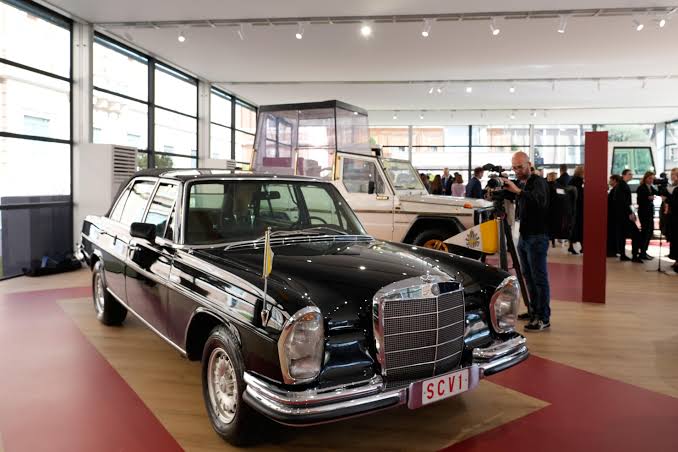
The Vatican is turning nearly a century of papal transportation into a showcase of automotive engineering, institutional heritage and changing public expectations. The exhibition “A Century of the Popemobile,” opening at the Vatican Museums on October 29, brings together eight historic Mercedes-Benz vehicles that served successive popes, illustrating how a specialized form of transport developed into a recognizable symbol of the Catholic Church.
The exhibition follows the evolution of papal vehicles from the first automobile delivered to Pope Pius XI in 1930 to more modern designs shaped by security requirements, public visibility and environmental concerns. Its significance extends beyond the vehicles themselves: it demonstrates how engineering decisions can become closely associated with an institution's identity and its relationship with the public.
Mercedes-Benz's relationship with the Vatican offers a distinctive example of long-term brand association. While the vehicles were designed for a specific institutional purpose, their appearances during papal visits and public celebrations gave them visibility well beyond the conventional automotive market. The partnership connects the manufacturer's engineering reputation with a centuries-old institution whose global audience spans countries, cultures and generations.
The earliest vehicle featured in the exhibition is a Mercedes-Benz Nürburg 460 presented to Pope Pius XI on May 23, 1930. Its silk-brocade armchair and carefully finished wood and metal details reflected the formal character of papal transportation at the time. The vehicle was specially prepared for the pope, establishing an early precedent for tailoring automotive design to the requirements of an individual office rather than relying solely on standard production specifications.
That approach changed as the priorities of papal travel evolved. A vehicle presented to Pope John XXIII in 1960, the Mercedes-Benz 300 d Landaulet, featured removable rear side windows. The design made it easier for the pope to reach out to people along his route, introducing a more direct relationship between the vehicle's physical configuration and its public-facing role.
A further shift came in 1980, when Mercedes-Benz developed the 230 G for Pope John Paul II's visit to Germany. Its elevated transparent dome provided protection while preserving visibility for large crowds gathered to see the pontiff. The design reflected a practical challenge that continues to define the popemobile: balancing security with the public's ability to see and interact with the person inside.
These changes reveal how specialized vehicle design can respond to requirements that differ substantially from those of ordinary passenger cars. Safety, visibility, accessibility and comfort must operate together, while the vehicle also needs to function in crowded public settings and during formal ceremonies. The popemobile therefore illustrates a form of engineering in which practical performance and symbolic value are inseparable.
The latest stage in that evolution involves environmental considerations. Pope Leo XIV recalled the electric popemobile presented to his predecessor, Pope Francis, in line with Francis' environmental priorities. The shift toward electric mobility places the Vatican's transportation tradition within a wider automotive transformation, as manufacturers and institutional customers examine how new technologies can support lower-emission operations.
During a meeting with senior Mercedes-Benz executives, Leo XIV thanked the company for its partnership with the Holy See and highlighted the role automotive innovation has played in the development of papal travel. He also encouraged the manufacturer to put technological progress at the service of human dignity, care for the environment and the common good.
For Mercedes-Benz, the exhibition provides an opportunity to demonstrate the historical depth of its relationship with a globally recognized institution. The vehicles represent different generations of design and engineering, allowing visitors to see how changes in materials, bodywork, passenger protection and propulsion reflect broader developments in automotive technology. Such a collection also reinforces the value of preserving corporate and industrial heritage as part of a brand's public identity.
The exhibition has a cultural and tourism dimension as well. By bringing together historic vehicles associated with successive popes, the Vatican Museums create a point of interest for visitors drawn to religious history, design, engineering and the evolution of public ceremonies. The cars provide a tangible link between technological development and the ways institutions communicate with their audiences.
The longer-term significance lies in what the collection reveals about the relationship between innovation and purpose. Across nearly a century, papal vehicles have moved from formal, specially appointed automobiles toward designs that place greater emphasis on visibility and interaction, with electric mobility introducing a new environmental consideration. The underlying task, however, remains consistent: enabling the pope to travel safely while maintaining a visible connection with the faithful.
As the automotive industry continues to adapt to electrification and changing expectations around sustainability, the popemobile's history offers a focused example of how technology can evolve without losing its institutional meaning. For the Vatican, the vehicles document changes in papal mobility. For Mercedes-Benz, they illustrate a longstanding engineering partnership. For visitors, they show how a car can become more than transportation when its design, function and public role converge.
News You Should See
Man City Faces Calls for Further Premier League Investigation Over Post-2018 Finances
Apple Maps Blurs Satellite Images of Key U.S. Military and NASA Sites
Who Is Delorean Bijon Brandon? The Case of Christina Downer’s Disappearance and Suspected Murder
From Siskel and Ebert to The Beatles: Celebrating Entertainment Legends
Olive Oil Before Carbs: Could Timing Influence Blood Sugar?
Jack Hughes Leads Devils to Shootout Victory, Ending Oilers’ Winning Run
Latest News
Premier League executives are debating a possible new investigation into Manchester City's finances after 2018, while the club appeals a verdict involving 114 financial-rule breaches.
Apple Maps has blurred satellite imagery of several U.S. military and NASA sites, including Cape Canaveral and Area 51. The reason for the changes remains unclear.
Delorean Bijon Brandon, 41, has been charged in connection with Christina Downer’s suspected murder after her disappearance in September 2025.
Chicago will honor film critics Gene Siskel and Roger Ebert with life-sized bronze statues, celebrating a partnership that reshaped popular film criticism.
Researchers are examining whether taking olive oil before glucose can slow stomach emptying and influence blood sugar levels, based on promising findings in mice.
Jack Hughes scores twice and adds an assist as the New Jersey Devils defeat the Edmonton Oilers 4-3 in a shootout, ending their three-game winning streak.
Researchers found that physical contact with dogs after an initial stressful task was associated with lower stress levels during a second challenge.
Researchers analyzed genetic data from 2.8 million people and identified 48 previously unknown genomic regions associated with Alzheimer's disease risk.
Screen-free schools are gaining interest among Silicon Valley tech families, raising questions about children's digital exposure and the role of technology in education.