US-Ukraine Relations Face a Strategic Test as Trump’s Russia Policy Shifts
Washington’s rejection of new sanctions against Moscow and disruptions to Ukraine’s satellite support are raising concerns over battlefield capabilities, Western unity and the future of US security commitments.

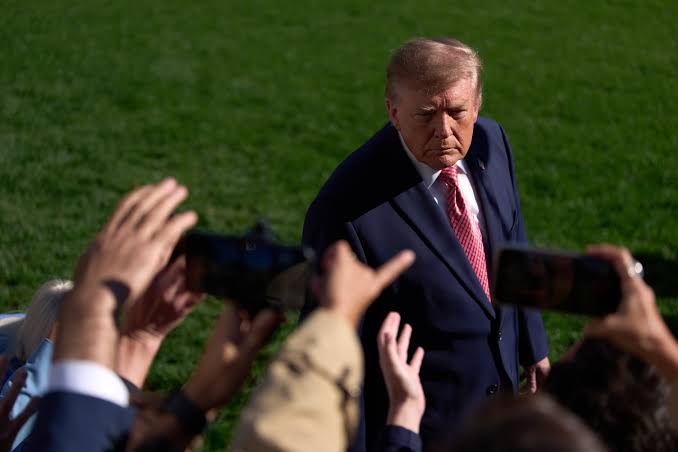
The relationship between Washington and Kyiv is entering a period of heightened uncertainty as President Donald Trump’s approach to Russia raises questions about the durability of American support for Ukraine. The combination of resistance to additional sanctions against Moscow, deteriorating relations with Ukrainian President Volodymyr Zelenskyy and reported disruptions to satellite support for Ukrainian drones has consequences that extend beyond diplomatic disagreements.
At stake is not simply the tone of relations between two presidents. The policy direction emerging from Washington could influence Ukraine’s ability to sustain its military operations, the calculations of European allies and Russia’s assessment of the risks associated with continuing the war.
Policy Shifts Could Alter the Strategic Balance
The refusal to pursue new sanctions against Russia represents a significant point of contention in the Western response to the conflict. Economic restrictions have been an important instrument for increasing pressure on Moscow, alongside military assistance to Ukraine and diplomatic coordination among the United States and its partners.
A decision to withhold additional sanctions does not, by itself, establish that existing restrictions will be lifted. However, it can affect perceptions of Western resolve, particularly if Russian leaders interpret the move as evidence that Washington is becoming less willing to impose further costs.
For Ukraine, the concern is that a softer American approach could reduce the leverage available in negotiations while allowing Moscow greater room to calculate its military and diplomatic options. For European governments, the development creates a difficult strategic question: whether to compensate for a less predictable American position through stronger coordination, additional support or a reassessment of their own defense priorities.
Technology Support Has Direct Military Consequences
The reported disruption of satellite support for Ukrainian drones highlights another dimension of the conflict. Modern battlefield operations increasingly depend on communications networks, navigation capabilities, intelligence systems and the rapid exchange of information.
Drones have become central to surveillance, targeting and operational flexibility. Their effectiveness, however, depends on more than the availability of aircraft. Reliable communications and access to supporting infrastructure can determine whether these systems remain useful under battlefield conditions.
Any interruption to critical satellite services can therefore create operational uncertainty, complicate coordination and force military planners to adapt. The broader lesson is that technological dependence has become a strategic vulnerability for countries whose defense capabilities rely on infrastructure controlled or influenced by external partners.
For Kyiv, diversifying technical support and strengthening cooperation with European partners could become increasingly important. Such measures would require resources, coordination and time, and they would not necessarily replace every capability previously available through American-linked systems.
Personal Diplomacy and Institutional Commitments
Trump’s strained relationship with Zelenskyy adds another layer of uncertainty. The American president has repeatedly expressed a more favorable personal relationship with Russian President Vladimir Putin, while his public criticism of the Ukrainian leader has intensified concerns in Kyiv about Washington’s long-term intentions.
Presidential relationships can influence negotiations, but security partnerships also depend on institutional decisions, military planning, intelligence cooperation and legislative support. The durability of the US-Ukraine relationship will therefore depend on whether political tensions translate into lasting changes in policy and operational assistance.
Domestic political pressure could also affect the administration’s room for maneuver. Bipartisan criticism of its approach to Ukraine creates a potential constraint, while Trump’s previous shifts in position demonstrate that the relationship remains subject to change.
This leaves Kyiv confronting an important strategic challenge: maintaining engagement with Washington while preparing for the possibility that American support may become less predictable.
Implications for European Security
The consequences of a weakening US-Ukraine partnership would not stop at Ukraine’s borders. European governments have treated the conflict as a central test of regional security, deterrence and the principles governing the use of force across national borders.
If Washington becomes less committed to supporting Kyiv, European countries could face greater pressure to provide military resources, expand defense production and improve coordination. These adjustments would carry financial and political costs, particularly where governments must balance security requirements against domestic spending priorities.
The issue also affects the credibility of wider Western partnerships. Allies observing changes in American policy may reconsider how much they can rely on Washington during future security crises. Conversely, a more coordinated European response could strengthen the continent’s capacity to act independently, although developing that capacity would take time.
The Economic and Diplomatic Stakes
The conflict also has an economic dimension. Sanctions policy, defense spending, energy security and the cost of sustaining military assistance are interconnected elements of the wider confrontation.
For businesses and investors, uncertainty surrounding the war’s trajectory can influence assessments of regional risk, infrastructure exposure, energy markets and long-term investment conditions. A credible diplomatic process could eventually improve the outlook for reconstruction and economic recovery, but a deterioration in security conditions would complicate those prospects.
These outcomes remain contingent rather than certain. The available developments do not establish that a peace agreement is imminent or that a change in sanctions policy will automatically produce a particular market response. The economic consequences will depend on subsequent decisions by Washington, Moscow, Kyiv and European governments.
What Comes Next
The direction of US policy will be shaped by several factors: the administration’s willingness to maintain practical support for Ukraine, the scope of any future negotiations with Russia, the response of Congress and the ability of European allies to coordinate their positions.
Trump’s approach remains capable of shifting, which means the current deterioration in relations should not be treated as an irreversible break. Nevertheless, uncertainty itself has strategic consequences. It complicates planning for Ukraine, challenges European policymakers and gives Moscow additional reasons to reassess the cohesion of its opponents.
The central test for Washington is whether it can pursue diplomacy without undermining the credibility of its security commitments. For Kyiv and its European partners, the priority is to preserve operational resilience while preparing for a wider range of possible American policy choices. The outcome will help determine not only the next phase of the war, but also the future balance of responsibility within the Western alliance.
News You Should See
P&G Raises Fiscal 2027 Cost Warning as Oil and Freight Expenses Threaten Profits
Chemical Tank Leak in Toledo Triggers Evacuations and Industrial Disruptions
Judge Sets December 11 Deadline for Trump Deposition in BBC Defamation Case
Iowa Senate Race Tests How Far Republicans Can Separate Themselves From Trump
California State Workers Strike Over Pay, Healthcare and Return-to-Office Rules
Streaming’s October Showdown: How Disney, Netflix and Major Entertainment Brands Compete for Audiences
Latest News
Procter & Gamble expects commodity, energy and transportation costs to reduce fiscal 2027 profit by $1.4 billion. Quarterly sales rose 4% to $23.28 billion, beating analyst expectations.
A ruptured chemical tank in Toledo, Ohio, prompted evacuations, school closures and an industrial shutdown. Authorities have reduced the restricted zone as the release slows and cleanup preparations continue.
A federal judge has ordered Donald Trump to give a deposition by December 11, 2026, in his $10 billion lawsuit against the BBC, with possible sanctions for noncompliance as the discovery deadline approaches.
Iowa’s 2026 Senate race pits Republican Ashley Hinson, balancing Trump support with economic concerns, against Democrat Josh Turek, who emphasizes bipartisanship amid rising campaign spending.
Thousands of California state workers struck on October 21 over a proposed three-year pay increase, healthcare costs and a four-day office attendance requirement as contract negotiations continued.
October 2026 brings major entertainment releases across Disney+, Netflix, HBO Max, Hulu, Prime Video and Peacock. Explore how familiar franchises, exclusive programming, new music and video games shape competition for streaming audiences.
Saudia advises travelers to book flights through Al Qassim Airport for Riyadh connections, offering free hourly shuttle buses in both directions until further notice.
An AP-NORC poll shows Democratic confidence in accurate vote counting falling to 55%, while Republican confidence rises to 38%, highlighting election integrity concerns ahead of the 2026 US midterms.
Donald Trump campaigns in North Carolina ahead of the November 2026 midterms as low approval ratings, rising fuel costs, Democratic early-voting gains and funding disparities challenge Republican efforts to retain control of Congress.