US Stocks Move Toward Records as Slower Hiring Eases Fed Rate Fears
Wall Street closes higher as softer U.S. hiring data reduces expectations of another Federal Reserve rate hike, lifting major indexes and supporting technology stocks.

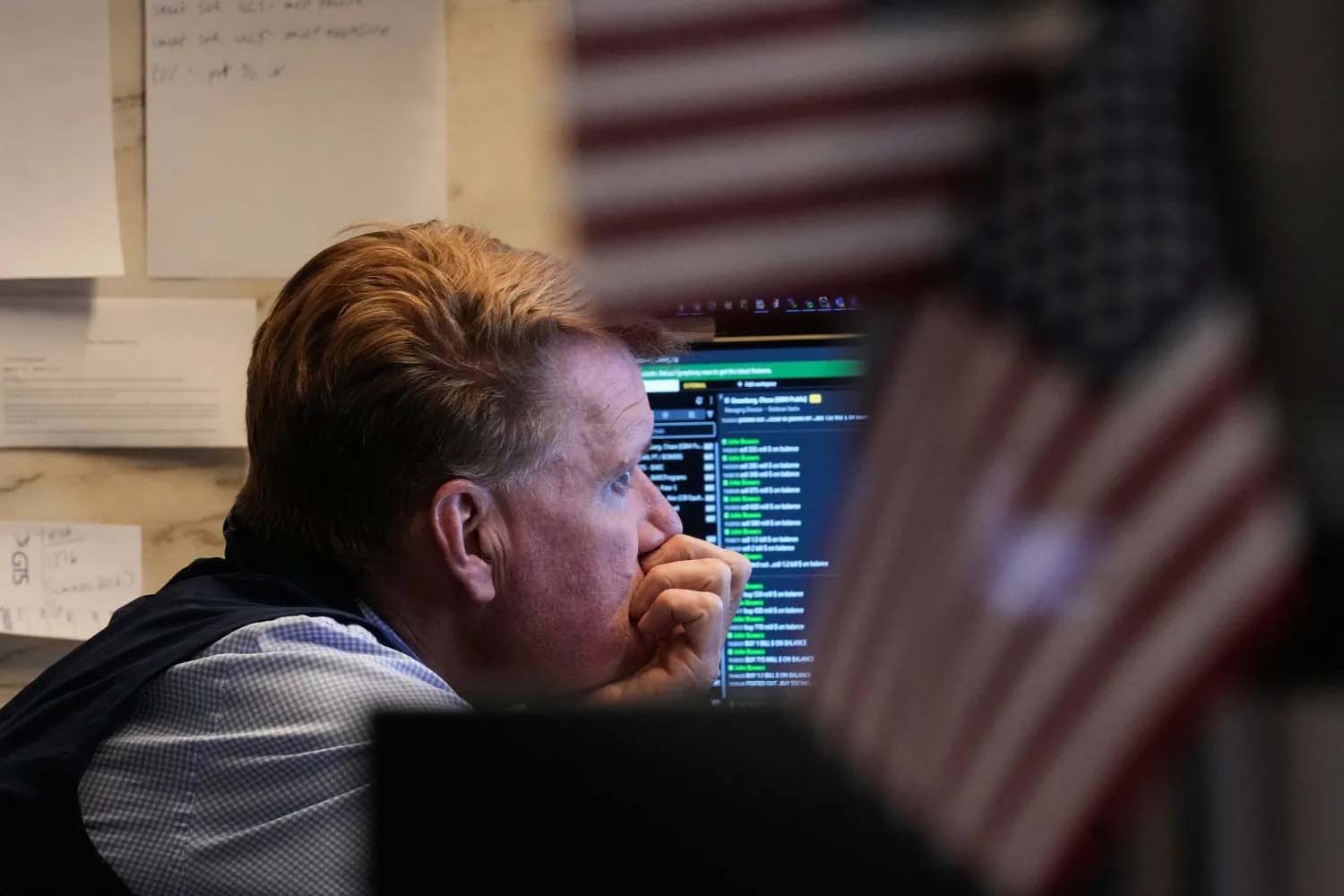
U.S. equities entered the final stretch of the trading week with renewed momentum, as fresh labor-market data shifted investor attention back toward monetary policy and the cost of capital. The move pushed the major U.S. indexes closer to their record levels while reinforcing the market’s sensitivity to even modest changes in employment conditions.
The S&P 500 gained 0.7% on Friday to close at 7,722.72, leaving the benchmark less than 1% below its all-time high. The Dow Jones Industrial Average added 0.5%, or 250.40 points, ending at 51,176.96. The Nasdaq composite advanced 1.2% to 27,190.86, while the Russell 2000 climbed 0.9% to 2,832.90.
The immediate catalyst was a report showing that U.S. employers slowed their hiring during September. For financial markets, the significance of the data extended beyond the labor market itself. A softer employment picture can reduce concerns that strong economic activity will continue to generate additional inflationary pressure, potentially giving the Federal Reserve more room to avoid another interest-rate increase.
That relationship between employment, inflation and borrowing costs remains central to corporate planning. Higher interest rates generally increase financing expenses for companies and can place pressure on equity valuations, particularly for businesses whose expected growth depends heavily on future earnings. A reduced probability of another rate increase therefore changes the financial backdrop for companies across sectors, even without any immediate change in corporate fundamentals.
The market response also highlighted the continuing importance of Treasury yields. Government bond yields initially declined after the employment report, before recovering part of the move as oil prices regained most of their earlier losses. The behavior of both yields and energy prices remains important because they influence inflation expectations, financing conditions and the valuation framework used by investors.
Technology shares benefited particularly strongly from the shift in expectations, reflected in the Nasdaq’s 1.2% advance. The performance reinforces the market’s continuing preference for growth-oriented companies when the interest-rate outlook becomes less restrictive. At the same time, the broader gains in the Russell 2000 indicate that the move was not limited to the largest technology companies, with smaller U.S. businesses also participating in the advance.
The daily gains, however, should be viewed within the wider performance picture. For the week, the S&P 500 declined 0.3% and the Dow lost 1.3%, while the Nasdaq gained 0.5%. The Russell 2000 slipped 0.2%. The figures show that Friday’s rally improved sentiment but did not fully reverse the pressure experienced earlier in the week.
The longer-term performance remains substantially stronger. Since the beginning of the year, the Nasdaq has gained 17%, followed by the Russell 2000 at 14.1%, the S&P 500 at 12.8% and the Dow at 6.5%. Those gains place the latest market move within a broader period of strong equity performance rather than presenting it as an isolated rebound.
For corporate America, the current market environment creates a mixed strategic picture. Easier expectations around monetary policy can support investment, financing and equity valuations, while a cooling labor market may signal that businesses are becoming more cautious about hiring and expansion. Companies therefore face the challenge of balancing growth plans with the possibility that economic momentum is gradually moderating.
The next phase of market direction is likely to remain closely tied to incoming economic data. Investors will be watching whether employment conditions continue to cool without triggering a sharper deterioration in economic activity, while also tracking inflation, energy prices and Treasury yields. For companies, that means financial conditions may remain favorable compared with a more aggressive tightening scenario, but the durability of the rally will still depend on how earnings and economic fundamentals develop.
Friday’s advance therefore represents more than a one-day rise in the major indexes. It reflects the market’s ongoing attempt to recalibrate valuations around the expected path of U.S. monetary policy, with labor-market data playing a central role in determining how investors assess the cost of capital and the prospects for corporate growth.
News You Should See
2026 Nobel Medicine Prize Honors Scientists Behind Optogenetics Breakthrough
Oil Prices Edge Lower as Stronger Middle East Exports and G7 Reserves Ease Supply Concerns
Trump Offers U.S. Assistance to Russia After Death at Siberian Plague Research Institute
Trump Takes Economic Message to Nebraska as GOP Faces Rising Cost-of-Living Pressure
U.S. Appeals Court Weighs Trump Administration’s $2.6 Billion Harvard Funding Fight
U.S. Midterm Elections Begin With Resilient Jobs Market and Persistent Cost Pressures
Latest News
The 2026 Nobel Prize in Physiology or Medicine honors Karl Deisseroth, Peter Hegemann and Georg Nagel for pioneering research behind optogenetics and its impact on neuroscience.
Oil prices edged lower as stronger Middle Eastern exports and a planned G7 release of 100 million barrels eased immediate supply concerns, while Gulf security risks and the Strait of Hormuz kept markets alert.
President Donald Trump said the United States would help Russia if needed after a laboratory worker died at a Siberian plague research institute, as Russian authorities imposed precautionary quarantine measures.
Trump’s Nebraska campaign stop highlights rising fuel and grocery costs, beef prices and growing economic pressure on Republicans ahead of the November midterm elections.
A U.S. appeals court is reviewing the Trump administration’s effort to cut Harvard’s federal research funding, with more than $2.6 billion at stake.
The U.S. enters the 2026 midterm elections with unemployment at 4.2%, while higher living and energy costs create economic pressure for households and businesses.
US services growth eased in September as input prices climbed to their highest level since July 2022, with fuel costs, supply-chain disruptions and strong demand increasing pressure on businesses.
Rising Treasury yields are increasing U.S. borrowing costs as Washington manages record debt, persistent inflation and strong economic demand, narrowing its policy options.
A EGP 16 million corporate partnership will establish and equip a bone marrow transplant unit at Cairo’s Coptic Hospital, supporting access to specialized treatment for patients.