U.S. Plans Tariffs of 25%-40% on Seven Countries Starting August 1, Warning of Doubling Rates
Tariff Deadline Extended as U.S. Warns Retaliation Could Double Rates, Impacting Trade and Economy

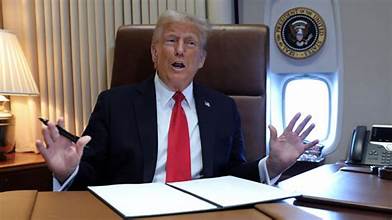
WASHINGTON — On July 7, U.S. President Donald Trump posted seven letters on Truth Social addressed to leaders of South Korea, South Africa, Japan, Malaysia, Myanmar, Kazakhstan, and Laos. The letters informed these nations that the United States will implement tariffs ranging from 25% to 40% on their goods starting August 1. Trump warned that if these countries respond with increased tariffs on U.S. products, the U.S. tariffs would double.
White House Press Secretary Karoline Leavitt indicated at a press briefing that about a dozen other countries would receive similar tariff warnings soon. The August 1 deadline effectively extends the timeframe for these countries to negotiate trade deals with the U.S., with further deadline extensions possible.
The announced tariff rates largely align with levels first announced in April, dashing hopes that the tariffs would be lower than previously threatened. Should all tariffs be implemented, analysts expect higher U.S. inflation, slower economic growth, and delayed interest rate cuts by the Federal Reserve.
Countries not yet receiving letters may face tariff hikes on July 9 as originally planned, but Washington could delay or suspend increases for strategic reasons. The U.S. appears focused on imposing higher tariffs on countries with which it has large trade deficits, such as South Korea and Japan.
Formal executive orders signed by President Trump over the next two days will clarify tariff pauses on South Korea and Japan, helping to reduce uncertainty.
The specific tariff rates are set at 25% for Kazakhstan, Malaysia, South Korea, and Japan; 30% for South Africa; and 40% for Laos and Myanmar. Notably, Laos’ tariff rate was reduced from the previously announced 48% to 40%.
News You Should See
Seattle Communities Celebrate Holiday Season with Local Markets and Cultural Activities
Nvidia's AI Dominance Faces Conflicting Expectations as Industry Demand Accelerates
Signal Strengthens Mobile Privacy Protections Amid Growing AI Surveillance Concerns
AI Agents Transform Messaging Apps Into Everyday Digital Assistants
Roma Crush Parma 5-1 as Donyell Malen Scores Four Goals
Vivo Prepares Three New Budget Smartphones with 6,500mAh Batteries and Updated Features
Latest News
Explore holiday markets, handmade gifts, live music, and cultural events in Shoreline and Lake Forest Park, Washington, on November 22.
Nvidia faces contrasting industry expectations as AI demand grows, with its financial performance and leadership shaping the future of computing.
Signal introduces mobile screenshot restrictions on Android and iOS as concerns grow over AI-powered surveillance and digital privacy.
AI agents are transforming messaging platforms by helping users organize daily activities, plan travel, manage work, and complete everyday tasks.
Donyell Malen scores four goals as Roma defeat Parma 5-1, while Lazio beat Lecce 3-0 in another important Serie A result.
Vivo's upcoming budget phones reportedly feature 6,500mAh batteries, 6.74-inch displays and different camera and charging specifications.
Carlos Espi scores a late winner as Real Madrid defeat Celta Vigo 2-1, despite Kylian Mbappé missing a penalty.
Google Pixel 11 reportedly features the Tensor G6 processor, 256GB storage and 25W wireless charging, alongside familiar camera and display features.
Felix Nmecha plays a crucial role as Borussia Dortmund defeat Borussia Mönchengladbach, strengthening their Bundesliga campaign.