U.S. Offers 40 Million Barrels From Strategic Reserve as Oil Market Faces Supply Pressure
The latest Strategic Petroleum Reserve exchange completes Washington’s share of a global emergency response while exposing tighter limits on U.S. oil-stock flexibility.

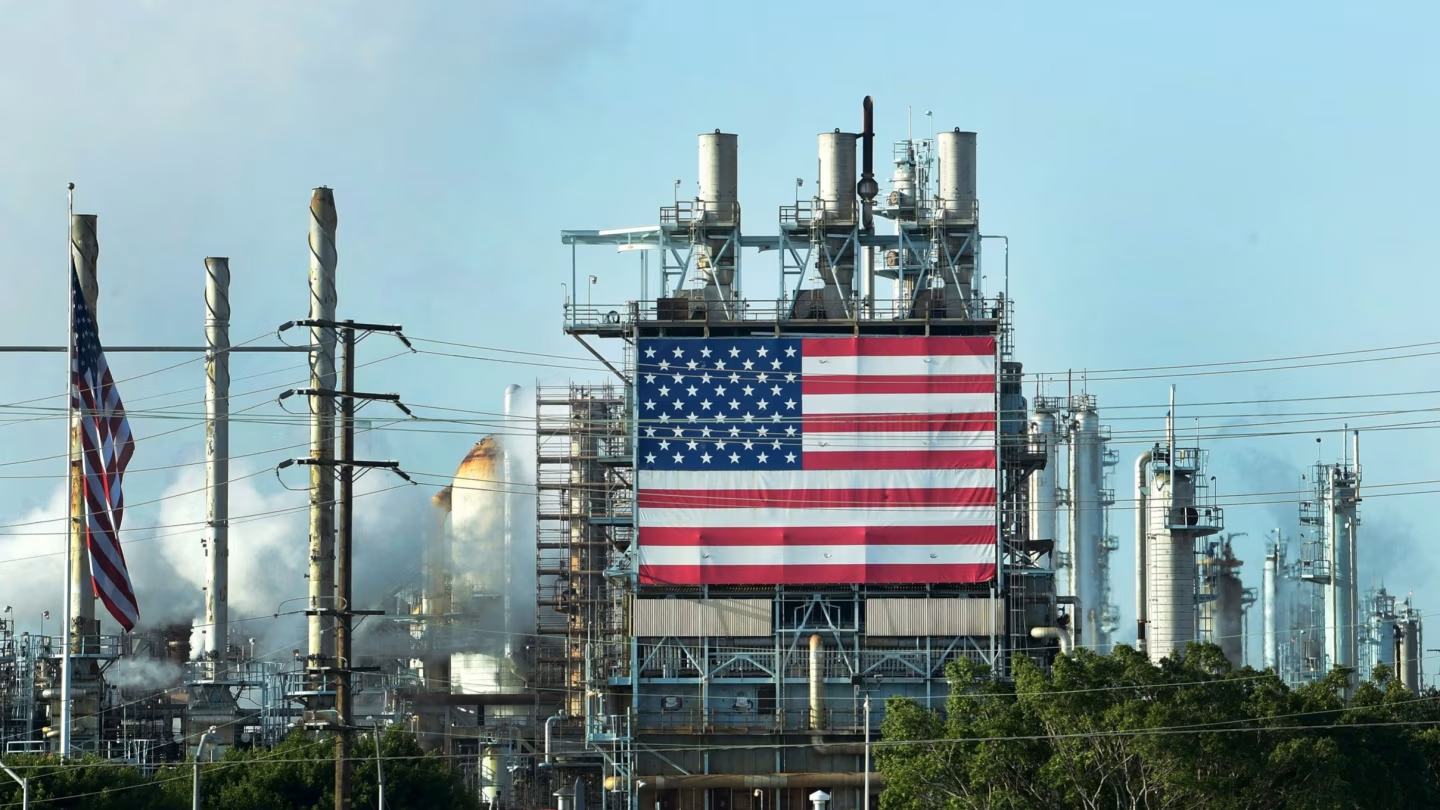
The United States is moving up to 40 million barrels of crude oil from its Strategic Petroleum Reserve into the commercial market through an exchange program, completing the American portion of a broader international effort to cushion the energy system against supply disruptions.
The decision gives energy companies another source of near-term crude at a time when fuel costs remain elevated. Unlike an outright sale, however, the program requires participating companies to return the borrowed oil with additional barrels, turning the operation into a mechanism designed to provide immediate liquidity without permanently transferring the reserve to the market. Companies have until October 6 to submit proposals, with deliveries scheduled for November and December.
The scale of the transaction is significant because Washington originally committed to provide 172 million barrels from the SPR as part of a coordinated 400-million-barrel release involving about 30 International Energy Agency member countries. The new 40-million-barrel offer represents the final U.S. tranche under that commitment. Earlier efforts to place the same volume attracted limited commercial interest, with companies agreeing to borrow only about 500,000 barrels in June.
From a market perspective, the program reflects a delicate balance between short-term supply management and long-term energy security. The SPR has fallen below 284 million barrels, its lowest level since 1982. The latest exchange could push inventories closer to the statutory threshold of 252.4 million barrels below which routine, smaller drawdowns are restricted, although emergency releases remain legally possible.
That inventory position changes the strategic value of every additional barrel released. The reserve is designed to give Washington a buffer during major supply disruptions, but repeated drawdowns reduce the volume immediately available for a future crisis. At the same time, the exchange structure allows the government to seek replenishment with a premium, rather than simply replacing every barrel one-for-one. The Energy Department says earlier exchanges achieved returned-barrel premiums of up to 25%, while the current program allows premiums of up to 24%.
The commercial rationale is closely connected to fuel prices. Reuters reported that U.S. gasoline prices were around $4.45 a gallon and diesel prices around $6.50, with gasoline up almost 50% and diesel about 70% since the conflict with Iran began. Those increases raise operating costs for transportation, logistics, agriculture and other fuel-intensive industries, making crude availability an important factor in corporate cost management and consumer prices.
The initiative also has an international dimension. U.S. Energy Secretary Chris Wright said the United States and Japan had fulfilled their commitments under the coordinated release, while several European participants had released only part of the crude and petroleum products they had pledged. The White House has separately encouraged European countries to draw down emergency diesel inventories as policymakers look for additional ways to relieve pressure on fuel markets.
For energy companies, the structure creates a temporary supply opportunity rather than a permanent change in crude ownership. Companies must assess the value of securing additional barrels now against the obligation to return crude later with a premium. That makes the program particularly relevant to refiners and other market participants managing inventory, procurement costs and exposure to volatile energy prices.
The broader strategic question is what happens after the immediate supply pressure eases. The Department of Energy says the borrowed crude will be returned beginning within the longer-term replenishment cycle, with full repayment not expected until late 2028. The timing means the current intervention could influence the commercial energy market well beyond the initial delivery period, while the reduced SPR inventory remains an important part of the U.S. energy-security equation.
The latest move therefore serves two purposes at once: it adds crude to a market facing supply constraints and tests a reserve-management model based on temporary exchanges rather than permanent sales. Its immediate effect will depend on how much oil companies actually request, while its longer-term significance will depend on the pace of SPR replenishment and the evolution of global supply disruptions.
News You Should See
2026 Nobel Medicine Prize Honors Scientists Behind Optogenetics Breakthrough
Oil Prices Edge Lower as Stronger Middle East Exports and G7 Reserves Ease Supply Concerns
Trump Offers U.S. Assistance to Russia After Death at Siberian Plague Research Institute
Trump Takes Economic Message to Nebraska as GOP Faces Rising Cost-of-Living Pressure
U.S. Appeals Court Weighs Trump Administration’s $2.6 Billion Harvard Funding Fight
U.S. Midterm Elections Begin With Resilient Jobs Market and Persistent Cost Pressures
Latest News
The 2026 Nobel Prize in Physiology or Medicine honors Karl Deisseroth, Peter Hegemann and Georg Nagel for pioneering research behind optogenetics and its impact on neuroscience.
Oil prices edged lower as stronger Middle Eastern exports and a planned G7 release of 100 million barrels eased immediate supply concerns, while Gulf security risks and the Strait of Hormuz kept markets alert.
President Donald Trump said the United States would help Russia if needed after a laboratory worker died at a Siberian plague research institute, as Russian authorities imposed precautionary quarantine measures.
Trump’s Nebraska campaign stop highlights rising fuel and grocery costs, beef prices and growing economic pressure on Republicans ahead of the November midterm elections.
A U.S. appeals court is reviewing the Trump administration’s effort to cut Harvard’s federal research funding, with more than $2.6 billion at stake.
The U.S. enters the 2026 midterm elections with unemployment at 4.2%, while higher living and energy costs create economic pressure for households and businesses.
US services growth eased in September as input prices climbed to their highest level since July 2022, with fuel costs, supply-chain disruptions and strong demand increasing pressure on businesses.
Rising Treasury yields are increasing U.S. borrowing costs as Washington manages record debt, persistent inflation and strong economic demand, narrowing its policy options.
A EGP 16 million corporate partnership will establish and equip a bone marrow transplant unit at Cairo’s Coptic Hospital, supporting access to specialized treatment for patients.