US Job Openings Fall in August as Labor Demand Cools
US job openings declined by 256,000 in August as employer demand weakened, while relatively low layoffs indicated that the labor market remained resilient.

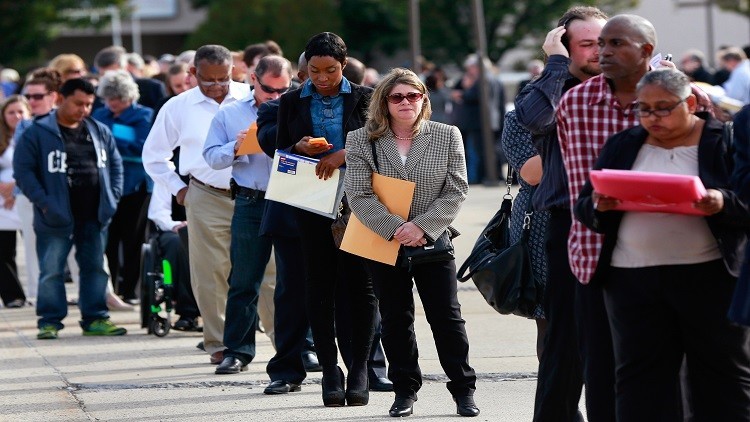
The U.S. labor market entered another phase of gradual adjustment in August as employers reduced the number of positions they were seeking to fill. Job openings fell by 256,000 to about 7.079 million at the end of the month, according to the Labor Department's Bureau of Labor Statistics.
The decline is important because it points to a moderation in employer demand rather than a sudden wave of job losses. Layoffs remained relatively limited, suggesting that companies are still holding on to workers even as they become more cautious about adding new positions.
That distinction is central to understanding the current condition of the American economy. A labor market can weaken without immediately producing a sharp increase in unemployment if businesses respond first by reducing recruitment. The August figures appear consistent with that type of adjustment, with fewer opportunities available to job seekers but no evidence in the report of an abrupt deterioration in employment conditions.
For financial markets, the direction of job openings carries significance because labor demand is closely linked to expectations for monetary policy. The Federal Reserve monitors employment conditions alongside inflation and other economic indicators when assessing the appropriate stance of interest rates. A sustained reduction in vacancies could indicate that earlier monetary tightening is gradually restraining business activity and hiring intentions.
The implications for inflation are more complex. When employers compete aggressively for workers, wage pressures can remain elevated, potentially adding to broader price pressures. A cooling labor market may eventually reduce that pressure. But policymakers also face the risk that a labor market slowdown could become too pronounced, weakening household incomes and consumer spending.
This creates a delicate balance for the U.S. economy. Businesses appear to be moving more cautiously on hiring, while their relatively limited layoffs suggest that existing employees remain valuable. The result is a labor market that is becoming less tight without yet showing the characteristics of a major employment contraction.
The change also has different consequences for companies and households. For employers, weaker hiring demand can reduce recruitment costs and give businesses greater flexibility after a period in which worker shortages increased competition for talent. Companies may have more room to manage payroll growth without aggressively competing for new employees.
For workers, the picture is less favorable. A smaller pool of vacancies can make job searches more competitive, particularly for people attempting to change employers or enter new industries. If businesses maintain a cautious approach to expansion, the reduction in available positions could become more visible in hiring figures over time.
The August report should therefore be viewed as part of a wider collection of labor-market signals rather than as evidence of a downturn on its own. Payroll growth, unemployment, wage gains and other employment measures will help determine whether the decline in vacancies represents a controlled normalization or the beginning of a more substantial slowdown.
The broader economic significance lies in the direction of the trend. The U.S. labor market has remained comparatively resilient, but the reduction in available jobs indicates that the exceptional tightness seen during earlier periods is continuing to ease. That shift could help policymakers manage inflation, but it also increases the importance of monitoring whether weaker labor demand eventually translates into higher unemployment.
For investors, businesses and policymakers, the August data consequently reinforce a message of moderation. The labor market is cooling, but it has not yet entered a phase that clearly signals widespread employment stress. The coming months will determine whether companies simply maintain a more selective approach to hiring or begin cutting employment more broadly.
That distinction will be critical for the economic outlook. A gradual normalization could allow inflationary pressures to ease without seriously damaging employment, while a faster decline in labor demand would raise concerns about consumer spending, corporate expansion and overall economic momentum. The latest job-openings data provide another indication that the U.S. economy is moving closer to that policy-sensitive point.
News You Should See
2026 Nobel Medicine Prize Honors Scientists Behind Optogenetics Breakthrough
Oil Prices Edge Lower as Stronger Middle East Exports and G7 Reserves Ease Supply Concerns
Trump Offers U.S. Assistance to Russia After Death at Siberian Plague Research Institute
Trump Takes Economic Message to Nebraska as GOP Faces Rising Cost-of-Living Pressure
U.S. Appeals Court Weighs Trump Administration’s $2.6 Billion Harvard Funding Fight
U.S. Midterm Elections Begin With Resilient Jobs Market and Persistent Cost Pressures
Latest News
The 2026 Nobel Prize in Physiology or Medicine honors Karl Deisseroth, Peter Hegemann and Georg Nagel for pioneering research behind optogenetics and its impact on neuroscience.
Oil prices edged lower as stronger Middle Eastern exports and a planned G7 release of 100 million barrels eased immediate supply concerns, while Gulf security risks and the Strait of Hormuz kept markets alert.
President Donald Trump said the United States would help Russia if needed after a laboratory worker died at a Siberian plague research institute, as Russian authorities imposed precautionary quarantine measures.
Trump’s Nebraska campaign stop highlights rising fuel and grocery costs, beef prices and growing economic pressure on Republicans ahead of the November midterm elections.
A U.S. appeals court is reviewing the Trump administration’s effort to cut Harvard’s federal research funding, with more than $2.6 billion at stake.
The U.S. enters the 2026 midterm elections with unemployment at 4.2%, while higher living and energy costs create economic pressure for households and businesses.
US services growth eased in September as input prices climbed to their highest level since July 2022, with fuel costs, supply-chain disruptions and strong demand increasing pressure on businesses.
Rising Treasury yields are increasing U.S. borrowing costs as Washington manages record debt, persistent inflation and strong economic demand, narrowing its policy options.
A EGP 16 million corporate partnership will establish and equip a bone marrow transplant unit at Cairo’s Coptic Hospital, supporting access to specialized treatment for patients.