US Consumer Spending Rebounds, but Rising Import Costs Complicate the Retail Outlook
August retail sales strengthened across major categories, signaling resilient household demand while accelerating import prices point to renewed inflation risks for businesses and consumers.

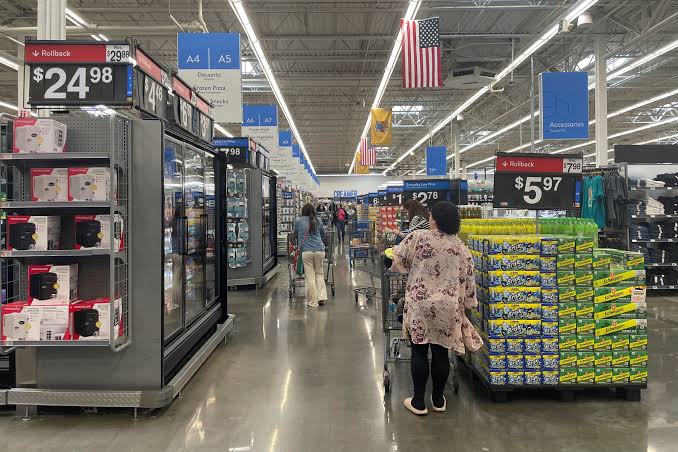
The U.S. consumer entered August with considerably more momentum than July’s figures had suggested. Retail sales increased 1.2% during the month, the strongest monthly rise since March, reversing a revised 0.5% decline in July. More importantly for the broader economy, core retail sales advanced 1.4%, the largest increase since September 2024 and well above economists’ expectations of a 0.4% gain.
The figures offer a more complicated picture of the American economy than a simple rebound in shopping activity. Consumers are still spending across a wide range of categories, but they are doing so in an environment marked by elevated inflation, higher energy costs and deteriorating sentiment. For retailers, the distinction matters: strong nominal sales do not necessarily translate into equally strong underlying purchasing power, particularly when households are becoming more selective about price.
August’s performance was broad rather than concentrated in one segment. Nonstore retailers recorded a 2.6% increase in receipts, while clothing stores gained 0.7%, vehicle and parts dealers rose 0.6%, and furniture stores increased 0.9%. Electronics and appliance retailers posted a 1.6% increase, while sporting goods, hobby, musical instrument and book retailers gained 1.2%. Restaurant and bar receipts, another important indicator of household spending, increased 1.2%.
The pattern suggests that consumers were not simply redirecting spending toward a single category. Back-to-school purchases supported demand among online and clothing retailers, while the fading impact of an earlier Amazon Prime promotion also helped nonstore sales recover. At the same time, gasoline station receipts increased 3.1%, partly reflecting higher fuel prices rather than a pure increase in the quantity of goods purchased. Building material and garden equipment retailers were a notable exception, with sales declining 0.2%.
For the retail industry, this creates an unusual strategic environment. Companies have evidence that demand remains available, but the consumer is becoming more price-conscious. That raises the importance of inventory management, promotions, product mix and pricing strategy. Retailers that can preserve traffic without relying excessively on discounts may have greater room to protect margins if cost pressures intensify.
The broader economic signal is also significant. Core retail sales, which exclude automobiles, gasoline, building materials and food services, are closely connected to the consumer-spending component of gross domestic product. Their 1.4% August increase substantially exceeded the 0.4% rise economists had anticipated. Current estimates for third-quarter economic growth were already running above a 2% annualized pace, compared with 1.5% growth in the previous quarter.
Household spending is being supported by several forces. Wage growth has remained steady, stock-market gains have strengthened household wealth for some consumers, and savings rates have declined as households draw more heavily on accumulated funds. That combination can sustain consumption even when consumer confidence weakens. It also creates a potential vulnerability: if financial-market gains reverse or household savings buffers become thinner, the current spending strength could prove less durable.
The inflation side of the data adds another layer of risk. Import prices increased 0.7% in August after declining 0.3% in each of the previous two months. Economists had expected a 0.4% increase. Over the 12 months through August, import prices rose 7%, the largest annual increase since August 2022.
The increase was not limited to one area of the import basket. Imported capital goods prices rose 0.9%, while prices for nonelectrical machinery increased 1.2% for a second consecutive month. Import prices for consumer goods excluding automobiles rose 0.5%, while automotive import prices were unchanged. Fuel import prices declined 0.1% for a third straight month, and food import prices edged up 0.1%. Excluding food and fuel, import prices increased 0.8% in August and were up 5.6% over the year.
One notable feature is the connection between technology investment and industrial pricing. The report points to an artificial-intelligence spending boom as a factor pushing up prices for imported capital goods. This means the AI investment cycle is having effects beyond technology companies themselves, potentially influencing the cost of machinery and other capital inputs used across the wider economy.
For companies, the combination of resilient demand and higher input costs presents a difficult balancing act. Retailers need to maintain competitive prices at a time when consumers are increasingly looking for lower-cost products, while manufacturers and import-dependent businesses face the possibility of higher costs passing through their supply chains. The ability to absorb, renegotiate or transfer those costs could become an increasingly important competitive factor.
The data also carry implications for monetary policy. Strong consumer demand, accelerating consumer and producer prices, and the sharp increase in import prices reinforce expectations that the Federal Reserve could raise interest rates. Higher borrowing costs would affect consumers through credit conditions and businesses through financing expenses, potentially changing purchasing decisions and investment plans.
The central economic question is therefore shifting from whether American consumers can continue spending to how long that resilience can coexist with renewed inflationary pressure. August showed that household demand remains capable of supporting growth, but the simultaneous rise in import costs suggests that the next phase may be less comfortable for both businesses and consumers.
For retailers, the coming months are likely to place greater emphasis on value positioning, operational efficiency and supply-chain discipline. For the wider economy, the August figures provide evidence of continued momentum but also underline the trade-off facing policymakers: an economy strong enough to sustain consumption can also generate conditions that make inflation harder to contain.
News You Should See
2026 Nobel Medicine Prize Honors Scientists Behind Optogenetics Breakthrough
Oil Prices Edge Lower as Stronger Middle East Exports and G7 Reserves Ease Supply Concerns
Trump Offers U.S. Assistance to Russia After Death at Siberian Plague Research Institute
Trump Takes Economic Message to Nebraska as GOP Faces Rising Cost-of-Living Pressure
U.S. Appeals Court Weighs Trump Administration’s $2.6 Billion Harvard Funding Fight
U.S. Midterm Elections Begin With Resilient Jobs Market and Persistent Cost Pressures
Latest News
The 2026 Nobel Prize in Physiology or Medicine honors Karl Deisseroth, Peter Hegemann and Georg Nagel for pioneering research behind optogenetics and its impact on neuroscience.
Oil prices edged lower as stronger Middle Eastern exports and a planned G7 release of 100 million barrels eased immediate supply concerns, while Gulf security risks and the Strait of Hormuz kept markets alert.
President Donald Trump said the United States would help Russia if needed after a laboratory worker died at a Siberian plague research institute, as Russian authorities imposed precautionary quarantine measures.
Trump’s Nebraska campaign stop highlights rising fuel and grocery costs, beef prices and growing economic pressure on Republicans ahead of the November midterm elections.
A U.S. appeals court is reviewing the Trump administration’s effort to cut Harvard’s federal research funding, with more than $2.6 billion at stake.
The U.S. enters the 2026 midterm elections with unemployment at 4.2%, while higher living and energy costs create economic pressure for households and businesses.
US services growth eased in September as input prices climbed to their highest level since July 2022, with fuel costs, supply-chain disruptions and strong demand increasing pressure on businesses.
Rising Treasury yields are increasing U.S. borrowing costs as Washington manages record debt, persistent inflation and strong economic demand, narrowing its policy options.
A EGP 16 million corporate partnership will establish and equip a bone marrow transplant unit at Cairo’s Coptic Hospital, supporting access to specialized treatment for patients.