US and Indian Refineries Turn Global Fuel Disruptions Into a Major Export Opportunity
War-driven supply shortages are reshaping global fuel trade, strengthening the position of US and Indian refiners while intensifying competition with China.

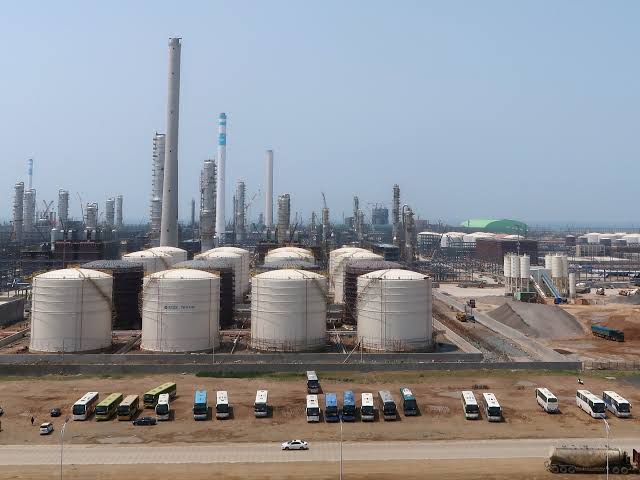
The global fuel market is undergoing a sharp redistribution of supply as conflicts in Iran and Ukraine disrupt traditional energy routes and leave major importing countries competing for replacement barrels. The immediate beneficiaries are refiners in the United States and India, whose facilities have remained largely insulated from the attacks and shipping blockades affecting competing supply centers.
The shift is creating an unusual commercial environment for refiners. Disruptions have reduced global refining throughput to about 89 million barrels per day in July, roughly 5 million barrels per day below the previous year's level, while global oil demand remains above 100 million barrels per day. The resulting imbalance is supporting higher refined-product prices and giving exporters with available capacity considerable pricing power.
India is emerging as a flexible supplier for Asian markets. Export-oriented facilities operated by Reliance and Nayara have maintained high utilization rates, allowing Indian refiners to respond when regional balances tighten. Indonesia, one of Asia's largest gasoline buyers, has maintained strong import demand, while its gasoline purchases have historically relied heavily on suppliers including India, Singapore and South Korea.
The opportunity is not limited to Asia. US refiners have redirected significant volumes toward Europe, Latin America and other markets that previously depended more heavily on Middle Eastern or Russian supplies. US distillate exports reached about 1.9 million barrels per day in the week ended August 7, while jet-fuel exports approached their previous record. Brazil, for example, more than doubled its imports of US diesel in July as Russian restrictions reduced the availability of alternative supplies.
For refiners, the economics are particularly attractive because the disruption has widened the gap between crude costs and refined-product prices. US diesel margins recently exceeded $102 per barrel, a record level, after attacks on refineries in the Middle East and Russia further tightened the market. Some refined products are therefore generating returns substantially above the value of the crude used to produce them.
However, the current boom comes with a strategic limitation: exporters must balance international opportunities against domestic requirements. US refiners are operating close to maximum capacity, while domestic gasoline inventories remain below their normal seasonal level. Refiners have also been prioritizing jet fuel because of stronger export margins, creating additional pressure on gasoline availability.
Political considerations add another layer of complexity in the United States. With domestic gasoline prices becoming a sensitive issue ahead of the November midterm elections, refiners face pressure to maintain adequate domestic supply even while international markets offer unusually attractive returns. Any policy discussion around export restrictions could therefore quickly alter global pricing dynamics and reduce refinery margins.
India faces a different strategic constraint. While its refining sector is benefiting from strong export opportunities, domestic fuel consumption is expected to expand significantly over the coming decade. That means Indian refiners may increasingly have to balance their role as regional swing suppliers with the country's own growing energy requirements.
China is also returning as a significant competitor. Beijing relaxed fuel-export limits in July, with Chinese exports rising sharply compared with June. This gives Asian buyers another source of supply and could eventually place downward pressure on the exceptional margins currently enjoyed by Indian and US refiners.
The competitive landscape is therefore being shaped by more than refinery capacity. Access to crude, shipping reliability, geographic location, inventory levels and government policy are becoming decisive factors in determining which companies can capture the highest-value markets.
The broader economic consequence is that the world's fuel trade is becoming more sensitive to geopolitical disruptions. Inventories are being drawn down faster than they can be replenished, and Asian gasoline stocks are expected to remain below their five-year average through the rest of 2026. A prolonged disruption in the Middle East could push inventories even lower and extend the current pricing pressure.
For the refining industry, the current environment offers exceptional short-term profitability but also exposes the limits of the global system. High margins can encourage refiners to maximize output, yet physical capacity, domestic political demands and crude availability prevent the market from responding indefinitely.
The strategic winners will therefore be companies capable of maintaining high utilization while preserving flexibility between domestic and export markets. If geopolitical disruptions continue, US and Indian refiners could remain among the most important balancing suppliers in global fuel markets. If supply routes normalize, however, today's extraordinary margins are likely to face pressure as competing exporters rebuild their presence.
The episode ultimately demonstrates how quickly energy-market power can shift when conventional supply chains are disrupted. Refiners with spare capacity, secure logistics and access to multiple markets are increasingly positioned not merely as processors of crude, but as strategic suppliers capable of influencing the direction of global fuel trade.
News You Should See
2026 Nobel Medicine Prize Honors Scientists Behind Optogenetics Breakthrough
Oil Prices Edge Lower as Stronger Middle East Exports and G7 Reserves Ease Supply Concerns
Trump Offers U.S. Assistance to Russia After Death at Siberian Plague Research Institute
Trump Takes Economic Message to Nebraska as GOP Faces Rising Cost-of-Living Pressure
U.S. Appeals Court Weighs Trump Administration’s $2.6 Billion Harvard Funding Fight
U.S. Midterm Elections Begin With Resilient Jobs Market and Persistent Cost Pressures
Latest News
The 2026 Nobel Prize in Physiology or Medicine honors Karl Deisseroth, Peter Hegemann and Georg Nagel for pioneering research behind optogenetics and its impact on neuroscience.
Oil prices edged lower as stronger Middle Eastern exports and a planned G7 release of 100 million barrels eased immediate supply concerns, while Gulf security risks and the Strait of Hormuz kept markets alert.
President Donald Trump said the United States would help Russia if needed after a laboratory worker died at a Siberian plague research institute, as Russian authorities imposed precautionary quarantine measures.
Trump’s Nebraska campaign stop highlights rising fuel and grocery costs, beef prices and growing economic pressure on Republicans ahead of the November midterm elections.
A U.S. appeals court is reviewing the Trump administration’s effort to cut Harvard’s federal research funding, with more than $2.6 billion at stake.
The U.S. enters the 2026 midterm elections with unemployment at 4.2%, while higher living and energy costs create economic pressure for households and businesses.
US services growth eased in September as input prices climbed to their highest level since July 2022, with fuel costs, supply-chain disruptions and strong demand increasing pressure on businesses.
Rising Treasury yields are increasing U.S. borrowing costs as Washington manages record debt, persistent inflation and strong economic demand, narrowing its policy options.
A EGP 16 million corporate partnership will establish and equip a bone marrow transplant unit at Cairo’s Coptic Hospital, supporting access to specialized treatment for patients.