UN Sudan Arms Debate Exposes the Limits of International Pressure
The UN Security Council’s temporary extension of the Darfur embargo highlights a deeper dispute over sovereignty, military leverage and the future of Sudan’s war.

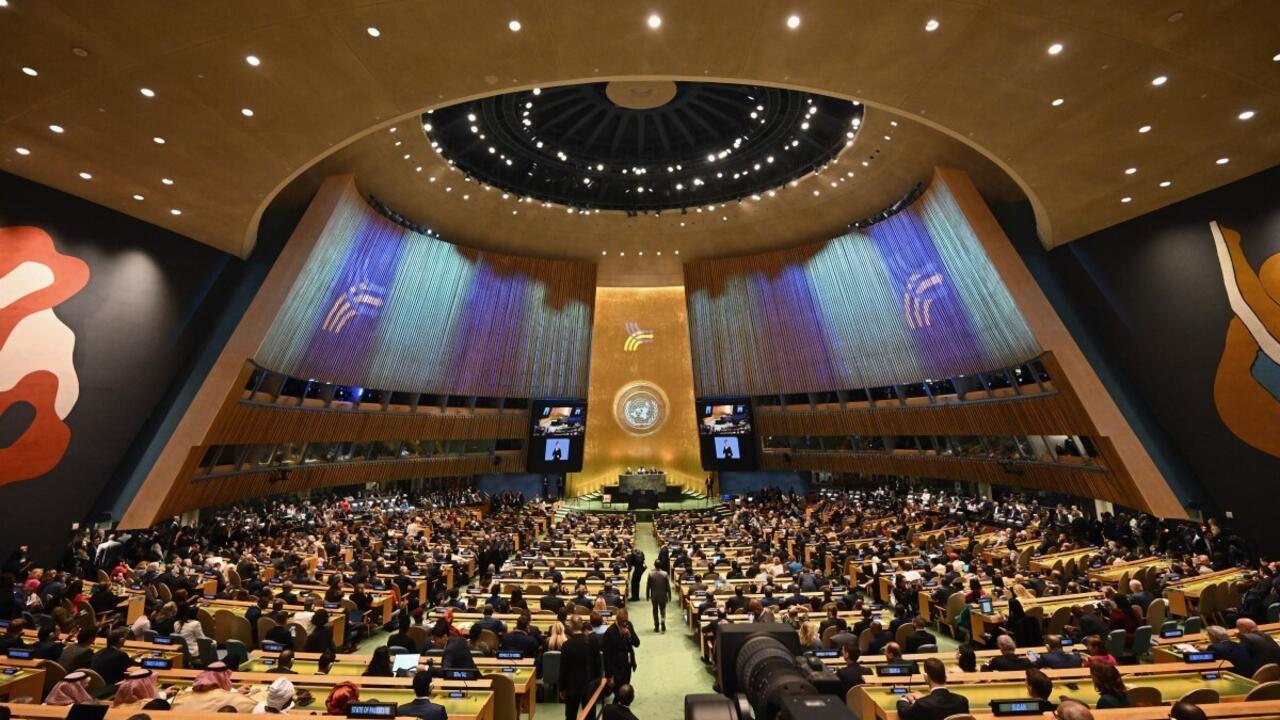
The most important question surrounding the United Nations Security Council’s latest decision on Sudan is not whether the Darfur arms embargo will remain in place for another month. It is whether international institutions still have an effective mechanism for influencing a war whose geography, military balance and humanitarian consequences have expanded far beyond the framework in which the original restrictions were created.
The council’s unanimous decision to extend the Darfur embargo temporarily while discussions continue over a proposed nationwide ban illustrates that the dispute is no longer simply about weapons. It is about what kind of international pressure can realistically alter the calculations of Sudan’s warring parties without creating new risks for the state, civilians or regional stability.
The existing embargo dates back to the Darfur conflict that erupted in 2003. More than two decades later, Sudan is confronting a different and much wider war. Fighting that began in April 2023 between the Sudanese army and the Rapid Support Forces has produced an estimated 59,000 deaths and displaced about 13 million people, while famine has affected parts of the country. That transformation is central to understanding why Washington considers the existing geographic limits of the embargo inadequate.
From an international-policy perspective, the American proposal represents an attempt to change the calculation of the parties by restricting the broader flow of weapons. Its logic is straightforward: if the conflict is being sustained by military capabilities and external supplies, then restricting access to those supplies could become part of a wider effort to push the combatants toward negotiations.
But that logic immediately encounters the central problem of Sudan’s political structure. Russia has made clear that it opposes any expansion of the embargo and has used its position on the Security Council to signal that a broader measure would face a major institutional obstacle. Moscow supports the Sudanese government and argues that current battlefield conditions are different from those of 2023. Sudan’s government itself has rejected a nationwide embargo, invoking its right to self-defense and to acquire weapons for the protection of its sovereignty.
China has raised another concern: that broader restrictions could worsen humanitarian conditions and contribute to the fragmentation of Sudan, with consequences extending beyond its borders. These positions matter because they show why the issue cannot be reduced to a simple confrontation between those who want more sanctions and those who want fewer. Each side is operating from a different assessment of what international pressure might produce on the ground.
This is where the debate becomes more complicated than the language of an arms embargo suggests. Weapons restrictions are not an isolated economic instrument. They interact with military supply chains, state institutions, territorial control and the ability of humanitarian organizations to operate. If restrictions affect one side more than another, they can potentially change incentives on the battlefield. But if weapons continue to reach the conflict through channels outside the scope of international enforcement, the practical effect of a formal embargo can become more limited.
The humanitarian dimension makes the calculation even more difficult. The World Food Program has already reduced the number of people it assists from about 5 million at the beginning of the year to 3.5 million because of funding shortages and has warned that further reductions could follow. An aerial attack on clearly identified WFP trucks in South Kordofan also resulted in the loss of more than 50 metric tons of aid.
Those figures change the meaning of the Security Council debate. The issue is not only how to influence armed actors; it is also how to preserve the channels through which food and shelter reach civilians. Every additional security risk raises the operational cost of humanitarian work, while every disruption to aid reduces the ability of international agencies to compensate for the collapse of local economic and social systems.
Sudan’s economic problem is therefore inseparable from its security problem. A prolonged conflict weakens production, disrupts transportation and trade, damages institutional capacity and increases uncertainty for businesses and households. The longer the war continues, the harder it becomes to separate temporary disruption from structural economic damage.
This also explains why the debate over weapons should be viewed through a wider lens. A sustainable political settlement would not simply stop military operations; it would create conditions for the restoration of trade, reconstruction of infrastructure, return of displaced people and gradual rebuilding of confidence in Sudan’s institutions. Without that transition, even a reduction in fighting would leave a deeply damaged economic environment.
For the United Nations, the immediate challenge is institutional as much as diplomatic. The temporary extension provides additional time, but it does not resolve the disagreement over whether the Darfur framework remains appropriate for a nationwide conflict. The coming negotiations will therefore test whether the Security Council can reconcile three competing objectives: reducing the military capacity that sustains the war, protecting Sudan’s institutional sovereignty and preventing further deterioration in humanitarian conditions.
There is also a broader lesson here about international sanctions. A restriction can be politically significant without necessarily producing the intended result on the ground. Its effectiveness depends on enforcement, the behavior of external suppliers, the military balance and the willingness of the targeted actors to alter their calculations. In Sudan, all of these variables remain fluid.
The next stage of the debate will consequently matter less for the symbolism of the embargo than for whether international diplomacy can connect pressure with a credible political pathway. A weapons restriction on its own cannot rebuild an economy, restore humanitarian supply chains or create a negotiated settlement. But neither can diplomacy operate in isolation from the military and economic realities that shape the incentives of the parties.
The United Nations has therefore bought time with a one-month extension. The real test is what that time produces. If it leads to a broader diplomatic framework that addresses weapons flows, humanitarian access and negotiations together, the debate could acquire a wider strategic purpose. If it becomes another cycle of temporary extensions without a corresponding political movement, the gap between international decisions and conditions inside Sudan will remain the central problem.
News You Should See
2026 Nobel Medicine Prize Honors Scientists Behind Optogenetics Breakthrough
Oil Prices Edge Lower as Stronger Middle East Exports and G7 Reserves Ease Supply Concerns
Trump Offers U.S. Assistance to Russia After Death at Siberian Plague Research Institute
Trump Takes Economic Message to Nebraska as GOP Faces Rising Cost-of-Living Pressure
U.S. Appeals Court Weighs Trump Administration’s $2.6 Billion Harvard Funding Fight
U.S. Midterm Elections Begin With Resilient Jobs Market and Persistent Cost Pressures
Latest News
The 2026 Nobel Prize in Physiology or Medicine honors Karl Deisseroth, Peter Hegemann and Georg Nagel for pioneering research behind optogenetics and its impact on neuroscience.
Oil prices edged lower as stronger Middle Eastern exports and a planned G7 release of 100 million barrels eased immediate supply concerns, while Gulf security risks and the Strait of Hormuz kept markets alert.
President Donald Trump said the United States would help Russia if needed after a laboratory worker died at a Siberian plague research institute, as Russian authorities imposed precautionary quarantine measures.
Trump’s Nebraska campaign stop highlights rising fuel and grocery costs, beef prices and growing economic pressure on Republicans ahead of the November midterm elections.
A U.S. appeals court is reviewing the Trump administration’s effort to cut Harvard’s federal research funding, with more than $2.6 billion at stake.
The U.S. enters the 2026 midterm elections with unemployment at 4.2%, while higher living and energy costs create economic pressure for households and businesses.
US services growth eased in September as input prices climbed to their highest level since July 2022, with fuel costs, supply-chain disruptions and strong demand increasing pressure on businesses.
Rising Treasury yields are increasing U.S. borrowing costs as Washington manages record debt, persistent inflation and strong economic demand, narrowing its policy options.
A EGP 16 million corporate partnership will establish and equip a bone marrow transplant unit at Cairo’s Coptic Hospital, supporting access to specialized treatment for patients.