UN General Assembly Opens Amid Wars, AI Governance Debate and Climate Challenges
World leaders meet in New York as conflicts, climate pressures, artificial intelligence and UN reform dominate the international agenda.

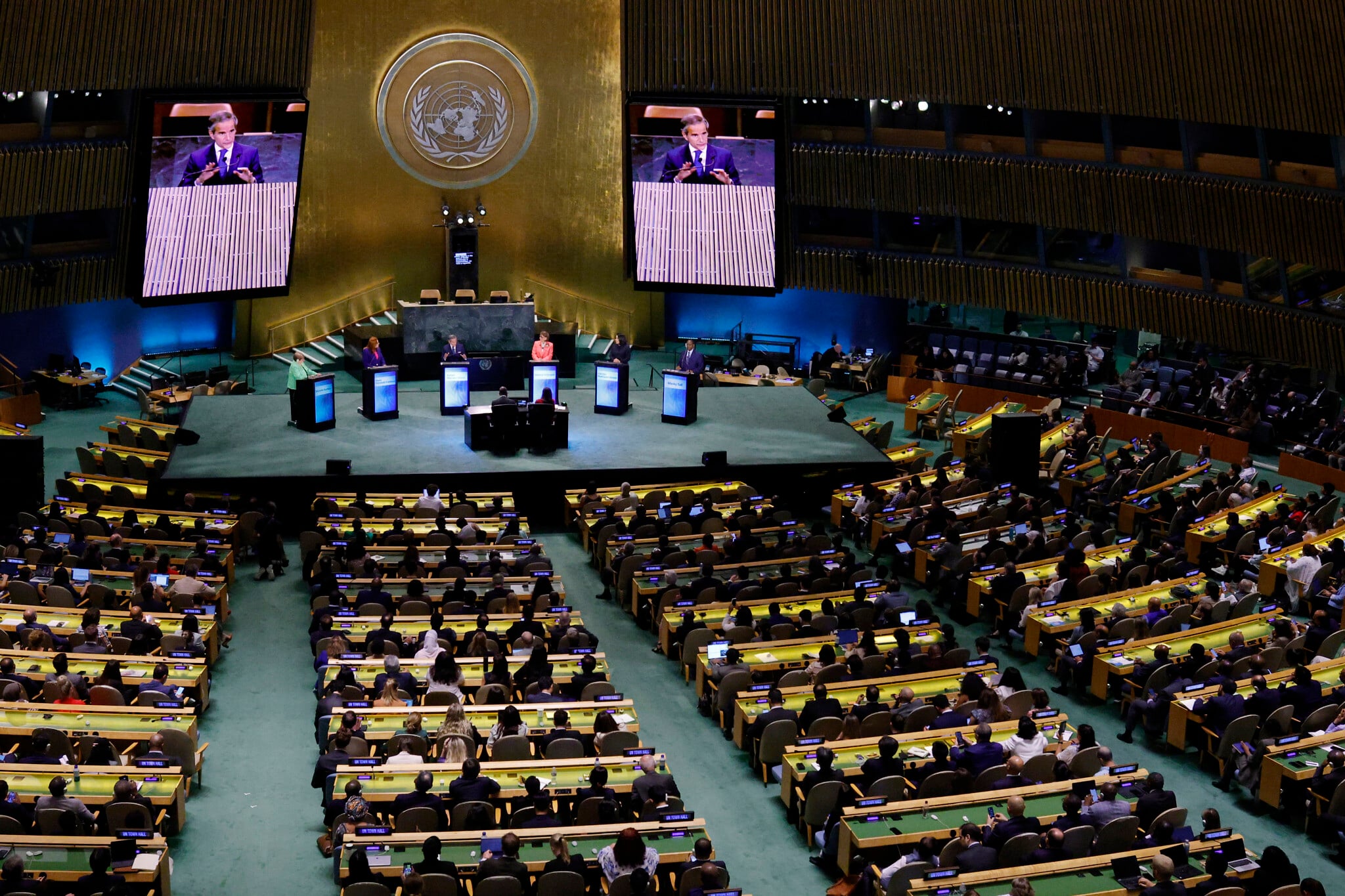
The United Nations General Assembly is bringing world leaders together in New York as governments confront a crowded international agenda spanning armed conflicts, economic pressures, climate disruption and the rapid development of artificial intelligence.
The high-level gathering comes at a particularly complex moment for the international system. Conflicts involving Gaza, Iran, Ukraine, Sudan, the Democratic Republic of the Congo and Myanmar remain prominent concerns, adding pressure on governments and international institutions to address security risks while maintaining channels for diplomacy.
The composition of this year’s high-level proceedings also reflects the changing dynamics of international diplomacy. U.S. President Donald Trump and French President Emmanuel Macron are among the leaders expected to address the gathering, while the absence of the leaders of China, Russia and India leaves their governments represented through other diplomatic channels.
Beyond immediate conflicts, artificial intelligence has become an increasingly important part of the UN agenda. The pace at which advanced AI systems are developing has created new policy questions for governments, particularly around governance, oversight and the international coordination needed to address risks associated with increasingly capable technologies.
The AI debate also reflects a broader shift in the way governments approach technology. Artificial intelligence is no longer being discussed solely as an economic or technological issue. Its implications for security, regulation, labor markets and international cooperation are making it part of wider discussions about how governments should respond to technological change.
Climate-related pressures add another layer to the agenda. Governments continue to face disruptions and economic consequences linked to climate change, making environmental policy increasingly connected to questions of development, infrastructure and economic resilience.
At the institutional level, the United Nations itself is facing financial and operational challenges. Questions over the effectiveness of multilateral institutions have intensified calls for reform, including longstanding discussions about the composition and structure of the Security Council.
These issues illustrate the gap between the scale of global challenges and the difficulty of reaching common positions among governments. The General Assembly remains one of the few forums where countries can address security, economic, environmental and technological questions within the same international framework, even when substantial disagreements persist.
The New York gathering therefore serves two functions: it provides governments with a platform to present their positions on major international issues, while also testing the capacity of multilateral diplomacy to produce cooperation amid competing national interests.
The discussions surrounding conflicts, artificial intelligence, climate pressures and institutional reform are likely to extend beyond the current session. Their significance lies not only in the statements delivered by individual leaders, but also in whether governments can translate those discussions into practical forms of international cooperation.
News You Should See
2026 Nobel Medicine Prize Honors Scientists Behind Optogenetics Breakthrough
Oil Prices Edge Lower as Stronger Middle East Exports and G7 Reserves Ease Supply Concerns
Trump Offers U.S. Assistance to Russia After Death at Siberian Plague Research Institute
Trump Takes Economic Message to Nebraska as GOP Faces Rising Cost-of-Living Pressure
U.S. Appeals Court Weighs Trump Administration’s $2.6 Billion Harvard Funding Fight
U.S. Midterm Elections Begin With Resilient Jobs Market and Persistent Cost Pressures
Latest News
The 2026 Nobel Prize in Physiology or Medicine honors Karl Deisseroth, Peter Hegemann and Georg Nagel for pioneering research behind optogenetics and its impact on neuroscience.
Oil prices edged lower as stronger Middle Eastern exports and a planned G7 release of 100 million barrels eased immediate supply concerns, while Gulf security risks and the Strait of Hormuz kept markets alert.
President Donald Trump said the United States would help Russia if needed after a laboratory worker died at a Siberian plague research institute, as Russian authorities imposed precautionary quarantine measures.
Trump’s Nebraska campaign stop highlights rising fuel and grocery costs, beef prices and growing economic pressure on Republicans ahead of the November midterm elections.
A U.S. appeals court is reviewing the Trump administration’s effort to cut Harvard’s federal research funding, with more than $2.6 billion at stake.
The U.S. enters the 2026 midterm elections with unemployment at 4.2%, while higher living and energy costs create economic pressure for households and businesses.
US services growth eased in September as input prices climbed to their highest level since July 2022, with fuel costs, supply-chain disruptions and strong demand increasing pressure on businesses.
Rising Treasury yields are increasing U.S. borrowing costs as Washington manages record debt, persistent inflation and strong economic demand, narrowing its policy options.
A EGP 16 million corporate partnership will establish and equip a bone marrow transplant unit at Cairo’s Coptic Hospital, supporting access to specialized treatment for patients.