UN Extends Sudan Arms Embargo as Russia Opposes Nationwide Restrictions
UN Security Council keeps Darfur restrictions in place as Washington pushes for a nationwide arms embargo on Sudan

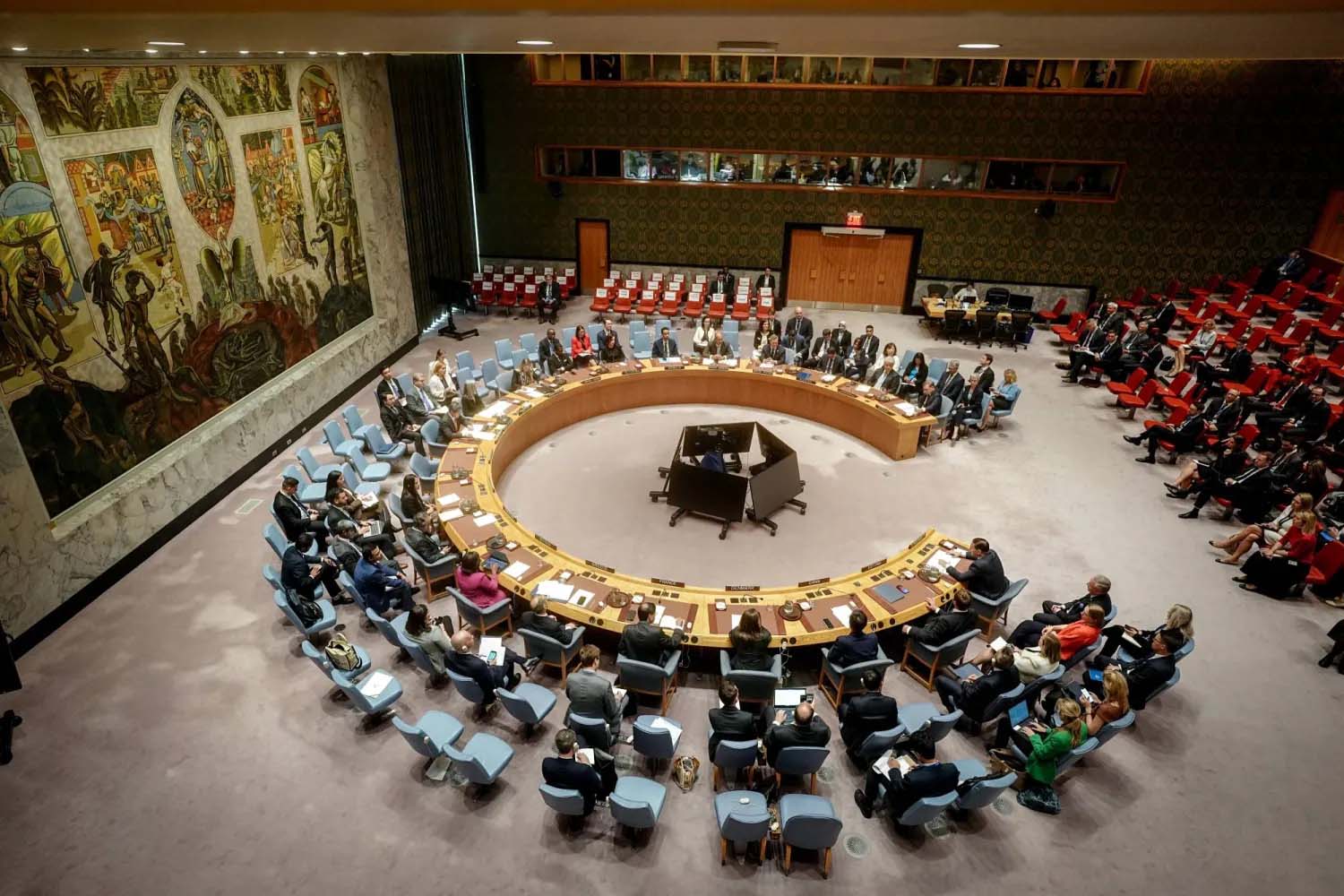
The United Nations Security Council has kept the issue of arms flows into Sudan at the center of international diplomacy by extending the existing embargo on Darfur for one month while negotiations continue over a U.S. proposal to broaden the restrictions nationwide. The unanimous extension does not resolve the larger dispute, but instead creates a short window for the council to debate whether the existing framework still reflects the scale and geography of Sudan’s current conflict.
The strategic significance of the decision lies in the gap between an embargo designed for an earlier phase of Sudan’s crisis and a war that has expanded well beyond Darfur. The Security Council originally imposed restrictions after violence erupted in Darfur in 2003. The conflict that began in April 2023 between Sudan’s army and the Rapid Support Forces has created a substantially broader security and humanitarian environment, with at least 59,000 people reported killed and around 13 million displaced, while parts of the country have been pushed into famine.
For Washington, the proposed nationwide embargo represents an attempt to address the conflict through a broader control of the military supply environment. U.S. officials have argued that continuing to renew the Darfur-only framework would not adequately respond to the current war and have also called for sanctions targeting individuals accused of serious abuses, including sexual violence, kidnapping for ransom and attacks on humanitarian personnel. The approach therefore combines restrictions on weapons flows with targeted accountability measures.
Russia has emerged as the principal obstacle to expanding the embargo within the Security Council. Moscow, which has veto power and supports Sudan’s government in its confrontation with the RSF, has stated that it will oppose any attempt to broaden the restrictions. Russian officials have questioned the timing of the U.S. initiative and argued that the military balance has changed since 2023, when the RSF was threatening Khartoum and other major cities.
China has raised a different but related concern, warning that broader restrictions could aggravate the humanitarian situation and potentially contribute to the fragmentation of Sudan, with consequences for regional stability. Sudan’s representative at the United Nations has also rejected a nationwide embargo, arguing that it would conflict with the country’s right to self-defense and its ability to acquire weapons for the protection of its sovereignty. These positions demonstrate that the debate is not simply about sanctions, but also about sovereignty, state authority and the balance of power inside Sudan.
The economic consequences of the conflict are inseparable from the security debate. Prolonged fighting disrupts domestic commerce, weakens productive capacity and increases the logistical cost of delivering essential goods. The humanitarian system is also operating under growing financial pressure. The World Food Program has reduced the number of people it assists from approximately 5 million at the beginning of the year to 3.5 million because of funding shortages, while warning that further reductions may become necessary.
The pressure on humanitarian supply chains illustrates how the conflict is affecting the civilian economy. A recent aerial attack on clearly identified World Food Program trucks in South Kordofan resulted in the loss of more than 50 metric tons of aid. Such incidents increase the cost and risk of humanitarian operations while simultaneously reducing the amount of food and essential assistance reaching vulnerable communities.
From a market perspective, the continuing uncertainty around sanctions and weapons supplies adds another layer of instability to an economy already damaged by war and displacement. Businesses operating in or around conflict-affected areas face a difficult environment shaped by disrupted transportation, weakened demand, security risks and uncertain access to supplies. Any meaningful improvement in security would therefore have implications beyond the military sphere, potentially affecting trade routes, food distribution, investment conditions and the ability of domestic businesses to resume normal activity.
The institutional dimension is equally important. The Security Council’s disagreement reflects competing interpretations of how international pressure should be used: whether broader restrictions can help reduce the military capacity sustaining the war, or whether they could constrain state institutions without preventing external actors and armed groups from maintaining access to weapons. The one-month extension leaves that strategic question unresolved and makes the next round of negotiations particularly significant.
The immediate outlook is therefore defined by a temporary compromise rather than a final settlement. Darfur remains under the existing embargo, while the proposed nationwide expansion remains under negotiation. Russia’s stated opposition makes any broader council action dependent on whether the United States and other supporters can address objections concerning sovereignty, regional stability and the treatment of Sudan’s government.
At the same time, the humanitarian situation creates a separate and increasingly urgent measure of the conflict’s consequences. With millions displaced, famine affecting parts of the country and humanitarian agencies facing funding constraints, the effectiveness of diplomatic measures will ultimately be judged alongside their impact on civilian access to food, shelter and essential services. The coming month will show whether the Security Council can move beyond maintaining the existing framework toward a broader approach capable of addressing the conflict’s nationwide dimensions.
News You Should See
2026 Nobel Medicine Prize Honors Scientists Behind Optogenetics Breakthrough
Oil Prices Edge Lower as Stronger Middle East Exports and G7 Reserves Ease Supply Concerns
Trump Offers U.S. Assistance to Russia After Death at Siberian Plague Research Institute
Trump Takes Economic Message to Nebraska as GOP Faces Rising Cost-of-Living Pressure
U.S. Appeals Court Weighs Trump Administration’s $2.6 Billion Harvard Funding Fight
U.S. Midterm Elections Begin With Resilient Jobs Market and Persistent Cost Pressures
Latest News
The 2026 Nobel Prize in Physiology or Medicine honors Karl Deisseroth, Peter Hegemann and Georg Nagel for pioneering research behind optogenetics and its impact on neuroscience.
Oil prices edged lower as stronger Middle Eastern exports and a planned G7 release of 100 million barrels eased immediate supply concerns, while Gulf security risks and the Strait of Hormuz kept markets alert.
President Donald Trump said the United States would help Russia if needed after a laboratory worker died at a Siberian plague research institute, as Russian authorities imposed precautionary quarantine measures.
Trump’s Nebraska campaign stop highlights rising fuel and grocery costs, beef prices and growing economic pressure on Republicans ahead of the November midterm elections.
A U.S. appeals court is reviewing the Trump administration’s effort to cut Harvard’s federal research funding, with more than $2.6 billion at stake.
The U.S. enters the 2026 midterm elections with unemployment at 4.2%, while higher living and energy costs create economic pressure for households and businesses.
US services growth eased in September as input prices climbed to their highest level since July 2022, with fuel costs, supply-chain disruptions and strong demand increasing pressure on businesses.
Rising Treasury yields are increasing U.S. borrowing costs as Washington manages record debt, persistent inflation and strong economic demand, narrowing its policy options.
A EGP 16 million corporate partnership will establish and equip a bone marrow transplant unit at Cairo’s Coptic Hospital, supporting access to specialized treatment for patients.