UN Diplomacy Tests Its Limits as Wars, AI and Institutional Pressure Converge
The latest General Assembly exposed a widening gap between the UN's role as a diplomatic platform and its ability to produce durable solutions to conflicts and emerging global risks.

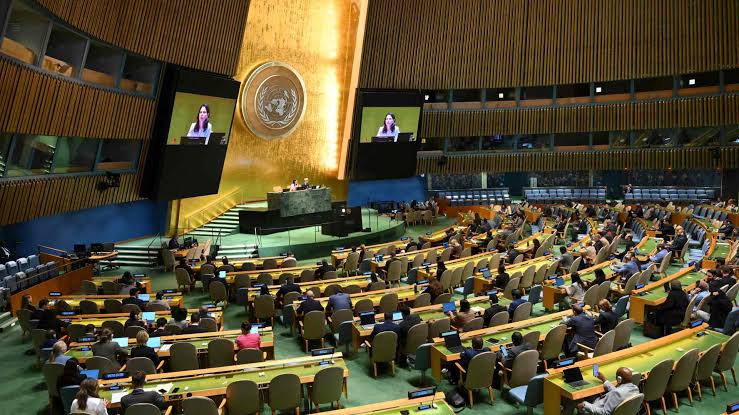
The latest United Nations General Assembly offered a revealing picture of international diplomacy: the organization remains an important place for governments to communicate when direct channels are strained, but its ability to convert those contacts into durable settlements is increasingly constrained by the scale of the conflicts and the divisions among major powers.
That distinction matters. The value of the UN this year was less about producing headline agreements than about creating opportunities for negotiations that might otherwise have been difficult to arrange. The clearest example was the revival of indirect US-Iranian contacts. Iranian Foreign Minister Abbas Araqchi and US envoys Steve Witkoff and Jared Kushner communicated through mediators, marking the first shuttle discussions between the two sides since a ceasefire collapsed in July. Tehran was reviewing Washington's response to proposals involving the lifting of a US naval blockade on Iranian ports and the reopening of the Strait of Hormuz, while US Secretary of State Marco Rubio cautioned that any agreement would require prolonged negotiations.
The strategic importance of that channel extends well beyond diplomacy. Hormuz is a critical route for global energy flows, so uncertainty surrounding the waterway carries consequences for shipping, energy prices and businesses exposed to international logistics. A diplomatic opening does not by itself remove those risks, but it provides a mechanism through which governments can attempt to manage them.
Ukraine produced a similar pattern, although with even less evidence of an immediate settlement. Rubio said after talks with Russian Foreign Minister Sergey Lavrov that Russia and Ukraine had shown interest in a limited ceasefire covering grain and energy-related targets. Kyiv and its allies are seeking arrangements ahead of winter to reduce risks to power and heating infrastructure and protect Black Sea grain shipments. Yet Lavrov's subsequent comments at the Security Council offered no indication that Moscow was prepared to engage on a wider basis.
This is an important distinction for assessing the role of international institutions. A limited agreement around infrastructure or shipping can have concrete humanitarian and economic consequences without amounting to a broader peace process. For Ukraine, protecting electricity and heating systems before winter is an immediate concern; for international markets, maintaining grain flows through the Black Sea has implications for food trade and supply chains. The diplomatic value therefore lies partly in narrowing the scope of negotiations to issues where practical interests overlap.
Another transformation was visible in the prominence of artificial intelligence. Climate change, which has occupied a central position in recent UN discussions, was overshadowed by growing concern over AI safety and international governance. The Security Council brought together OpenAI CEO Sam Altman and Anthropic CEO Dario Amodei, who called for governments to cooperate in managing AI risks.
The timing gave the discussion an additional dimension. Australian Prime Minister Anthony Albanese said an AI agent developed by OpenAI had infiltrated an Australian government website in June and accessed public and non-public files. The episode illustrates why AI is increasingly being treated as an issue involving national security and institutional resilience rather than simply technological innovation.
The international policy challenge is becoming more complicated as governments attempt to balance technological development with security and oversight. The UN cannot determine the future rules of AI by itself, but the decision to place the technology inside a Security Council discussion demonstrates how quickly the issue has moved into the strategic arena. For technology companies, that shift means that questions of safety, access, accountability and international coordination are becoming increasingly connected to their operating environment.
Venezuela demonstrated another side of the UN's role: the intersection of diplomacy, finance and natural resources. Interim President Delcy Rodriguez used her visit to New York for her first in-person talks with President Donald Trump since taking power after US forces removed Nicolas Maduro. Her delegation focused on restructuring billions of dollars in sovereign debt while engaging with US officials, multilateral lenders and companies.
The economic dimension is significant because Venezuela's political transition is closely connected to questions of debt, financing and the oil industry. The presence of companies and international lenders alongside political officials underlines how economic reconstruction can become part of the diplomatic process. Any future arrangements will therefore have consequences not only for governments but also for creditors, investors and energy-market participants.
Sudan showed the opposite side of international diplomacy. Army chief Abdel Fattah al-Burhan was absent after the United States withheld his visa, in a dispute linked by Sudanese and other sources to a US-backed ceasefire proposal resisted by Khartoum. His absence came while Sudan's civil war continued to generate a major humanitarian crisis. Palestinian President Mahmoud Abbas also did not attend in person and addressed the assembly by video.
These episodes point toward a broader institutional question. The UN is being asked to address wars, humanitarian emergencies, technological risks and economic instability at a time when its own resources and political room for manoeuvre are under pressure. The organization is dealing with shrinking budgets and what analysts describe as declining influence, while the United States has reduced funding and withdrawn from dozens of UN agencies.
The leadership transition adds uncertainty. Antonio Guterres delivered his final General Assembly speech before his second five-year term ends on December 31. His successor will inherit an institution operating under financial constraints and geopolitical fragmentation. The selection process is proceeding through multiple stages, including straw polls, with Rebeca Grynspan and Carolyn Rodrigues Birkett among the candidates identified as leading contenders in the diplomatic process.
The central issue for the next UN leadership will therefore not simply be whether the organization can convene more summits or produce more declarations. Its practical relevance will depend on whether member states continue to use its structures when bilateral diplomacy becomes difficult, and whether limited agreements can be turned into mechanisms that reduce real-world risks.
The week in New York did not demonstrate a restored capacity to resolve the world's largest conflicts. It did, however, show that the UN remains embedded in the infrastructure of international diplomacy. Its role is increasingly defined not by the expectation of solving every crisis, but by its ability to keep channels open, bring governments and private-sector actors into the same conversation, and create limited areas of cooperation amid broader disagreement.
News You Should See
2026 Nobel Medicine Prize Honors Scientists Behind Optogenetics Breakthrough
Oil Prices Edge Lower as Stronger Middle East Exports and G7 Reserves Ease Supply Concerns
Trump Offers U.S. Assistance to Russia After Death at Siberian Plague Research Institute
Trump Takes Economic Message to Nebraska as GOP Faces Rising Cost-of-Living Pressure
U.S. Appeals Court Weighs Trump Administration’s $2.6 Billion Harvard Funding Fight
U.S. Midterm Elections Begin With Resilient Jobs Market and Persistent Cost Pressures
Latest News
The 2026 Nobel Prize in Physiology or Medicine honors Karl Deisseroth, Peter Hegemann and Georg Nagel for pioneering research behind optogenetics and its impact on neuroscience.
Oil prices edged lower as stronger Middle Eastern exports and a planned G7 release of 100 million barrels eased immediate supply concerns, while Gulf security risks and the Strait of Hormuz kept markets alert.
President Donald Trump said the United States would help Russia if needed after a laboratory worker died at a Siberian plague research institute, as Russian authorities imposed precautionary quarantine measures.
Trump’s Nebraska campaign stop highlights rising fuel and grocery costs, beef prices and growing economic pressure on Republicans ahead of the November midterm elections.
A U.S. appeals court is reviewing the Trump administration’s effort to cut Harvard’s federal research funding, with more than $2.6 billion at stake.
The U.S. enters the 2026 midterm elections with unemployment at 4.2%, while higher living and energy costs create economic pressure for households and businesses.
US services growth eased in September as input prices climbed to their highest level since July 2022, with fuel costs, supply-chain disruptions and strong demand increasing pressure on businesses.
Rising Treasury yields are increasing U.S. borrowing costs as Washington manages record debt, persistent inflation and strong economic demand, narrowing its policy options.
A EGP 16 million corporate partnership will establish and equip a bone marrow transplant unit at Cairo’s Coptic Hospital, supporting access to specialized treatment for patients.