Uber Exits Serve Robotics as Autonomous Delivery Strategy Takes a New Direction
The full sale of Uber’s stake exposes growing differences over how autonomous delivery fleets should scale, while the companies’ partnership faces an uncertain future.

Uber’s complete exit from Serve Robotics marks a significant shift in the relationship between two companies that were once closely connected through a shared vision for autonomous delivery. While the transaction does not immediately terminate their commercial partnership, it signals that Uber is reassessing where and how it wants to participate in the rapidly evolving autonomous mobility market.
Uber disclosed the sale of its entire stake in Serve Robotics through a regulatory filing on August 11. The exit had been developing for at least a year, with regulatory records showing that Uber had already begun reducing its ownership position during 2025. However, the final disposal reportedly caught Serve off guard, with a source familiar with the matter saying the robotics company learned about the complete sale only after the disclosure became public.
The timing is particularly important because Serve was not an unrelated investment for Uber. The robotics company originated inside Postmates, whose robotics division became known as Postmates X. Uber acquired Postmates for $2.65 billion in 2020 and subsequently spun the robotics operation out as an independent company called Serve Robotics in 2021. Uber remained an investor and later established a commercial partnership with Serve.
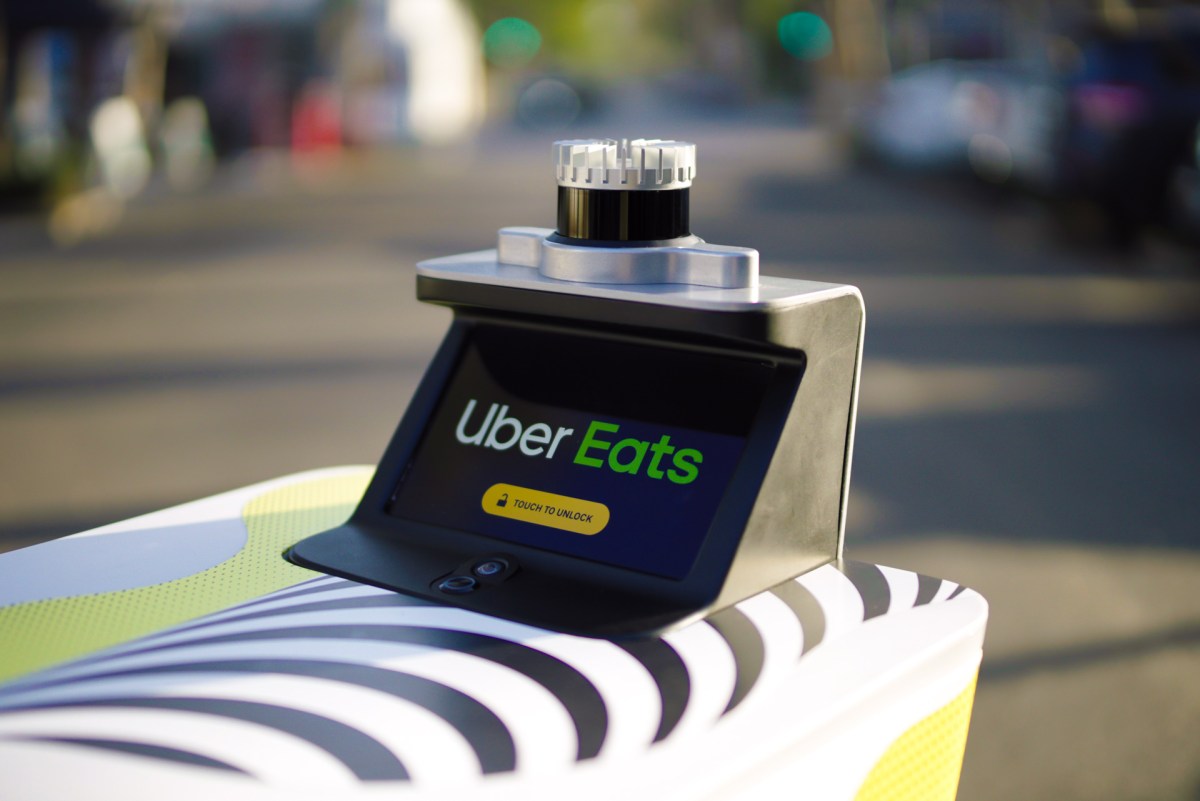
That partnership expanded substantially in May 2023, when the companies announced plans to deploy as many as 2,000 Serve sidewalk delivery robots through Uber’s platform across several U.S. markets. The model was strategically attractive because it offered Uber a way to experiment with autonomous delivery without having to develop and operate the entire robotics infrastructure internally.
The latest developments suggest that the economics and operating assumptions behind that strategy have become more complicated.
Serve CEO and co-founder Ali Kashani said during the company’s second-quarter earnings call on August 6 that delivery volume through Uber had grown for 17 consecutive quarters before reversing in the second quarter. He attributed the decline to lower-than-expected robot utilization and said the two companies had developed different views about how a shared autonomous fleet should be scaled. Those differences reportedly include fleet coordination and merchant integration.
This is an important distinction because autonomous delivery is not simply a hardware problem. The commercial viability of sidewalk robots depends on how efficiently robots are dispatched, how frequently they operate, how merchants integrate them into fulfillment processes and how customers interact with the delivery system. A technically capable robot can still generate weak economics if utilization remains low or if the surrounding logistics network is not optimized.
Serve’s performance with another food-delivery partner provides an additional indication that the issue may be specific to the Uber relationship rather than a fundamental inability to generate demand. Kashani said deliveries with another food-delivery partner increased by nearly 50% in a single quarter. He also indicated that Serve did not expect extending the Uber agreement to make sense once the current partnership expires in early 2027.
For Uber, selling the stake can therefore be interpreted as a portfolio decision rather than a withdrawal from autonomous mobility altogether. The company has worked with or invested in more than 30 autonomous vehicle technology companies over the past several years. Maintaining exposure to multiple technology providers gives Uber flexibility to test competing approaches and avoid becoming dependent on a single robotics platform.
This strategy also reflects the broader transformation of Uber’s identity. The company increasingly operates as a mobility and delivery platform that can connect customers with different transportation technologies rather than necessarily owning the underlying vehicles or robots. In autonomous transportation, that platform position can be valuable because the technology landscape remains fragmented and rapidly changing.
The Serve divestment may strengthen that platform-oriented strategy. By separating its investment position from the commercial relationship, Uber can potentially continue evaluating autonomous delivery through its marketplace while reducing direct financial exposure to one specific robotics company. The distinction between being a customer, platform partner and shareholder gives Uber more strategic flexibility.
For Serve, however, the consequences are more complicated. The loss of Uber as an investor removes an important strategic connection to one of the world's largest mobility and delivery platforms. At the same time, independence could allow Serve to pursue partnerships and operating models that it believes are better suited to its technology and economics.
The company’s challenge will be demonstrating that its robots can achieve strong utilization across multiple commercial networks. Higher robot utilization is critical because autonomous delivery requires substantial investment in hardware, software, maintenance, remote assistance and fleet operations. The more frequently each robot performs productive deliveries, the greater the potential to spread those costs across revenue-generating activity.
The disagreement over fleet coordination and merchant integration also points to a deeper issue facing the autonomous delivery industry. Robotics companies may prioritize deploying as many units as possible, while platforms may focus more heavily on customer experience, merchant economics and network efficiency. These priorities can align during early experimentation but become harder to reconcile when operations move toward large-scale deployment.
The Uber-Serve relationship therefore offers a useful case study in how technology partnerships evolve after the initial innovation phase. Early-stage cooperation often revolves around proving that a technology works. Once the technology reaches commercial deployment, the central questions shift toward utilization, margins, operational control and scalability.
For Uber, the current move suggests greater selectivity in its autonomous strategy. Rather than maintaining ownership positions across every promising technology provider, the company may increasingly favor partnerships that demonstrate clear operational value and strong alignment with its platform economics.
For Serve, the next phase will depend on its ability to diversify demand, improve fleet utilization and establish itself as an independent robotics platform rather than an extension of Uber's delivery ecosystem.
The relationship is not yet over. The existing commercial agreement remains in place until early 2027, giving both companies time to determine whether their operational differences can be resolved. But the sale of Uber’s entire stake changes the strategic balance between them.
Ultimately, the transaction illustrates a broader shift in autonomous mobility: the industry is moving from a period dominated by experimentation and strategic investments toward one where actual utilization, unit economics and scalable operations are becoming the decisive measures of success.
News You Should See
2026 Nobel Medicine Prize Honors Scientists Behind Optogenetics Breakthrough
Oil Prices Edge Lower as Stronger Middle East Exports and G7 Reserves Ease Supply Concerns
Trump Offers U.S. Assistance to Russia After Death at Siberian Plague Research Institute
Trump Takes Economic Message to Nebraska as GOP Faces Rising Cost-of-Living Pressure
U.S. Appeals Court Weighs Trump Administration’s $2.6 Billion Harvard Funding Fight
U.S. Midterm Elections Begin With Resilient Jobs Market and Persistent Cost Pressures
Latest News
The 2026 Nobel Prize in Physiology or Medicine honors Karl Deisseroth, Peter Hegemann and Georg Nagel for pioneering research behind optogenetics and its impact on neuroscience.
Oil prices edged lower as stronger Middle Eastern exports and a planned G7 release of 100 million barrels eased immediate supply concerns, while Gulf security risks and the Strait of Hormuz kept markets alert.
President Donald Trump said the United States would help Russia if needed after a laboratory worker died at a Siberian plague research institute, as Russian authorities imposed precautionary quarantine measures.
Trump’s Nebraska campaign stop highlights rising fuel and grocery costs, beef prices and growing economic pressure on Republicans ahead of the November midterm elections.
A U.S. appeals court is reviewing the Trump administration’s effort to cut Harvard’s federal research funding, with more than $2.6 billion at stake.
The U.S. enters the 2026 midterm elections with unemployment at 4.2%, while higher living and energy costs create economic pressure for households and businesses.
US services growth eased in September as input prices climbed to their highest level since July 2022, with fuel costs, supply-chain disruptions and strong demand increasing pressure on businesses.
Rising Treasury yields are increasing U.S. borrowing costs as Washington manages record debt, persistent inflation and strong economic demand, narrowing its policy options.
A EGP 16 million corporate partnership will establish and equip a bone marrow transplant unit at Cairo’s Coptic Hospital, supporting access to specialized treatment for patients.