Turkey Poised to Shape Syria’s New Order
Turkey Poised to Shape Syria’s New Order

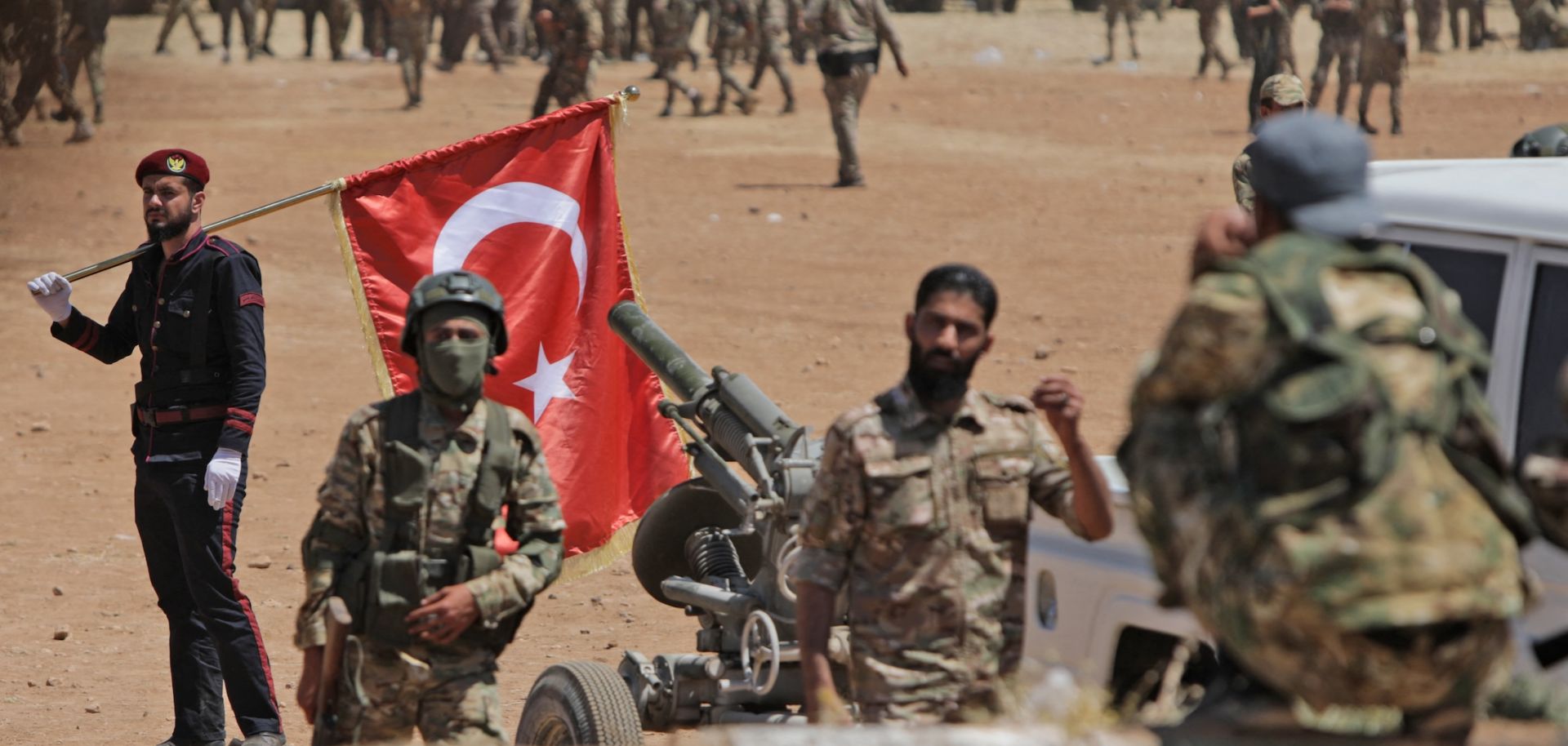
As Syria undergoes a transformative period following the collapse of Bashar al-Assad’s regime, Turkey is strategically positioning itself to influence the emerging political landscape. Turkey’s goals include establishing a stable, pro-Turkey provisional government, curbing Kurdish autonomy, bolstering its business interests, and repatriating Syrian refugees. However, this assertive strategy risks intensifying tensions with regional actors like Israel.
Turkey’s Strategic Moves
In the aftermath of Assad’s fall, Turkey’s foreign minister, Hakan Fidan, emphasized the importance of unifying Syrian opposition groups. This came as Turkish-backed forces, including the Syrian National Army (SNA), advanced against Kurdish fighters, whom Turkey regards as terrorists. The Turkish-led effort to secure Kurdish withdrawal from Manbij underscores Ankara’s determination to consolidate control along its border. Simultaneously, President Recep Tayyip Erdogan announced plans to open additional border crossings to facilitate the return of Syrian refugees, signaling Turkey’s broader ambitions in Syria.
While Ankara denies direct involvement in the Hayat Tahrir al-Sham (HTS) offensive that led to Damascus’s fall, Turkey’s longstanding support for the Syrian opposition and military operations against Kurdish forces have significantly shaped the trajectory of Syria’s civil war. Turkey’s involvement reflects its dual objectives: securing national security and fostering influence over a post-Assad Syria.
Refugee Dynamics and Domestic Pressures
Turkey currently hosts over three million Syrian refugees, a number that has fueled domestic discontent amid economic challenges. Initially welcoming refugees under an “open door” policy, Turkey’s stance has shifted as the prolonged conflict strained public tolerance. Anti-refugee sentiment has grown, prompting the government to explore repatriation strategies, including opening new border crossings and providing reconstruction aid to encourage returns.
The opposition Republican People’s Party (CHP) has also criticized the ruling Justice and Development Party (AKP) for its handling of the refugee issue. The CHP advocates for a comprehensive repatriation plan to address domestic concerns while maintaining national security.
Kurdish Question and Military Operations
Turkey’s efforts to prevent the establishment of a semi-autonomous Kurdish entity in Syria remain central to its policy. Ankara is likely to leverage its influence over Syria’s new leadership to counter Kurdish aspirations. If the United States reduces its military presence in Syria, Turkey may intensify operations against Kurdish groups, particularly the PKK/YPG, along its border.
Economic and Geopolitical Implications
Turkey’s ambitions extend beyond security concerns to economic opportunities. By supporting the formation of a provisional Syrian government, Ankara aims to secure international aid and business contracts for its defense and construction sectors. Turkey’s burgeoning arms industry, exemplified by its Bayraktar drones, and its extensive construction capabilities position it as a key player in Syria’s reconstruction.
Regional and International Ramifications
Turkey’s growing influence in Syria is likely to strain relations with Israel, which has already conducted extensive military operations targeting Assad-era weaponry. As Israel opposes Turkish-backed advances and bolsters support for Kurdish forces, the potential for a proxy conflict involving rival Syrian factions looms large.
Meanwhile, Turkey’s strained ties with Western allies over its engagement with HTS could complicate efforts to secure international legitimacy for the new Syrian government. However, a shift in HTS’s approach toward inclusivity could pave the way for sanctions relief and international recognition, further advancing Turkey’s strategic goals.
Outlook
Turkey’s proactive involvement in shaping Syria’s future underscores its regional ambitions. While this strategy presents economic and geopolitical opportunities, it also carries significant risks, including heightened regional tensions and domestic backlash. As the situation evolves, Turkey’s ability to balance these competing pressures will determine the success of its Syrian policy.
News You Should See
Trump Heads to Alaska to Bolster Dan Sullivan as Senate Race Draws National Attention
Aberdeen Police Urge Heritage Square Residents to Check Valuables After Superintendent’s Arrest
Law Offices of Marc S. Albert Announces Six Personal Injury and Medical Malpractice Settlements Totaling More Than $7.4 Million
S&P 500 Rally Masks Market Weakness as AI Chipmakers Drive 2026 Gains
Dollar Holds Near 18-Month High as Middle East Tensions Put Inflation and Fed Policy in Focus
New State Voting Rules Complicate Election Preparations Ahead of 2026 Midterms
Latest News
Trump campaigns for Alaska Sen. Dan Sullivan as Democrat Mary Peltola mounts a challenge ahead of the November 3 midterms, with inflation and fuel prices shaping the race.
Aberdeen police urge Heritage Square residents to check for missing valuables after superintendent Nicholas Brent’s arrest. The investigation continues, and the allegations remain unproven.
The Law Offices of Marc S. Albert announced six personal injury and medical malpractice settlements totaling $7.446 million, including cases involving a hospital respiratory emergency, vehicle crashes, a fall and a bicyclist.
The S&P 500 has gained 14% in 2026, but more than 40% of its stocks are down. AI chipmakers dominate returns as higher interest rates pressure other sectors.
The dollar nears an 18-month high amid Middle East tensions, oil volatility, and awaited US inflation data.
Several Republican-led US states have changed voter ID and mail-ballot rules ahead of the November 2026 midterms, creating new challenges for election officials and renewing debate over ballot access and election safeguards.
Brent crude climbed to $105.74 a barrel as President Donald Trump announced plans to buy Russian diesel. Investors are watching inflation expectations, retail sales, geopolitical risks and quarterly results from major US banks.
IMF chief Kristalina Georgieva says AI infrastructure investment is supporting global growth near 3%, with gains for Asian economies despite energy pressures.
A New York federal judge temporarily blocks taxpayer-funded television ads featuring Donald Trump amid legal concerns over public spending, political messaging and the upcoming US midterm elections.