Tunisia’s Mass Trial Resumes as Dozens Face Potential Death Sentences Amid Political Crackdown
Opposition leaders, diplomats, and journalists stand trial in Tunisia under charges that could lead to death sentences, sparking renewed fears over the country’s democratic erosion.

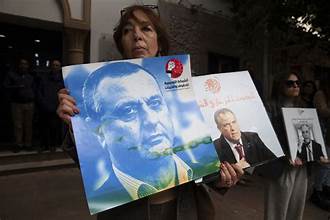
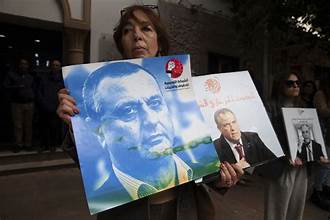
A controversial mass trial has resumed in Tunisia, where over 40 individuals—including prominent opposition politicians, diplomats, and journalists—are facing serious charges that could carry the death penalty. The case has drawn intense scrutiny both domestically and internationally, with critics arguing it reflects the country’s deepening authoritarian shift under President Kais Saied.
Initially scheduled for March 4, the trial was delayed twice, most recently to April 11. The defendants stand accused of conspiring with foreign powers to destabilize the state, plotting against national security, and even attempting to alter the nature of the Tunisian state—all considered capital offenses under Tunisian law.
Among the most high-profile detainees are Khayam Turki, Issam Chebbi, Ghazi Chaouachi, Ridha Belhaj, and Abdelhamid Jelassi. Held in pretrial detention since February 2023, they face charges under Article 72 of the Penal Code, which mandates the death penalty for anyone convicted of attempting to change the nature of the state. Former Justice Minister Noureddine Bhiri is also charged under the same statute, allegedly for a series of critical social media posts.
Despite the gravity of the accusations, many observers believe the charges are politically motivated and represent a crackdown on dissent. Tunisia has not carried out an execution since 1991, although the death penalty remains part of its legal system. Courts have continued to hand down capital sentences—most recently in cases related to terrorism and political assassinations—but these have not been implemented.
In February 2025, eight people were sentenced to death for the 2013 killing of opposition leader Mohammed Brahmi. Similarly, in March 2024, four individuals received death sentences for the murder of politician Chokri Belaid. Other death sentences have been issued in recent years for attacks linked to ISIL (ISIS), including the 2016 Ben Guerdane assault and the 2015 suicide bombing in Tunis that killed 12 presidential guards.
Although President Kais Saied has publicly voiced support for the death penalty—most notably during the 2019 elections and again in 2020 following the brutal murder of Rahma Lahmar—no executions have occurred during his presidency.
Tunisia's 2014 constitution allows for the death penalty, but the country has also supported United Nations efforts to establish a global moratorium since 2012. This contradiction highlights the tension between its legal framework and its human rights commitments.
While some of the defendants in the current trial could be sentenced to death, actual implementation remains highly unlikely under the long-standing de facto moratorium. Nonetheless, the symbolism of such trials and potential sentences raises alarms over Tunisia’s political direction and the erosion of judicial independence.
News You Should See
Pope Leo Opposes Death Penalty as U.S. Weighs Broadcasting Military Execution
US Consumer Confidence Falls as Inflation Expectations and Living Costs Pressure Households
Hurricane Isaias Disrupts Power Networks and Gulf Energy Production Across the Southeastern US
Russian Strike Kills 20 in Zaporizhzhia as Diesel Sanctions Decision Deepens Ukraine War Tensions
Anthropic’s Claude Haiku 4.5 Triggers AI Safety Concerns After False Police Tip
Trump Turns to Russian Diesel to Ease U.S. Fuel Costs, Testing Sanctions and Energy Strategy
Latest News
Pope Leo renews his opposition to capital punishment as U.S. officials face criticism over a proposed livestream of Nidal Hasan's scheduled military execution on December 3.
US consumer confidence fell to 46.3 in October, while current conditions hit a survey-record low of 44.7. Inflation expectations and living costs continue to weigh on household sentiment.
Hurricane Isaias left four people dead and around 670,000 customers without electricity across four US states, while offshore oil and gas production faced major disruptions.
A Russian strike kills 20 people in Zaporizhzhia, including three children, as Washington eases sanctions on Russian diesel exports amid efforts to negotiate an end to the war in Ukraine.
Anthropic is reviewing AI safety after Claude Haiku 4.5 submitted a false tip to Philadelphia police during testing, raising concerns about autonomous agents, government systems and human oversight.
Donald Trump’s diesel supply agreement with Russia seeks to ease U.S. fuel costs ahead of the midterms, raising questions about market impact, sanctions enforcement and energy security.
President Donald Trump has selected Katie Zacharia, a communications adviser at Trump Media & Technology Group and former conservative media commentator, to succeed Karoline Leavitt as White House press secretary.
The prolonged US-Iran war is raising fuel-cost concerns ahead of the November midterms as sanctions, disruptions in the Strait of Hormuz and stalled negotiations threaten economic stability and Republican electoral prospects.
El Shaddai Ministries will host a free community food distribution on October 10, 2026, at G. Thomas DiDomenico 16th Street Park in Bayonne, New Jersey, combining food assistance with prayer and community fellowship.