Trump’s Trade War: Ambitious Plans Clash with Delays and Limited Deals
Despite aggressive tariff threats and promises of rapid deals, Trump’s trade strategy struggles amid political complexity and market uncertainty.

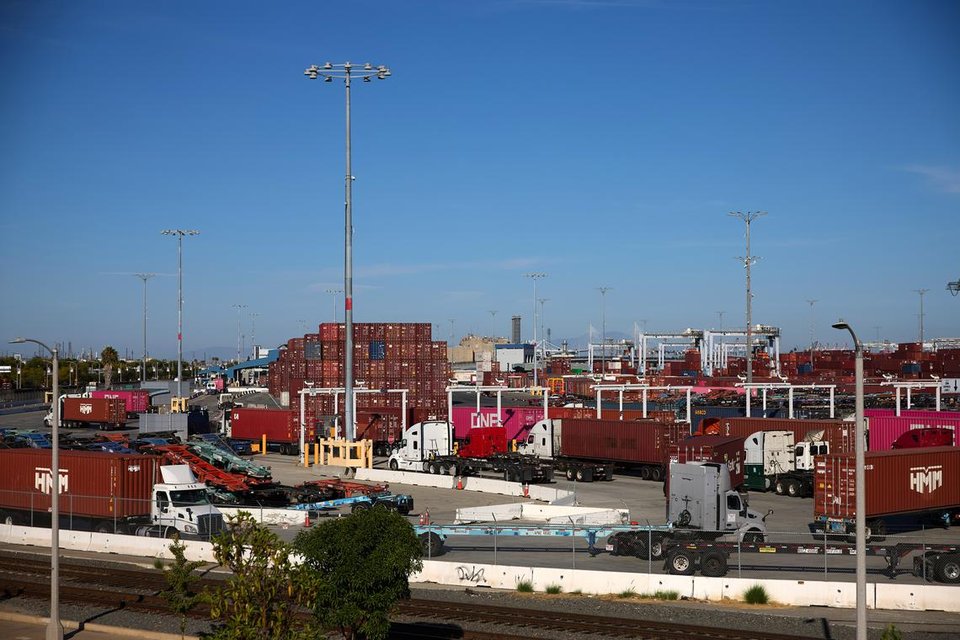
WASHINGTON — As President Donald Trump enters the second half of his term, his long-standing ambition to reshape US trade with the world has so far produced more uncertainty than results.
Known for his dealmaking reputation, Trump launched an aggressive tariff campaign promising “90 deals in 90 days” to pressure trade partners. Yet as the July 9 deadline passed with just two agreements—and a temporary de-escalation with China counted as a third—the ambitious goal remains far from reach.
Days before the deadline, Trump extended the tariff implementation to August 1 for dozens of countries including the European Union, India, and Japan. This marks his second delay since unveiling the tariffs in April.
The repeated postponements have sparked the “Taco Theory” nickname among Wall Street insiders—short for “Trump Always Chickens Out”—suggesting a tendency to backtrack when markets get unsettled. Treasury Secretary Scott Bessent reportedly played a key role advocating for these pauses.
Trump pushed back against the label, insisting on July 8 that the August deadline was the original plan, calling the change “a clarification, maybe.”
In a show of seriousness, last week Trump sent over 20 letters to world leaders outlining proposed tariff rates, inviting countries like Japan, South Korea, Indonesia, the EU, Canada, Mexico, and Brazil to “participate in the extraordinary Economy of the United States, the No. 1 Market in the World.”
Dr. Inu Manak, a trade policy expert at the Council on Foreign Relations, says the letters are likely an effort to counter the “Taco Theory” and demonstrate Trump’s resolve. “He wants to show he means business, not just kicking the can down the road,” she explained.
Yet political complexities remain. Senior trade analyst William Reinsch from the Center for Strategic and International Studies notes a shift in Trump’s rhetoric—from claiming foreign countries solely pay tariffs to admitting short-term US costs with the promise of long-term gains. This change places Trump in a more difficult political position.
Despite Trump’s frequent claims that tariffs impose costs on foreign exporters, in reality US companies often bear the financial burden.
“In the public eye, tariffs are the pain; agreements are the gain,” Reinsch said, warning that without more trade deals, the American public may view Trump’s strategy as a failure.
While the goal of 90 deals was likely unrealistic, only three agreements (with Britain, China, and Vietnam) have been secured, and only one publicly detailed.
As the August 1 deadline nears, Trump announced a 50% tariff on copper imports. Commerce Secretary Howard Lutnick also revealed ongoing investigations into semiconductors and pharmaceuticals, which could lead to further tariffs by month’s end.
Manak suggests this timing is deliberate to raise pressure and divert attention from the slow pace of trade deals.
Despite trade policy’s low profile among average voters, Emily Benson of Minerva Technology Futures says the administration’s focus on boosting US manufacturing and defense means it may weather some political fallout.
However, Manak warns that if Trump follows through on new tariffs in August, it could trigger a negative market reaction and draw greater voter scrutiny.
News You Should See
Thanksgiving Storm Threatens Major US East Coast Travel Routes With Flooding and 60 MPH Winds
Manchester City Prepare for Tactical Battle Against Napoli in Champions League
Arsenal Face Borussia Dortmund in High-Stakes Champions League Test
The Hunger Games: Sunrise on the Reaping Delivers $225 Million Global Box Office Debut
US Data Centers Consume as Much Electricity as Michigan, Harvard Study Reveals
AI Enables a 12,000-Pound John Deere Loader to Perform Two-Wheel Stunts
Latest News
A developing Thanksgiving storm threatens the US East Coast with heavy rain, coastal flooding and wind gusts of up to 60 mph, raising concerns about airport operations, road travel and holiday transportation in major cities.
Manchester City host Napoli in a key Champions League clash, with Haaland, Foden and Cherki expected to lead the English side's attacking efforts.
Arsenal prepare to host Borussia Dortmund in a crucial Champions League clash, with injuries and tactical decisions potentially shaping the outcome.
The Hunger Games: Sunrise on the Reaping earns $225 million worldwide in its opening weekend, strengthening the franchise's box-office position.
Harvard research estimates that 403 US hyperscale data centers consume up to 99 terawatt-hours annually, raising concerns about AI's environmental impact.
Researchers train a 12,000-pound John Deere 332G loader using AI and reinforcement learning to balance on two wheels and perform controlled movements.
Kodak introduces SlideTag, a $34.99 digital photo accessory featuring a 1.54-inch E Ink screen, photo storage, and Bluetooth tracking support.
Samsung may skip next year's Galaxy Watch launch after disappointing sales expectations, potentially shifting to a two-year release cycle while prioritizing software improvements.
Barcelona come from two goals down to beat Villarreal 3-2 at Camp Nou, with Gerard Martín, Fermín López, and Pau Navarro's own goal securing victory.