Trump's Tariffs Once Shook China—Now It's Prepared for Round Two
Trump's Tariffs Once Shook China—Now It's Prepared for Round Two

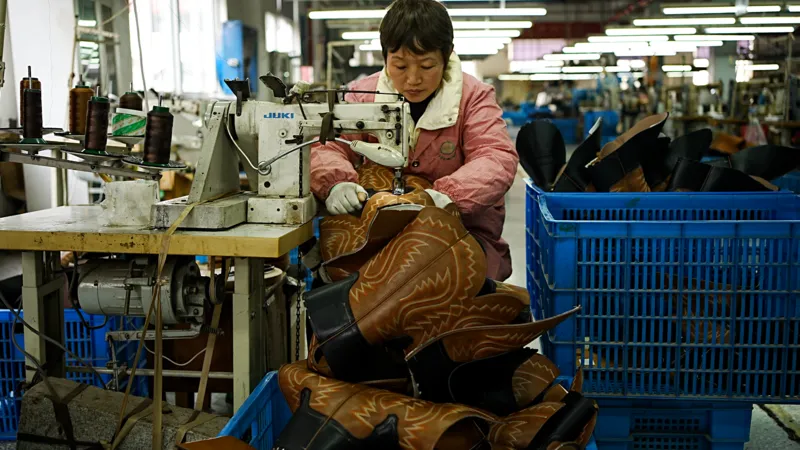
In a factory on China’s eastern coast, a burst of compressed air shapes smooth leather into an iconic all-American cowboy boot. The rhythmic sounds of sewing, stitching, cutting, and soldering echo through the high-ceilinged space.
“We used to sell around a million pairs of boots each year,” says Mr. Peng, a 45-year-old sales manager who prefers not to disclose his first name. That was before Donald Trump’s presidency changed everything.
During Trump’s first term, a wave of tariffs ignited a trade war between the world’s two largest economies. Six years later, with Trump back in the White House, Chinese businesses are bracing for another round of economic tension.
“What direction should we take in the future?” Mr. Peng wonders, uncertain about what “Trump 2.0” will mean for his factory, his colleagues, and China at large.
A New Trade Battle on the Horizon
For Western markets wary of Beijing’s growing influence, trade has become a powerful leverage tool—especially as China’s slowing economy grows increasingly dependent on exports. Trump’s return comes with a renewed promise of steep tariffs on Chinese goods, including a proposed 10% levy set to take effect on February 1.
While Trump has ordered a review of U.S.-China trade relations—buying time for Beijing and creating negotiating space for Washington—his tough rhetoric and tariff threats have also targeted U.S. allies like Canada and Mexico. Though tensions with China seem momentarily paused, many believe another confrontation is inevitable.
Major companies such as Nike, Adidas, and Puma have already shifted operations to Vietnam, and Chinese businesses are adjusting supply chains accordingly. Mr. Peng’s employer is considering relocating production to Southeast Asia, like many competitors, to reduce costs.
However, this move could result in job losses for the factory’s dedicated workforce, many of whom have worked there for over two decades. “Our boss is determined not to abandon these employees,” Mr. Peng says, reflecting on the deep ties the factory has with its staff.
Lingering Effects of the First Trade War
The shadow of Trump’s previous tariffs still looms. In 2019, a 15% tariff on Chinese-made consumer goods like clothing and footwear severely impacted businesses. Orders dwindled, and the factory’s workforce shrank from over 500 employees to just over 200.
Workers meticulously cut U.S.-imported leather, striving for precision to avoid costly mistakes. The factory is striving to keep production costs low, but potential tariff hikes and shifting buyer preferences pose ongoing challenges.
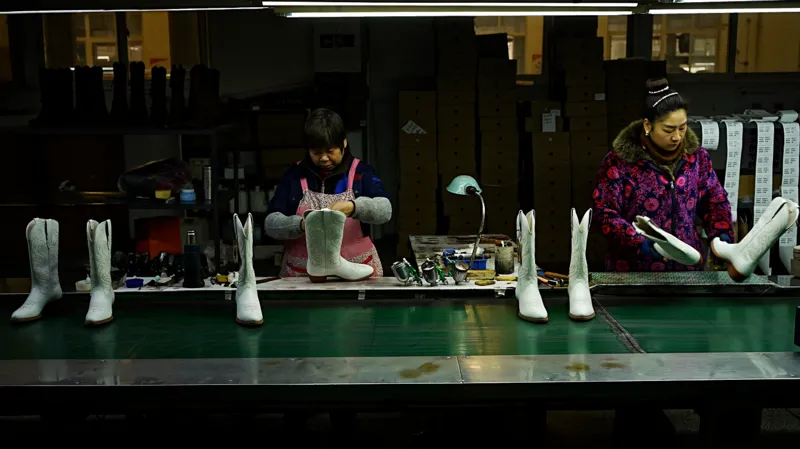
Skilled labor is another concern. Crafting a single pair of boots can take up to a week, from shaping the leather to the final polish—highlighting the labor-intensive production that helped establish China as the world’s manufacturing powerhouse.
“It used to be a continuous cycle of inspecting and shipping goods—I felt fulfilled,” Mr. Peng recalls of his early days at the factory in 2015. “But declining orders leave me feeling lost and anxious.”
The Bigger Picture
The factory’s story mirrors that of many others in Jiangsu province, a manufacturing hub along the Yangtze River. From textiles to electric vehicles, this region has been central to China’s export-driven growth.
However, under Trump, China’s status as America’s top trading partner diminished, and President Biden maintained many of the Trump-era tariffs amid strained U.S.-China relations. The European Union has also imposed tariffs on Chinese electric vehicles, citing overproduction and state subsidies—claims Trump echoes in his criticism of China’s "unfair" trade practices.
Beijing views such accusations as attempts to hinder its growth but remains open to dialogue, emphasizing that there are no winners in a trade war.
Trump, who once called tariffs his “one big power” over China, is open to negotiations—but it’s unclear what he may seek in return. In his first term, Trump sought China’s help in diplomatic efforts with North Korea. This time, he may look to leverage Beijing’s influence over Russia amid the ongoing war in Ukraine, recently stating that China holds “a great deal of power over that situation.”
Additionally, Trump’s proposed 10% tariff is linked to concerns about fentanyl trafficking through Mexico and Canada, with potential demands for China to curb this flow. He may also revisit negotiations over TikTok’s ownership, given the geopolitical weight of the app’s technology.
As the next chapter in U.S.-China trade relations unfolds, Chinese businesses like Mr. Peng’s are left to navigate the uncertainty—prepared, yet anxious about what lies ahead.
News You Should See
FEMA and FCC Set Nationwide Emergency Alert System Test for Today
Lisa's 'Always Lalisa' Documentary Set for November 18 YouTube Premium Release
Darius Rucker Documentary Traces His Rise From Rock to Country Music
Hollywood Honors Glenn Close and Ridley Scott at Governors Awards
Toronto Tempo Claim Top Selection in 2027 WNBA Draft Lottery
Detroit Lions Overpower Patriots 35-10 in Munich Behind Jahmyr Gibbs' Outstanding Performance
Latest News
FEMA and the FCC will test America's Emergency Alert System on November 17 at 2:20 p.m. ET. Radio and TV broadcasts will be interrupted briefly.
Lisa's Always Lalisa documentary arrives on YouTube Premium November 18, featuring her solo career, Coachella performances and The White Lotus experience.
The Hulu documentary explores Darius Rucker's journey from Charleston to rock success with Hootie & the Blowfish and his country music career.
Glenn Close and Ridley Scott receive honorary Oscars alongside Floyd Norman, Pamela Koffler and Christine Vachon at Hollywood's Governors Awards.
Toronto Tempo secure the No. 1 pick in the 2027 WNBA Draft, raising expectations around the franchise's rebuilding plans and potential interest in JuJu Watkins.
Detroit Lions defeat New England Patriots 35-10 in Munich as Jahmyr Gibbs records 252 scrimmage yards and two touchdowns.
Minnesota Vikings defeat Green Bay Packers 30-10 as Kirk Cousins throws two touchdowns and the defense delivers eight sacks and four turnovers.
AAA expects 81.5 million Americans to travel for Thanksgiving 2026, with nearly six million flying as transportation costs influence holiday plans.
Nvidia's upcoming earnings report could offer insights into AI chip demand, data center investments and investor confidence amid uncertainty in the technology market.