Trump's Tariff Threats Likely to Chill North American Investment
Trump's Tariff Threats Likely to Chill North American Investment

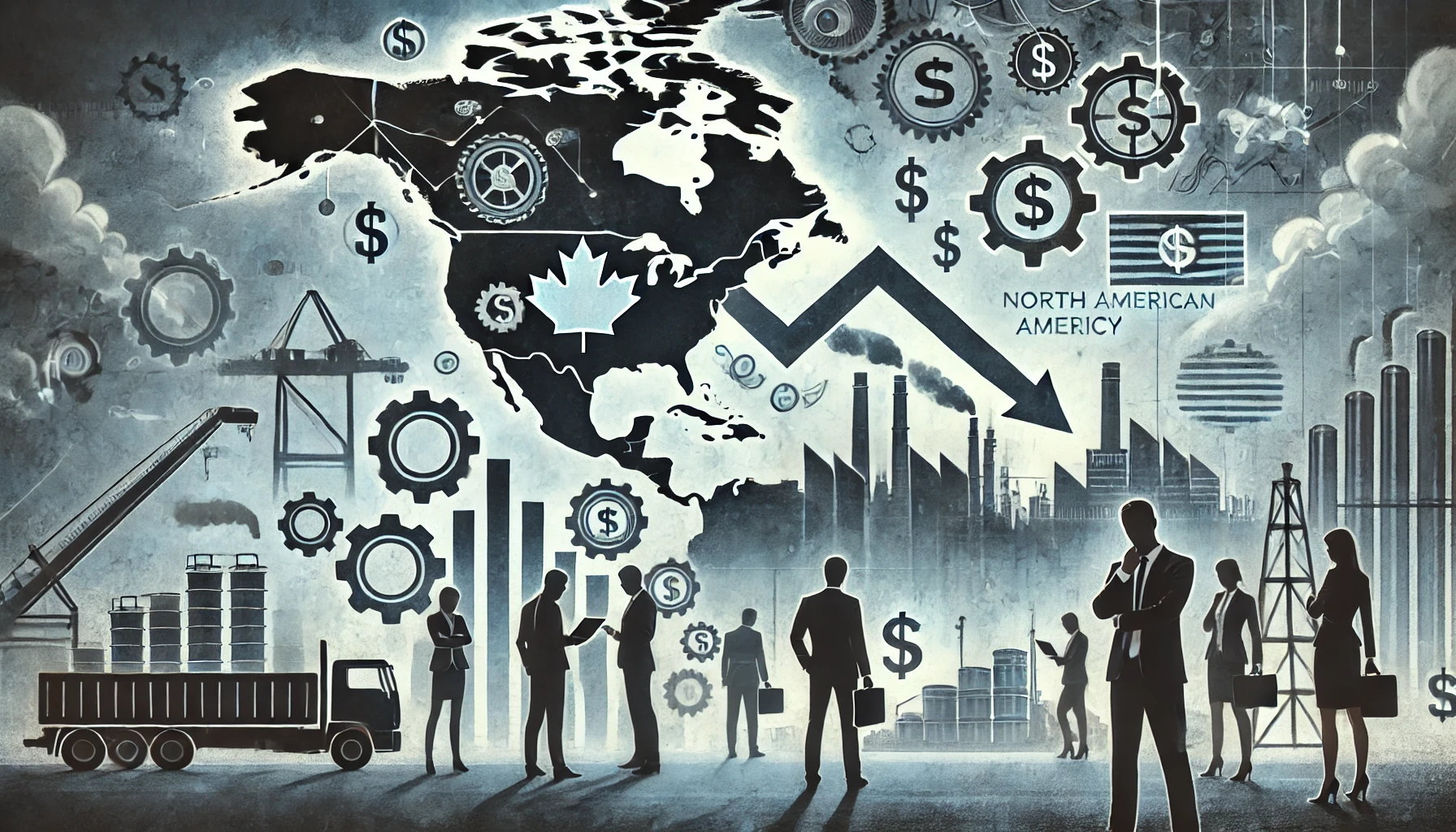
The specter of renewed tariffs by former U.S. President Donald Trump has cast a shadow over North American investment. Although the likelihood of new tariffs being enacted remains low, the uncertainty fueled by Trump's rhetoric is already having tangible effects on investor sentiment and market behavior. Businesses, particularly in sectors vulnerable to trade disruptions, are cautious as they assess the risks associated with potential changes in U.S. trade policy.
Trump's prior presidency was marked by a confrontational trade strategy, with tariffs frequently used as leverage in negotiations with both allies and rivals. The steel and aluminum tariffs imposed under Section 232 and the tit-for-tat trade war with China were a hallmark of this approach. While many of these measures have been rolled back or softened under the Biden administration, Trump's recent comments suggesting a potential return to a hardline stance have reminded investors of the unpredictable nature of U.S. trade policy.
The implications for North American investment are significant. The United States, Canada, and Mexico are deeply integrated through the United States-Mexico-Canada Agreement (USMCA), which replaced NAFTA in 2020. Any disruption in trade flows between these countries can lead to ripple effects across multiple industries, including automotive, agriculture, and manufacturing. Businesses that rely on cross-border supply chains may find themselves in a precarious position, having to prepare contingency plans for a potential breakdown in tariff-free trade. Even the threat of tariffs can lead companies to postpone investments, rethink expansion plans, or reconsider sourcing strategies.
In Mexico, the uncertainty is particularly impactful given the country’s role as a manufacturing hub for North American markets. The auto sector, a critical component of the Mexican economy, is especially sensitive to changes in tariff policy. Automakers that depend on parts moving seamlessly across borders may face increased costs, which could make Mexican production less attractive compared to other global alternatives. This hesitation could lead to reduced growth in Mexico’s manufacturing sector, affecting employment and economic stability.
Canada, too, stands to be affected by any renewed trade tensions. Canada's close economic relationship with the United States means that even minor disruptions can have outsized consequences. Canadian industries, such as steel, aluminum, and agriculture, are closely linked to American markets, and uncertainty about future tariffs puts a strain on bilateral trade relations. Canadian businesses are wary of potential retaliatory measures, as seen during the previous tariff episodes, and this uncertainty stifles enthusiasm for future investment.
The broader consequence of Trump's tariff threats is the chilling effect on business confidence. Trade uncertainty makes long-term planning difficult for companies operating in North America. Executives are hesitant to make decisions involving significant capital expenditures if they perceive a risk of policy shifts that could alter their cost structures or disrupt their access to key markets. Financial markets, too, respond negatively to the possibility of renewed trade confrontations, with investors pulling back from sectors that are most exposed to international trade.
While the likelihood of Trump returning to power and implementing new tariffs remains speculative, the mere potential for such a scenario can influence decisions today. Trade policy is one of the most potent tools for affecting international economic relationships, and the memories of the previous trade disputes are still fresh in the minds of executives and policymakers alike. As the U.S. moves closer to the next election cycle, the rhetoric around tariffs and trade could continue to create waves of uncertainty.
In conclusion, Trump's tariff threats may never materialize into actual policy, but their impact on North American investment is already evident. The uncertainty has raised questions about the stability of cross-border trade, particularly within the context of the USMCA. As businesses await more clarity on U.S. trade policy, the hesitancy to commit to new investments across North America underscores the power of political rhetoric in shaping economic decisions, regardless of whether the policies themselves come to fruition.
News You Should See
Helicopters Over Marseille as Police Pursue Suspects After Jewelry Store Is Targeted
France Protests: TN News Correspondent Documents Police Lines and Crowds in the Streets
Police Presence and Road Barricades Documented in French Protest Footage
France on Edge: Violence, Racism and Political Polarization Raise Fears of a Deeper Divide
DOJ Orders California Counties to Verify Suspected Noncitizen Ballots Ahead of Midterms
Never Stop Making Du’a: Allah’s Door Is Never Closed
Latest News
Police pursued individuals reportedly connected to a jewelry store incident in Marseille’s Cinq-Avenues neighborhood as helicopters flew overhead. Authorities have not confirmed arrests, injuries, theft or property damage.
TN News correspondent Khaled Shokair documents street protests in France, showing police lines, demonstrators, road obstructions and visible haze as key details remain unconfirmed.
Footage from France shows crowds, police officers, road barricades, debris and smoke. The gathering's location, date, cause, and any injuries or arrests remain unconfirmed.
A deadly shooting near Paris, protest-related violence and concerns about France’s 2027 presidential election are intensifying debates over racism, public safety, political polarization and social cohesion.
The U.S. Justice Department has ordered at least 18 California counties to review voter records and set aside ballots linked to suspected noncitizens within 48 hours, escalating a dispute with state officials ahead of the November 3 midterm elections.
Mohamed Amen’s Friday khutbah explores persistent du’a, patience during uncertainty, emotional resilience, and the importance of trusting Allah while pursuing practical solutions.
Procter & Gamble expects commodity, energy and transportation costs to reduce fiscal 2027 profit by $1.4 billion. Quarterly sales rose 4% to $23.28 billion, beating analyst expectations.
A ruptured chemical tank in Toledo, Ohio, prompted evacuations, school closures and an industrial shutdown. Authorities have reduced the restricted zone as the release slows and cleanup preparations continue.
A federal judge has ordered Donald Trump to give a deposition by December 11, 2026, in his $10 billion lawsuit against the BBC, with possible sanctions for noncompliance as the discovery deadline approaches.