Trump’s Diplomatic Push Meets the Limits of American Leverage
The Iran war, China’s rare-earth advantage and resistance from allies expose the growing gap between Washington’s ambitions and its ability to secure outcomes

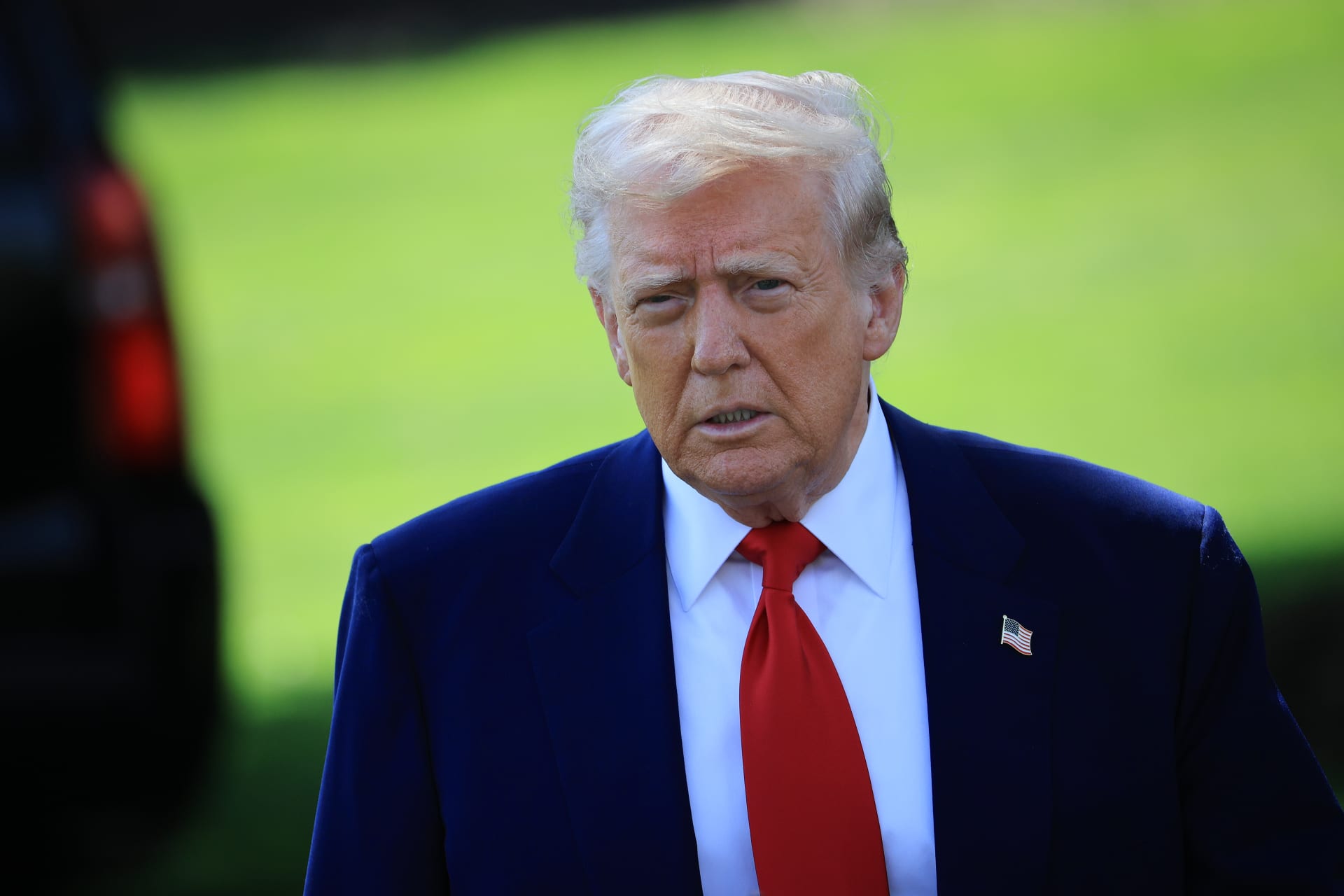
The latest round of U.S. diplomacy has highlighted a central tension in Washington’s foreign policy: the ambition to reshape international affairs through economic and military pressure is increasingly colliding with the constraints imposed by global markets, strategic dependencies and the interests of other major powers.
President Donald Trump entered the week seeking to project American influence through two major stages: his address to the United Nations General Assembly and his summit with Chinese President Xi Jinping at the White House. Yet the outcomes underscored that influence is not measured only by the ability to set an agenda. It also depends on whether partners and competitors are willing to translate that agenda into concrete agreements.
The Iran conflict has become the clearest example. The war, which began with U.S. and Israeli military action against Iran on February 28, has continued for nearly seven months and has affected energy supplies while extending instability toward Yemen and the Red Sea shipping corridor. Trump used his UN speech to defend the campaign and maintain pressure on Tehran, but the continued confrontation has also created economic consequences inside the United States, including higher gasoline prices. Reuters reported that the conflict has become one of the most difficult foreign-policy challenges of Trump’s second term.
For businesses and markets, the significance extends beyond Washington’s political calculations. Prolonged disruption around energy-producing regions and major shipping routes can raise transportation, insurance and input costs, while uncertainty makes corporate planning more difficult. The longer such risks persist, the greater the pressure on companies to build alternative suppliers, increase inventories or diversify logistics.
The U.S.-China relationship presents a different form of constraint. Trump’s meeting with Xi produced a two-month extension of an existing trade truce, while difficult issues including artificial intelligence, Taiwan and Iran remained on the agenda. The limited scope of the immediate outcome illustrates how difficult it is for either side to secure broad concessions when the economic relationship is deeply interconnected.
China’s position is particularly important because of its control over rare earth minerals, which are essential inputs for technology and automobile manufacturing. Beijing has previously demonstrated its ability to restrict exports in response to trade pressure. That leverage changes the calculation for Washington: aggressive tariff or technology measures can impose costs not only on Chinese companies, but also on U.S. manufacturers that depend on critical mineral supply chains.
This creates a strategic contradiction for American industrial policy. Washington wants to strengthen domestic manufacturing and reduce dependence on China, but rebuilding critical supply chains takes time. Until alternative sources of rare earth mining, processing and manufacturing are developed at scale, the United States remains exposed to a degree of Chinese leverage.
The business implications are already visible in the investment decisions of individual companies. U.S. battery startup EnerVenue, for example, opened its first factory in China after abandoning a previously announced Kentucky project. The company cited the depth of the Chinese supply chain, engineering capabilities and lower costs as reasons for the decision. Its Changzhou plant is designed to reach 250 megawatt-hours of annual capacity in 2026 and 1 gigawatt-hour by the third quarter of 2027.
That case illustrates a broader limitation of reshoring policies. Tax incentives and regulatory changes can influence investment, but they cannot immediately reproduce the supplier networks, specialized labor and industrial ecosystems that have developed over decades. For multinational companies, location decisions remain tied to total production economics rather than political objectives alone.
The diplomatic pressure is also extending to U.S. allies. Several European and Asian partners have resisted Washington’s demands for assistance in the Iran conflict, while statements at the UN General Assembly reflected concerns about the use of coercion in international relations. The differences indicate that American influence increasingly has to operate through negotiation with partners rather than through expectations of automatic alignment.
Ukraine provides another example. Trump’s effort to encourage Russia and Ukraine toward even a limited energy ceasefire did not gain the desired traction, highlighting the difficulty of converting presidential diplomacy into an agreement when the parties involved have different strategic calculations.
The Arctic dispute with Denmark and Greenland offers a similar lesson. Washington secured an agreement allowing an expanded U.S. military presence on the island, but that outcome fell short of the earlier demand for ownership and threats of taking the territory by force. The episode demonstrates the difference between setting an ambitious negotiating position and achieving the maximum outcome initially sought.
None of this means that U.S. influence has disappeared. The United States remains a central military, financial and diplomatic power, and the Trump administration has demonstrated its ability to move major international issues rapidly onto the global agenda. The more important question is how much of that agenda can be converted into durable arrangements when other governments possess their own economic and strategic leverage.
China is particularly significant in this respect. Beijing’s expanding trade position, control of critical mineral supply chains and ability to combine economic interests with geopolitical objectives give it tools that cannot be easily neutralized through tariffs or political pressure alone. The recent summit therefore reflects not simply a contest between two leaders, but a broader adjustment in the balance of economic leverage between the world's two largest economies.
For companies, the emerging environment requires a different approach to geopolitical risk. Governments may change tariffs, sanctions or diplomatic priorities quickly, but corporate supply chains cannot be rebuilt at the same speed. Businesses operating across technology, automotive, energy and advanced manufacturing are therefore likely to place greater emphasis on supplier diversification, strategic inventories, regional production and access to critical materials.
The same logic applies to investors. Political announcements can move markets quickly, but their long-term economic impact depends on whether they alter production costs, trade flows, energy availability or access to strategic resources. The gap between political rhetoric and implementable policy is therefore becoming an increasingly important variable in assessing international markets.
Trump’s diplomatic week ultimately illustrates a broader transformation in global power. The United States retains enormous capabilities, but those capabilities operate within a system where China controls important industrial inputs, allies have greater room to resist, and conflicts such as Iran can generate economic costs that feed back into domestic politics.
The strategic challenge for Washington is consequently not simply to demonstrate power, but to convert it into sustainable outcomes. That requires agreements that can survive market pressures, supply-chain realities and the competing interests of other governments. The ability to negotiate those constraints may prove more consequential for U.S. influence than the scale of any individual diplomatic confrontation.
News You Should See
2026 Nobel Medicine Prize Honors Scientists Behind Optogenetics Breakthrough
Oil Prices Edge Lower as Stronger Middle East Exports and G7 Reserves Ease Supply Concerns
Trump Offers U.S. Assistance to Russia After Death at Siberian Plague Research Institute
Trump Takes Economic Message to Nebraska as GOP Faces Rising Cost-of-Living Pressure
U.S. Appeals Court Weighs Trump Administration’s $2.6 Billion Harvard Funding Fight
U.S. Midterm Elections Begin With Resilient Jobs Market and Persistent Cost Pressures
Latest News
The 2026 Nobel Prize in Physiology or Medicine honors Karl Deisseroth, Peter Hegemann and Georg Nagel for pioneering research behind optogenetics and its impact on neuroscience.
Oil prices edged lower as stronger Middle Eastern exports and a planned G7 release of 100 million barrels eased immediate supply concerns, while Gulf security risks and the Strait of Hormuz kept markets alert.
President Donald Trump said the United States would help Russia if needed after a laboratory worker died at a Siberian plague research institute, as Russian authorities imposed precautionary quarantine measures.
Trump’s Nebraska campaign stop highlights rising fuel and grocery costs, beef prices and growing economic pressure on Republicans ahead of the November midterm elections.
A U.S. appeals court is reviewing the Trump administration’s effort to cut Harvard’s federal research funding, with more than $2.6 billion at stake.
The U.S. enters the 2026 midterm elections with unemployment at 4.2%, while higher living and energy costs create economic pressure for households and businesses.
US services growth eased in September as input prices climbed to their highest level since July 2022, with fuel costs, supply-chain disruptions and strong demand increasing pressure on businesses.
Rising Treasury yields are increasing U.S. borrowing costs as Washington manages record debt, persistent inflation and strong economic demand, narrowing its policy options.
A EGP 16 million corporate partnership will establish and equip a bone marrow transplant unit at Cairo’s Coptic Hospital, supporting access to specialized treatment for patients.