Trump Takes Economic Message to Nebraska as GOP Faces Rising Cost-of-Living Pressure
The president’s Nebraska campaign stop puts fuel, grocery and beef prices at the center of a broader effort to protect Republican support in rural America.

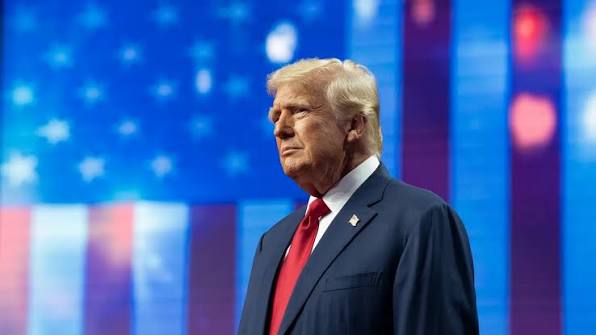
President Donald Trump’s decision to campaign in Nebraska reflects a broader political calculation: the Republican Party is entering the final stretch before the November midterm elections with economic concerns becoming increasingly difficult to separate from electoral strategy.
Trump’s appearance alongside Republican Sen. Pete Ricketts comes as voters continue to express frustration over the cost of everyday necessities, particularly fuel and groceries. The pressure is especially relevant in rural communities, where household budgets are closely tied to transportation, food prices and agricultural conditions. For Republicans, maintaining support in these areas is strategically important because rural voters have become a core component of the party’s electoral coalition.
Nebraska offers Trump a relatively favorable political environment, but the economic debate complicates that advantage. The president is campaigning in Grand Island as early voting begins in the state, seeking to reinforce support for Ricketts and Gov. Jim Pillen while also demonstrating that the administration’s economic agenda remains responsive to voters outside the country’s major metropolitan centers.
One of the clearest points of tension is the administration’s approach to beef imports. Trump has promoted greater access to foreign beef as a way to increase supply and reduce prices for consumers. Nebraska’s ranching industry, however, has pushed back against the proposal, warning that additional imports could weaken the position of domestic producers and intensify competitive pressure on cattle operations.
That disagreement illustrates a larger economic challenge facing the administration. Policies designed to reduce consumer prices can produce very different effects across the supply chain. Lower retail prices may benefit households, but producers can view the same policy as a threat to margins, market share and long-term investment. In an agriculture-heavy state such as Nebraska, that distinction carries direct political consequences.
Fuel costs represent another pressure point. Trump has acknowledged concerns among farmers about elevated diesel prices and indicated that his administration would provide assistance. Diesel remains a significant operating expense for agricultural businesses, affecting planting, harvesting, transportation and other stages of farm production. Any sustained increase therefore has implications beyond individual consumers, feeding into the cost structure of the broader food economy.
The political significance of these issues extends beyond Nebraska. Recent polling cited by the Associated Press indicates that voters have increasingly favored Democrats on the question of which party is better positioned to address the cost of living and the economy. That shift creates a strategic problem for Republicans because economic dissatisfaction can weaken the effectiveness of broader political messaging when voters judge the administration primarily through the prices they encounter every day.
Trump’s response has been to maintain an aggressive campaign schedule ahead of Election Day. His planned travel across a series of competitive states demonstrates how closely the administration is linking its political standing to the performance of Republican candidates. The campaign strategy is not limited to traditional swing states; it also includes heavily Republican regions where maintaining enthusiasm and turnout can be decisive.
For businesses and investors, the political debate is relevant because the outcome of the midterms could influence the direction of economic policy, including agriculture, energy, trade and regulation. Companies operating in food production, transportation, energy and related industries have a direct interest in how policymakers balance consumer affordability with producer competitiveness.
The Nebraska visit therefore represents more than a campaign rally. It is a test of whether the administration can translate its economic policies into a message that resonates with voters facing higher household and operating costs. The challenge is particularly acute when a single policy can create winners and losers across different parts of the same market.
As the November election approaches, the Republican strategy will increasingly depend on whether the administration can convince rural voters that its economic agenda can lower costs without undermining the industries that sustain local economies. Nebraska provides an important case study because agriculture, consumer prices and Republican electoral strength intersect there more directly than in many other states.
The outcome will depend not only on campaign rhetoric but also on how voters evaluate the economic conditions they experience in their own households and businesses. That makes the cost of living one of the most consequential battlegrounds of the remaining campaign period.
News You Should See
2026 Nobel Medicine Prize Honors Scientists Behind Optogenetics Breakthrough
Oil Prices Edge Lower as Stronger Middle East Exports and G7 Reserves Ease Supply Concerns
Trump Offers U.S. Assistance to Russia After Death at Siberian Plague Research Institute
Trump Takes Economic Message to Nebraska as GOP Faces Rising Cost-of-Living Pressure
U.S. Appeals Court Weighs Trump Administration’s $2.6 Billion Harvard Funding Fight
U.S. Midterm Elections Begin With Resilient Jobs Market and Persistent Cost Pressures
Latest News
The 2026 Nobel Prize in Physiology or Medicine honors Karl Deisseroth, Peter Hegemann and Georg Nagel for pioneering research behind optogenetics and its impact on neuroscience.
Oil prices edged lower as stronger Middle Eastern exports and a planned G7 release of 100 million barrels eased immediate supply concerns, while Gulf security risks and the Strait of Hormuz kept markets alert.
President Donald Trump said the United States would help Russia if needed after a laboratory worker died at a Siberian plague research institute, as Russian authorities imposed precautionary quarantine measures.
Trump’s Nebraska campaign stop highlights rising fuel and grocery costs, beef prices and growing economic pressure on Republicans ahead of the November midterm elections.
A U.S. appeals court is reviewing the Trump administration’s effort to cut Harvard’s federal research funding, with more than $2.6 billion at stake.
The U.S. enters the 2026 midterm elections with unemployment at 4.2%, while higher living and energy costs create economic pressure for households and businesses.
US services growth eased in September as input prices climbed to their highest level since July 2022, with fuel costs, supply-chain disruptions and strong demand increasing pressure on businesses.
Rising Treasury yields are increasing U.S. borrowing costs as Washington manages record debt, persistent inflation and strong economic demand, narrowing its policy options.
A EGP 16 million corporate partnership will establish and equip a bone marrow transplant unit at Cairo’s Coptic Hospital, supporting access to specialized treatment for patients.