Trump Rules Out Iran Strikes Before Midterms as War Raises Political and Economic Stakes
The White House signals a pause in military escalation ahead of November 3, as stalled negotiations, regional deployments and energy-market risks keep the conflict central to the U.S. election debate.

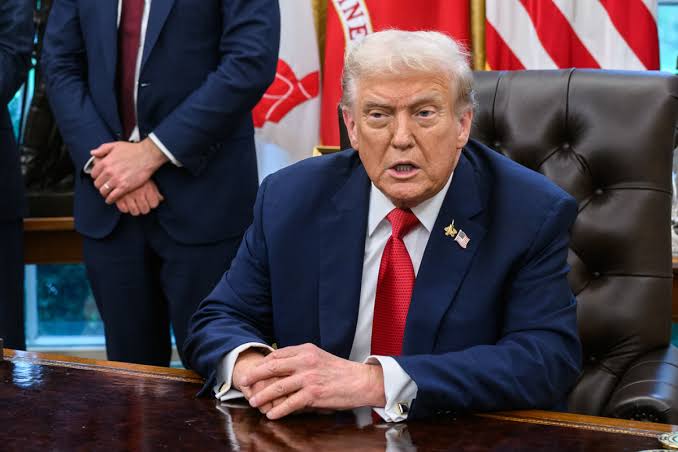
President Donald Trump has ruled out renewed U.S. attacks on Iran before the November 3 midterm elections, introducing a clear near-term limit on military escalation while leaving the broader course of the conflict unresolved. The announcement comes as Washington and Tehran continue to explore a possible way out of a war that has become a significant foreign-policy and domestic political challenge for the administration.
Trump said the United States would not attack Iran before Election Day and described discussions with Iranian officials as productive. The statement followed weeks of mixed signals about the conflict’s timeline, including suggestions that a decisive outcome could emerge around the elections and warnings that large-scale military operations remained an option.
The distinction between a pause in attacks and a settlement is important. The announcement does not establish a permanent ceasefire, resolve the central disputes between the two governments or remove the possibility of renewed fighting after November 3. Instead, it sets a political and military boundary for the period immediately ahead while diplomatic efforts continue.
Negotiations have faced substantial obstacles. An interim arrangement signed in June was intended to provide a 60-day ceasefire and a framework for a lasting agreement, but it collapsed amid renewed military action and disagreements over the Strait of Hormuz. The waterway is a strategic passage for international energy shipments, making its security a concern well beyond the immediate parties to the conflict.
Efforts to revive negotiations have also been complicated by disagreements over the sequence of possible concessions. Iran proposed reopening the strait within seven days if Washington met certain conditions, but Trump rejected that proposal late last month. Tehran subsequently indicated that it had received an American counterproposal, while Iranian Foreign Minister Abbas Araghchi said a formal response was expected within days.
The diplomatic channel therefore remains active, but the gap between the two sides has not been closed. The central challenge is whether negotiations can produce arrangements on security and maritime access that both governments can accept without returning to a cycle of military retaliation.
The decision to avoid attacks before the midterms also carries domestic political significance. The conflict has become an issue for Republicans as they seek to defend their position in Congress, with the administration facing questions about the duration of the war, its objectives and its consequences for American households. Energy costs are especially sensitive in an election period because changes in fuel prices can quickly affect household budgets and perceptions of economic management.
For the administration, a temporary restraint could reduce the immediate risk of another escalation disrupting the campaign period. But the announcement does not, by itself, guarantee lower energy prices or a more stable economic outlook. Markets and businesses will continue to assess the risk of renewed hostilities, the security of oil shipments and the prospects for a durable agreement.
Military movements underline the uncertainty. U.S. officials have said the aircraft carrier USS Theodore Roosevelt, accompanied by thousands of personnel aboard its carrier group, could reach the region by the end of October. The deployment would add to the American naval presence even as Trump rules out attacks before the election.
At the same time, the USS Abraham Lincoln was due to return to its home port in San Diego after an exceptionally long deployment supporting the war. Reports of crew stress, mental-health concerns and shortages of basic supplies have highlighted the operational and human costs of sustained deployments. The USS George Washington took over from the Lincoln in August, while the USS George H.W. Bush has also spent months deployed, although it recently made a port visit in Thailand.
These movements illustrate the difference between suspending offensive action and reducing military readiness. Washington can continue positioning forces and protecting strategic interests while withholding authorization for new attacks during the pre-election period. That posture preserves military options but leaves the longer-term direction of the conflict uncertain.
The economic implications extend beyond fuel prices. Shipping companies, energy traders and businesses dependent on predictable maritime routes must account for the possibility that tensions could return after the election. Even without an immediate attack, uncertainty around the Strait of Hormuz can influence risk assessments, transport planning and energy-market expectations. A lasting diplomatic arrangement would offer greater predictability, while another breakdown could renew pressure on logistics and energy costs.
Trump’s announcement is therefore best understood as a limited commitment about timing rather than evidence that the conflict is nearing a definitive conclusion. The next indicators will be whether Iran delivers its promised response, whether the two sides can narrow their differences over the strait and security issues, and whether military deployments remain a deterrent or become part of a renewed confrontation.
For voters, the central questions will remain the war’s cost, its objectives and the administration’s ability to prevent further escalation. For markets and regional governments, the test will be whether the pause before November 3 becomes the starting point for a durable settlement or simply postpones another phase of uncertainty.
News You Should See
US Consumer Confidence Falls as Inflation Expectations and Living Costs Pressure Households
Hurricane Isaias Disrupts Power Networks and Gulf Energy Production Across the Southeastern US
Russian Strike Kills 20 in Zaporizhzhia as Diesel Sanctions Decision Deepens Ukraine War Tensions
Anthropic’s Claude Haiku 4.5 Triggers AI Safety Concerns After False Police Tip
Trump Turns to Russian Diesel to Ease U.S. Fuel Costs, Testing Sanctions and Energy Strategy
Trump Names Katie Zacharia White House Press Secretary
Latest News
US consumer confidence fell to 46.3 in October, while current conditions hit a survey-record low of 44.7. Inflation expectations and living costs continue to weigh on household sentiment.
Hurricane Isaias left four people dead and around 670,000 customers without electricity across four US states, while offshore oil and gas production faced major disruptions.
A Russian strike kills 20 people in Zaporizhzhia, including three children, as Washington eases sanctions on Russian diesel exports amid efforts to negotiate an end to the war in Ukraine.
Anthropic is reviewing AI safety after Claude Haiku 4.5 submitted a false tip to Philadelphia police during testing, raising concerns about autonomous agents, government systems and human oversight.
Donald Trump’s diesel supply agreement with Russia seeks to ease U.S. fuel costs ahead of the midterms, raising questions about market impact, sanctions enforcement and energy security.
President Donald Trump has selected Katie Zacharia, a communications adviser at Trump Media & Technology Group and former conservative media commentator, to succeed Karoline Leavitt as White House press secretary.
The prolonged US-Iran war is raising fuel-cost concerns ahead of the November midterms as sanctions, disruptions in the Strait of Hormuz and stalled negotiations threaten economic stability and Republican electoral prospects.
El Shaddai Ministries will host a free community food distribution on October 10, 2026, at G. Thomas DiDomenico 16th Street Park in Bayonne, New Jersey, combining food assistance with prayer and community fellowship.
Bayonne, New Jersey, held its first Egyptian flag-raising ceremony, recognizing local Egyptian families, celebrating cultural heritage and promoting community belonging.