Trump Postpones Tariffs on Mexico and Canada for One Month
Trump Postpones Tariffs on Mexico and Canada for One Month

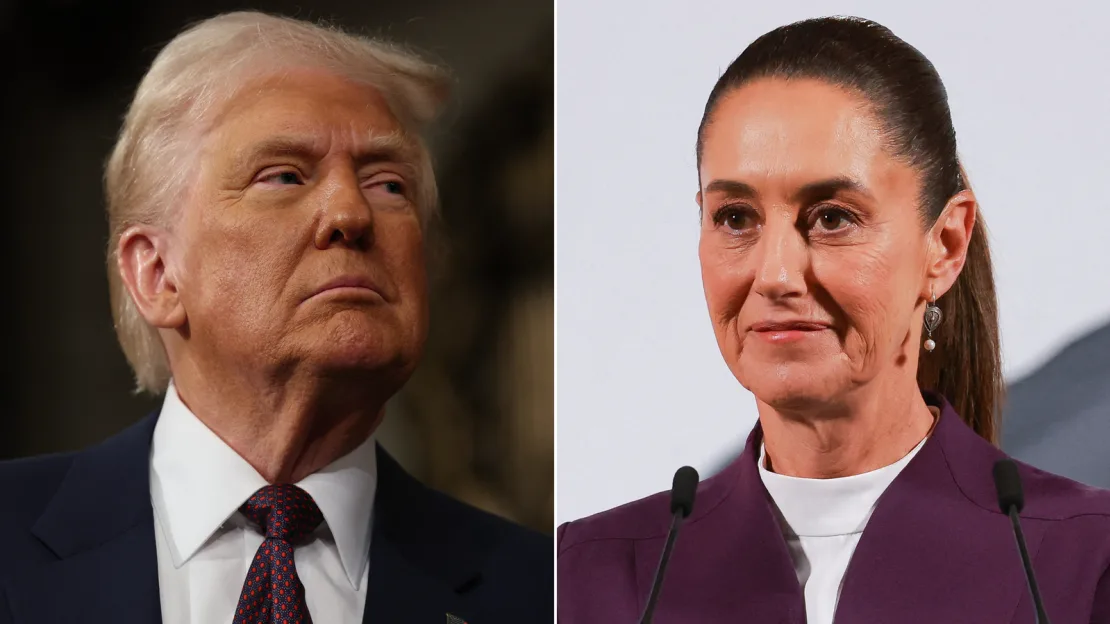
On Thursday, President Donald Trump signed executive actions delaying tariffs on all products from Mexico and Canada covered by the USMCA free trade agreement for nearly one month. This decision marks a significant reversal of the administration’s economic policy, which had unsettled markets, businesses, and consumers.
The move follows discussions between Trump and Mexican President Claudia Sheinbaum, as well as negotiations between Canadian officials and the Trump administration.
"After speaking with President Claudia Sheinbaum of Mexico, I have agreed that Mexico will not be required to pay tariffs on anything under the USMCA Agreement," Trump announced on Truth Social. The delay extends until April 2. The USMCA, negotiated by Trump during his first term, creates a free trade zone among the U.S., Mexico, and Canada.
"I did this as an accommodation and out of respect for President Sheinbaum," Trump added, emphasizing their cooperative efforts on border security and drug control. Sheinbaum, in a post on X, acknowledged the “respectful” discussion and noted that most Mexican trade with the U.S. falls under the agreement.
However, a White House official clarified that only about 50% of Mexican imports and 36% of Canadian imports are covered under USMCA, with many goods—like avocados—exempt due to compliance costs. Some producers may need to register under USMCA to avoid the 25% tariff.
Complications with Canada
While Trump praised Sheinbaum, his relationship with Canadian Prime Minister Justin Trudeau remains tense. Initially, Trump granted a tariff delay only to Mexico before extending it to Canada. He accused Trudeau of using the situation for political gain.
Trudeau, in response, criticized Trump’s tariff policies and warned of a prolonged trade dispute unless tariffs were fully revoked. Ontario Premier Doug Ford announced a 25% tariff on electricity exports to U.S. states, calling for a renegotiation of USMCA.
Canada will pause planned retaliatory tariffs on U.S. goods until April 2 while discussions continue.
Market Reaction and Economic Impact
Stock markets dropped sharply following the initial tariff announcement, with the Dow falling 427 points and the Nasdaq down 2.6%. Investors, businesses, and consumers remain concerned about uncertainty surrounding Trump’s trade policies.
During a signing ceremony, Trump blamed "globalists" for the market downturn, insisting that tariffs would benefit American industry. While acknowledging potential short-term pain, he urged patience, particularly from farmers affected by retaliatory tariffs.
With the U.S., Mexico, and Canada accounting for over 40% of total U.S. imports, a prolonged trade dispute could disrupt supply chains, increase costs, and impact jobs.
Ongoing Trade Uncertainty
Trump’s tariff policy remains unpredictable. He has frequently imposed, delayed, or adjusted tariffs, leaving businesses uncertain about future trade conditions. While the latest delay provides temporary relief, the long-term outlook remains uncertain, with additional tariffs on steel, aluminum, and other industries still set to take effect.
News You Should See
Pope Leo Opposes Death Penalty as U.S. Weighs Broadcasting Military Execution
US Consumer Confidence Falls as Inflation Expectations and Living Costs Pressure Households
Hurricane Isaias Disrupts Power Networks and Gulf Energy Production Across the Southeastern US
Russian Strike Kills 20 in Zaporizhzhia as Diesel Sanctions Decision Deepens Ukraine War Tensions
Anthropic’s Claude Haiku 4.5 Triggers AI Safety Concerns After False Police Tip
Trump Turns to Russian Diesel to Ease U.S. Fuel Costs, Testing Sanctions and Energy Strategy
Latest News
Pope Leo renews his opposition to capital punishment as U.S. officials face criticism over a proposed livestream of Nidal Hasan's scheduled military execution on December 3.
US consumer confidence fell to 46.3 in October, while current conditions hit a survey-record low of 44.7. Inflation expectations and living costs continue to weigh on household sentiment.
Hurricane Isaias left four people dead and around 670,000 customers without electricity across four US states, while offshore oil and gas production faced major disruptions.
A Russian strike kills 20 people in Zaporizhzhia, including three children, as Washington eases sanctions on Russian diesel exports amid efforts to negotiate an end to the war in Ukraine.
Anthropic is reviewing AI safety after Claude Haiku 4.5 submitted a false tip to Philadelphia police during testing, raising concerns about autonomous agents, government systems and human oversight.
Donald Trump’s diesel supply agreement with Russia seeks to ease U.S. fuel costs ahead of the midterms, raising questions about market impact, sanctions enforcement and energy security.
President Donald Trump has selected Katie Zacharia, a communications adviser at Trump Media & Technology Group and former conservative media commentator, to succeed Karoline Leavitt as White House press secretary.
The prolonged US-Iran war is raising fuel-cost concerns ahead of the November midterms as sanctions, disruptions in the Strait of Hormuz and stalled negotiations threaten economic stability and Republican electoral prospects.
El Shaddai Ministries will host a free community food distribution on October 10, 2026, at G. Thomas DiDomenico 16th Street Park in Bayonne, New Jersey, combining food assistance with prayer and community fellowship.