Trump Opens White House Helipad as Media Access Dispute Escalates
Major television networks skipped coverage of the new White House helipad after CNN was excluded from the presidential media pool, intensifying a broader dispute over press access.

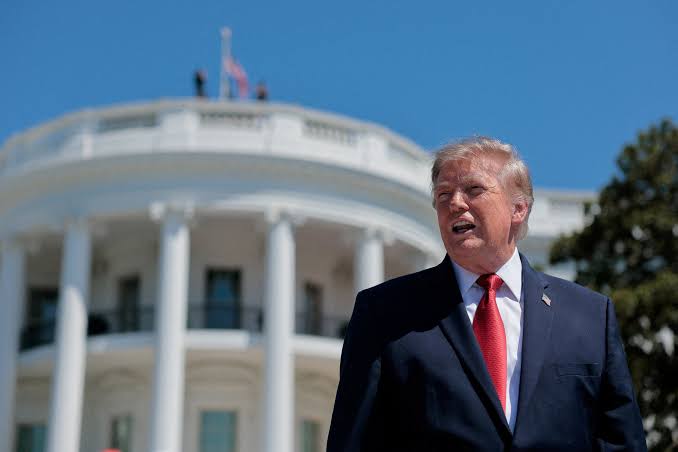
President Donald Trump opened a new helicopter landing pad at the White House on Monday, a project intended to highlight one of the most visible physical changes made to the presidential complex under his administration. Instead, the ceremony became another focal point in the growing dispute between the White House and major U.S. news organizations.
Trump cut the ribbon on the new facility before departing Washington aboard Marine One for New York. The event drew attention not only because of the new landing area, but also because several major television networks that normally participate in the shared coverage of presidential events were absent.
CNN had been removed from its usual place in a five-network rotation responsible for pooled coverage of presidential activities. In response, ABC, CBS, CNN and Fox News jointly declined to cover the helipad ceremony, an unusual show of coordination among competing broadcasters over the way White House media access was being handled.
The decision came shortly after CNN, MS NOW and Politico sued the Trump administration following the president’s announcement that the three organizations would be barred from covering the White House. The dispute has raised legal questions over the administration’s authority to determine which news organizations receive access to presidential events, while the affected outlets have challenged the restrictions under First Amendment principles.
For the media industry, access to the White House is more than a logistical convenience. It forms part of the infrastructure of political journalism. Direct access allows news organizations to provide live coverage, gather original material and compete on speed, access and exclusive reporting.
When that access is restricted, newsrooms may have to rely more heavily on official statements, remote reporting and alternative sources. Such changes can affect not only editorial workflows but also the cost and economics of covering the presidency.
The joint decision by ABC, CBS, CNN and Fox News also underscored the importance of the television news pool system. The arrangement allows competing networks to share the costs and logistics of covering presidential movements while ensuring that participating broadcasters have access to the resulting footage. Removing one organization from the structure can therefore affect the operation of the broader system, rather than simply the company directly involved.
The helipad itself is a separate infrastructure project with practical operational implications. Construction began in June and involved replacing portions of the White House grounds with granite, along with additional work around the landing area.
Trump has said the project was privately funded and estimated its cost at as much as $6 million. Additional work to level the surrounding ground, however, has made the final cost more difficult to determine.
The administration has presented the project as a response to changes in the aircraft used for presidential travel. Trump said newer Marine One helicopters are more powerful than the Vietnam-era aircraft previously used and that repeated landings directly on the White House lawn could cause damage.
Under that explanation, the helipad is being positioned not simply as a cosmetic improvement, but as an operational adjustment designed to accommodate the requirements of modern presidential aviation.
The timing of the project also has a diplomatic dimension. Trump has said the new facility and the surrounding granite work would make an impression on Chinese President Xi Jinping, who is scheduled to visit Washington for a state visit. Trump is also expected to use the new arrangement as part of his travel to New York for the United Nations General Assembly.
The media dispute, however, has overshadowed those objectives. While the administration sought to present the helipad as a new addition to the physical infrastructure of the White House, the ceremony unfolded against a separate institutional dispute over which news organizations should have access to presidential activities and the ability to document them for the public.
The episode highlights how media and communications policies can shape the public reception of government projects, even when those projects are primarily designed to address operational requirements.
For the major television networks, the dispute underscores the strategic value of maintaining access to the White House while protecting the independence of their news operations. For the administration, it illustrates the practical consequences of changing long-established media arrangements.
The controversy is therefore no longer limited to a single ceremony or a particular group of reporters. It has become part of a broader debate over the institutional relationship between the presidency and the organizations responsible for informing the public about presidential activities.
The new helipad may eventually become a permanent part of the White House transportation infrastructure. But the controversy surrounding its inauguration has given the project a significance that extends beyond construction, bringing together questions about presidential infrastructure, communications strategy, media economics and the constitutional boundaries of press access.
News You Should See
2026 Nobel Medicine Prize Honors Scientists Behind Optogenetics Breakthrough
Oil Prices Edge Lower as Stronger Middle East Exports and G7 Reserves Ease Supply Concerns
Trump Offers U.S. Assistance to Russia After Death at Siberian Plague Research Institute
Trump Takes Economic Message to Nebraska as GOP Faces Rising Cost-of-Living Pressure
U.S. Appeals Court Weighs Trump Administration’s $2.6 Billion Harvard Funding Fight
U.S. Midterm Elections Begin With Resilient Jobs Market and Persistent Cost Pressures
Latest News
The 2026 Nobel Prize in Physiology or Medicine honors Karl Deisseroth, Peter Hegemann and Georg Nagel for pioneering research behind optogenetics and its impact on neuroscience.
Oil prices edged lower as stronger Middle Eastern exports and a planned G7 release of 100 million barrels eased immediate supply concerns, while Gulf security risks and the Strait of Hormuz kept markets alert.
President Donald Trump said the United States would help Russia if needed after a laboratory worker died at a Siberian plague research institute, as Russian authorities imposed precautionary quarantine measures.
Trump’s Nebraska campaign stop highlights rising fuel and grocery costs, beef prices and growing economic pressure on Republicans ahead of the November midterm elections.
A U.S. appeals court is reviewing the Trump administration’s effort to cut Harvard’s federal research funding, with more than $2.6 billion at stake.
The U.S. enters the 2026 midterm elections with unemployment at 4.2%, while higher living and energy costs create economic pressure for households and businesses.
US services growth eased in September as input prices climbed to their highest level since July 2022, with fuel costs, supply-chain disruptions and strong demand increasing pressure on businesses.
Rising Treasury yields are increasing U.S. borrowing costs as Washington manages record debt, persistent inflation and strong economic demand, narrowing its policy options.
A EGP 16 million corporate partnership will establish and equip a bone marrow transplant unit at Cairo’s Coptic Hospital, supporting access to specialized treatment for patients.