Trump Expands H-1B Oversight as U.S. Tightens Rules on Foreign Worker Visas
New executive action increases interagency scrutiny of H-1B petitions and extends the $100,000 payment requirement for certain applications.

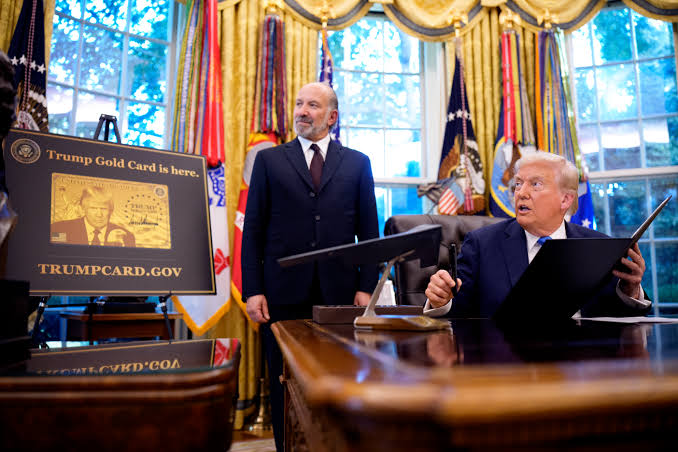
The Trump administration is tightening oversight of the U.S. H-1B visa system by combining greater interagency scrutiny with an extended financial requirement for certain applications. The measures announced on September 18, 2026, place employment trends, wage data and recent layoffs more directly within the federal review of H-1B petitions.
The White House said President Donald Trump signed both an executive order and a proclamation intended to strengthen the administration of the program and address what it describes as risks to American workers and national security. The executive order expands coordination among the Departments of State, Labor and Homeland Security, while bringing the Departments of Commerce and Education and the Small Business Administration into the information-gathering process.
One of the most consequential changes is the instruction for federal agencies reviewing H-1B petitions to consider whether a sponsoring employer has recently laid off, or plans to lay off, U.S. workers in comparable positions. The administration also wants agencies to draw on broader information about wages, industry conditions and employment specialization when assessing applications.
The policy effectively moves H-1B scrutiny toward a more data-driven model. Rather than examining the petition primarily as an individual immigration application, agencies are being directed to consider the employer's wider labor-market circumstances. For companies operating in sectors where workforce reductions and foreign hiring occur simultaneously, this could introduce an additional compliance consideration when planning recruitment.
The administration is also extending the $100,000 payment requirement introduced in September 2025 for certain H-1B applications involving workers outside the United States. The new proclamation extends the restriction for another 12 months, through September 21, 2027, subject to specified exceptions, including cases determined to be in the national interest.
The financial requirement represents a substantial change in the economics of hiring through the H-1B channel for affected employers. A six-figure additional payment can materially alter the cost comparison between domestic recruitment and international hiring, particularly for positions at lower wage levels. At the same time, the policy creates a stronger economic incentive for companies to evaluate the skill level, compensation and strategic importance of each sponsored position.
According to the White House, H-1B registrations submitted by the largest IT outsourcing firms declined by 92% after the 2025 proclamation took effect. The administration also reported a nearly 97% decline in consular processing requests and characterized the changes as contributing to a shift toward higher-skilled and higher-paid foreign workers. These figures are administration-reported measures rather than independent assessments of the overall H-1B labor market.
The administration has framed the policy around concerns about wage competition and the use of outsourcing models in which foreign workers may be employed at lower compensation or in roles that can subsequently be moved outside the United States. The White House argues that such practices can place downward pressure on wages and reduce employment opportunities for U.S. workers.
For technology companies, staffing firms and multinational employers, the new framework could therefore influence workforce planning. Businesses that rely heavily on H-1B recruitment may face greater pressure to document the business rationale for sponsored positions, assess their recent workforce actions and account for the additional financial cost associated with certain petitions.
The measures also form part of a broader restructuring of the H-1B selection and compliance system. In December 2025, the Department of Homeland Security finalized a rule replacing the traditional randomized selection process with a weighted system based on wage levels. The White House said registrations for fiscal year 2027 fell by almost 40% following the change.
The combined effect is to place greater emphasis on compensation and job characteristics within the H-1B system. The administration has stated that the objective is to discourage lower-wage recruitment while preserving access to highly skilled international workers whose expertise is considered necessary by U.S. employers.
There is also a broader labor-market dimension. The White House cited unemployment among recent computer science graduates at 6.1% and among recent computer engineering graduates at 7.5% before the 2025 proclamation. The administration has used those figures to support its argument that the H-1B system should be more closely aligned with domestic workforce conditions.
The latest proclamation itself cites more recent labor-market indicators, noting that unemployment among recent college graduates stood at 5.7% in June 2026, compared with 5.8% in September 2025, while underemployment increased slightly over the same period. The administration says these conditions, along with continuing concerns over fraud and prevailing-wage rules, justify maintaining the restrictions.
From a corporate strategy perspective, the policy could make immigration planning more closely connected to human-resources and compensation decisions. Employers may need to evaluate not only whether a candidate meets the technical requirements of an H-1B position, but also how that position fits within the company's wage structure, workforce plans and recent employment decisions.
For the technology and outsourcing industries, the potential impact is particularly significant because these sectors have historically been major users of H-1B visas. A more expensive and closely scrutinized visa process could encourage companies to reconsider the balance between domestic hiring, international recruitment, remote delivery models and overseas outsourcing.
The policy also has implications for the competitive positioning of U.S. employers. Higher barriers for certain forms of foreign recruitment may reduce the attractiveness of lower-cost staffing models while increasing the relative importance of specialized talent. At the same time, companies competing for scarce technical skills may need to weigh the additional cost of sponsorship against the business value of securing particular expertise.
The administration's latest action therefore represents more than an immigration-processing adjustment. It connects H-1B eligibility with labor-market data, employer workforce decisions, wage levels and national economic priorities. The continued implementation of these measures will determine how employers adapt their recruitment strategies and whether the program increasingly concentrates on higher-paid and more specialized positions.
The White House has presented the changes as part of a wider effort to strengthen immigration enforcement and prioritize U.S. workers. The practical outcome for businesses, however, will depend on how agencies apply the new review criteria, how employers adjust compensation and hiring practices, and how the labor market responds to changes in the availability and cost of H-1B workers.
News You Should See
2026 Nobel Medicine Prize Honors Scientists Behind Optogenetics Breakthrough
Oil Prices Edge Lower as Stronger Middle East Exports and G7 Reserves Ease Supply Concerns
Trump Offers U.S. Assistance to Russia After Death at Siberian Plague Research Institute
Trump Takes Economic Message to Nebraska as GOP Faces Rising Cost-of-Living Pressure
U.S. Appeals Court Weighs Trump Administration’s $2.6 Billion Harvard Funding Fight
U.S. Midterm Elections Begin With Resilient Jobs Market and Persistent Cost Pressures
Latest News
The 2026 Nobel Prize in Physiology or Medicine honors Karl Deisseroth, Peter Hegemann and Georg Nagel for pioneering research behind optogenetics and its impact on neuroscience.
Oil prices edged lower as stronger Middle Eastern exports and a planned G7 release of 100 million barrels eased immediate supply concerns, while Gulf security risks and the Strait of Hormuz kept markets alert.
President Donald Trump said the United States would help Russia if needed after a laboratory worker died at a Siberian plague research institute, as Russian authorities imposed precautionary quarantine measures.
Trump’s Nebraska campaign stop highlights rising fuel and grocery costs, beef prices and growing economic pressure on Republicans ahead of the November midterm elections.
A U.S. appeals court is reviewing the Trump administration’s effort to cut Harvard’s federal research funding, with more than $2.6 billion at stake.
The U.S. enters the 2026 midterm elections with unemployment at 4.2%, while higher living and energy costs create economic pressure for households and businesses.
US services growth eased in September as input prices climbed to their highest level since July 2022, with fuel costs, supply-chain disruptions and strong demand increasing pressure on businesses.
Rising Treasury yields are increasing U.S. borrowing costs as Washington manages record debt, persistent inflation and strong economic demand, narrowing its policy options.
A EGP 16 million corporate partnership will establish and equip a bone marrow transplant unit at Cairo’s Coptic Hospital, supporting access to specialized treatment for patients.