Trump and Musk’s Corporate Takeover of America: Privatization at Any Cost
Trump and Musk’s Corporate Takeover of America: Privatization at Any Cost

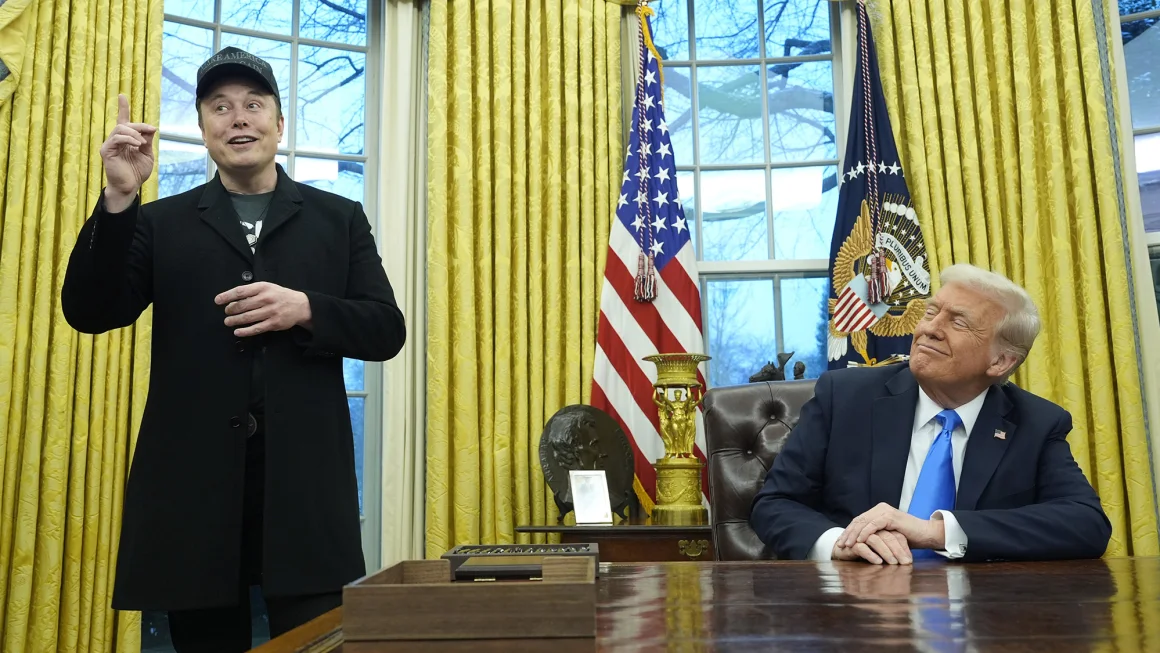
Over the past six weeks, federal employees have watched uneasily as tech engineers—many with no government experience—have entered their offices with a mission to eliminate inefficiencies and root out corruption.
While their strategy remains unclear, it’s unsurprising given the backgrounds of Donald Trump and Elon Musk—two businessmen steeped in private enterprise, where CEOs operate with near-absolute authority and minimal oversight.
Both Trump and Musk seem determined to run the country like a corporation. However, their approach closely resembles a private equity playbook—one that prioritizes maximizing returns, slashing costs to the bone, and burdening institutions with unsustainable debt.
Of the five companies Musk oversees, only Tesla operates under strict public-market regulations. While he owes much of his wealth to Tesla shareholders, he frequently clashes with regulators and investors. Speaking at a tech conference, Musk argued for widespread privatization, citing the U.S. Postal Service and Amtrak as prime candidates.
Trump’s ventures into public markets have been largely disastrous—except for himself. His Trump Hotels and Casino Resorts, which went public in 1995, never turned a profit and eventually collapsed into bankruptcy in 2004, wiping out investors. His media company, Trump Media & Technology Group, remains a volatile, cash-burning entity resembling a meme stock.
The Private Equity Playbook in Action
Neither Trump nor Musk comes directly from private equity, yet their tactics closely align with its methods:
Acquiring a “Struggling” Institution – Wealthy investors take control of a company, remove it from public scrutiny, and aggressively cut costs.
Restructuring for Profitability – Assets are sold off, and the company is streamlined to make it attractive to future buyers.
Debt and Deterioration – The company is often saddled with heavy debt while cost-cutting undermines its long-term viability. Research indicates that private equity-owned firms are 10 times more likely to go bankrupt than their non-targeted counterparts.
Musk’s acquisition of Twitter (now X) in 2022 followed this exact playbook, using a leveraged buyout that left the company responsible for repaying a third of the $44 billion purchase price. Since then, X has lost nearly 80% of its value, with advertisers and users fleeing due to Musk’s erratic leadership and controversial platform policies.
Similarly, Trump exploited his publicly traded casino company to buy another one of his debt-ridden casinos, the Taj Mahal. While the deal was lucrative for Trump, it buried the company under a mountain of debt, a classic private equity move.
Asset Stripping Washington, D.C.?
Once private equity takes over a company, asset-stripping often follows. Properties are sold off, layoffs begin, and cost-cutting becomes the priority.
This pattern is now playing out in the federal government. Tens of thousands of jobs are at risk, with Musk’s Department of Government Efficiency overseeing drastic staff reductions. Reports indicate the Trump administration plans to slash over 70,000 jobs at the Department of Veterans Affairs alone.
Meanwhile, valuable federal real estate may soon be up for grabs. The Trump administration has proposed selling 440 “non-core” government properties, claiming the move could save $430 million annually. Though officials later walked back the list, the intent remains clear: liquidation of public assets.
Who Benefits?
The destination of the money saved and generated remains ambiguous. Trump has suggested that some funds may go toward reducing national debt or even issuing payments to citizens. However, if history is any indication, the financial gains are likely to benefit the already wealthy—just as they do in private equity deals.
News You Should See
Helicopters Over Marseille as Police Pursue Suspects After Jewelry Store Is Targeted
France Protests: TN News Correspondent Documents Police Lines and Crowds in the Streets
Police Presence and Road Barricades Documented in French Protest Footage
France on Edge: Violence, Racism and Political Polarization Raise Fears of a Deeper Divide
DOJ Orders California Counties to Verify Suspected Noncitizen Ballots Ahead of Midterms
Never Stop Making Du’a: Allah’s Door Is Never Closed
Latest News
Police pursued individuals reportedly connected to a jewelry store incident in Marseille’s Cinq-Avenues neighborhood as helicopters flew overhead. Authorities have not confirmed arrests, injuries, theft or property damage.
TN News correspondent Khaled Shokair documents street protests in France, showing police lines, demonstrators, road obstructions and visible haze as key details remain unconfirmed.
Footage from France shows crowds, police officers, road barricades, debris and smoke. The gathering's location, date, cause, and any injuries or arrests remain unconfirmed.
A deadly shooting near Paris, protest-related violence and concerns about France’s 2027 presidential election are intensifying debates over racism, public safety, political polarization and social cohesion.
The U.S. Justice Department has ordered at least 18 California counties to review voter records and set aside ballots linked to suspected noncitizens within 48 hours, escalating a dispute with state officials ahead of the November 3 midterm elections.
Mohamed Amen’s Friday khutbah explores persistent du’a, patience during uncertainty, emotional resilience, and the importance of trusting Allah while pursuing practical solutions.
Procter & Gamble expects commodity, energy and transportation costs to reduce fiscal 2027 profit by $1.4 billion. Quarterly sales rose 4% to $23.28 billion, beating analyst expectations.
A ruptured chemical tank in Toledo, Ohio, prompted evacuations, school closures and an industrial shutdown. Authorities have reduced the restricted zone as the release slows and cleanup preparations continue.
A federal judge has ordered Donald Trump to give a deposition by December 11, 2026, in his $10 billion lawsuit against the BBC, with possible sanctions for noncompliance as the discovery deadline approaches.