Trump Administration Faces High-Stakes Negotiations with Iran Over Nuclear Deal
As the U.S. and Iran negotiate over Tehran’s nuclear program, deep divides remain over uranium enrichment and military threats.

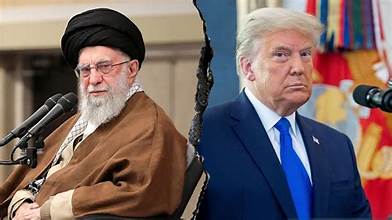
The ongoing talks between the Trump administration and the Islamic Republic of Iran have intensified concerns about Iran’s nuclear ambitions. Negotiations are centered around the regime’s failure to dismantle its illicit nuclear weapons program, and the possibility of reaching a new agreement is uncertain.
During a recent appearance on "The Story with Martha MacCallum," retired General Jack Keane, a senior strategic analyst for Fox News, criticized Iran for reusing the same tactics that helped secure the controversial Joint Comprehensive Plan of Action (JCPOA) under the Obama administration. He described Iran’s strategy as a “bold-faced lie” that contributed to the “disastrous” 2015 agreement. Keane’s claim is that Iran is once again asserting that it will reduce highly enriched uranium to a low level, supposedly for civilian purposes, while secretly advancing its nuclear weapon capabilities.
In 2018, President Trump pulled the United States out of the JCPOA, citing its failure to halt Iran’s nuclear weapons ambitions. The Trump administration’s stance remains firm: Iran must never be allowed to possess a nuclear weapon or have an enrichment program. A State Department spokesperson stated, “Iran cannot have a nuclear weapon or enrichment program,” emphasizing that a new deal must align with President Trump’s objectives of preventing Iran from obtaining nuclear capabilities.
Enrichment of Uranium: The Central Issue
The crux of the negotiations revolves around Iran’s uranium enrichment program. Enriching uranium is critical for producing nuclear weapons, and Tehran’s ongoing enrichment efforts have raised alarms across the international community. Iranian Foreign Minister Abbas Araghchi recently stated, "Enrichment is non-negotiable." Iran views enrichment as an essential sovereign right, despite calls from the U.S. to halt it.
The 2015 JCPOA allowed Iran to enrich uranium up to 3.67%, a concession made by the Obama administration. Critics, including Mark Wallace, CEO of United Against Nuclear Iran, argue that this concession has only accelerated Iran’s nuclear weapons development. The International Atomic Energy Agency (IAEA) confirmed earlier this year that Iran has significantly increased its uranium production, which could be used to build six nuclear bombs, raising further concerns about Tehran’s intentions.
Trump’s Tough Stance: Military Action and Negotiation Deadlock
President Trump has made it clear that Iran cannot be permitted to develop nuclear weapons, and he has even indicated that military action could be a viable option if Iran does not comply with U.S. demands. Trump’s hardline approach reflects the belief that military pressure has historically influenced Iran to pause its nuclear program. John Hannah, a senior fellow at the Jewish Institute for National Security of America (JINSA), referenced the U.S. invasion of Iraq in 2003, which led Iran’s Supreme Leader Ali Khamenei to briefly pause nuclear weapons development due to fears of military action.
The Trump administration is working within a two-month framework to reach a deal with Iran. However, this timeline is fraught with challenges, particularly as Iran remains firm on its red lines. These include refusing to dismantle its centrifuges, halt enrichment altogether, or reduce its stockpile of enriched uranium below the levels outlined in the original 2015 deal.
Iran’s Red Lines and Potential for Negotiation
While Iran has reportedly expressed a willingness to accept some limits on its uranium enrichment, it has made it clear that certain red lines are non-negotiable. These include:
Not dismantling its centrifuges or halting enrichment.
Not reducing its enriched uranium stockpile below the 2015 JCPOA level.
Maintaining its right to enrich uranium as a sovereign matter, as dictated by Supreme Leader Ali Khamenei.
This stance complicates the already difficult negotiations, making it unclear whether the Trump administration will find a workable framework for a new deal.
The Path Ahead: Can a Deal Be Reached?
The road to a new nuclear deal remains uncertain. Both sides are entrenched in their positions, with the U.S. seeking a complete dismantling of Iran’s nuclear infrastructure and Iran asserting its right to enrich uranium. As the Trump administration works toward a potential agreement, the shadow of military action looms large if diplomacy fails. The fate of the talks will depend on whether both sides can find common ground on key issues like uranium enrichment and verification.
For now, the world watches closely as the U.S. and Iran navigate this high-stakes diplomatic and military standoff, with the potential for far-reaching consequences for regional and global security.
News You Should See
Democrats Win Historic House Majority, Reshaping Washington's Political Landscape
Thanksgiving Storm Threatens Major US East Coast Travel Routes With Flooding and 60 MPH Winds
Manchester City Prepare for Tactical Battle Against Napoli in Champions League
Arsenal Face Borussia Dortmund in High-Stakes Champions League Test
The Hunger Games: Sunrise on the Reaping Delivers $225 Million Global Box Office Debut
US Data Centers Consume as Much Electricity as Michigan, Harvard Study Reveals
Latest News
Democrats secure at least 259 House seats and a 56-seat Senate majority, setting the stage for major changes in US healthcare, spending and congressional oversight.
A developing Thanksgiving storm threatens the US East Coast with heavy rain, coastal flooding and wind gusts of up to 60 mph, raising concerns about airport operations, road travel and holiday transportation in major cities.
Manchester City host Napoli in a key Champions League clash, with Haaland, Foden and Cherki expected to lead the English side's attacking efforts.
Arsenal prepare to host Borussia Dortmund in a crucial Champions League clash, with injuries and tactical decisions potentially shaping the outcome.
The Hunger Games: Sunrise on the Reaping earns $225 million worldwide in its opening weekend, strengthening the franchise's box-office position.
Harvard research estimates that 403 US hyperscale data centers consume up to 99 terawatt-hours annually, raising concerns about AI's environmental impact.
Researchers train a 12,000-pound John Deere 332G loader using AI and reinforcement learning to balance on two wheels and perform controlled movements.
Kodak introduces SlideTag, a $34.99 digital photo accessory featuring a 1.54-inch E Ink screen, photo storage, and Bluetooth tracking support.
Samsung may skip next year's Galaxy Watch launch after disappointing sales expectations, potentially shifting to a two-year release cycle while prioritizing software improvements.