"The World Grows Weary of Trump’s Unpredictable Leadership"
"The World Grows Weary of Trump’s Unpredictable Leadership"

Chaos in governance has returned.
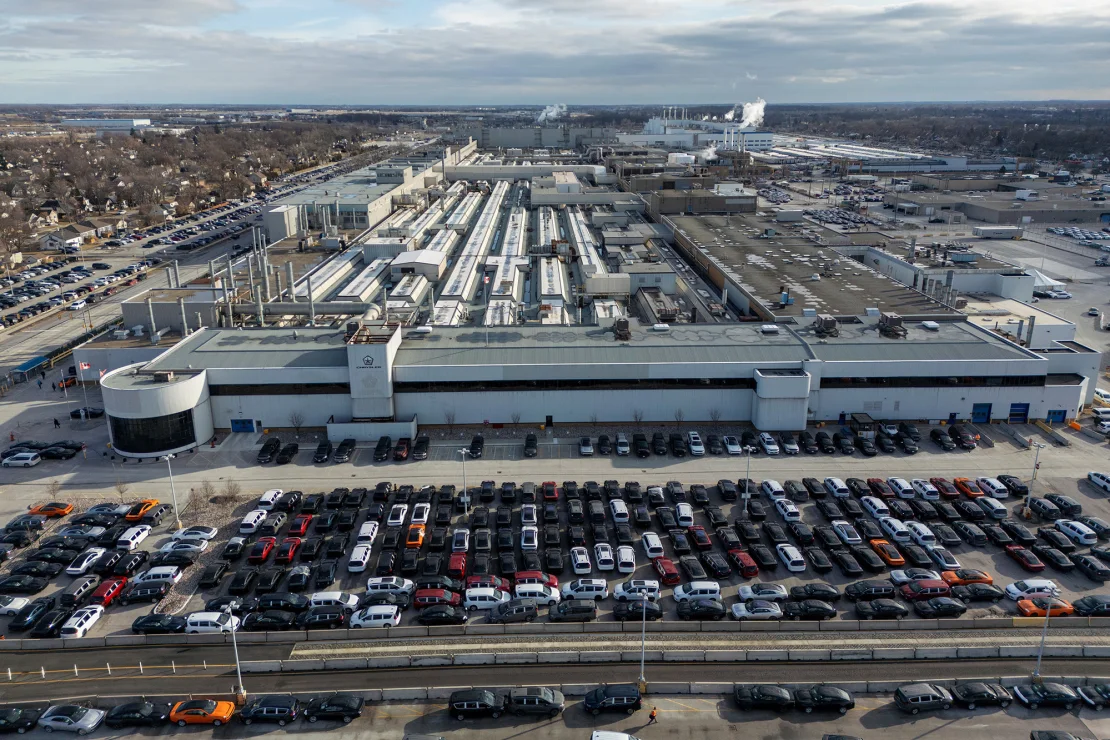
One day, President Donald Trump imposed harsh tariffs on Canada and Mexico. The next, he backtracked on auto duties for a month after realizing—just as many had warned—that they could devastate a key American industry.
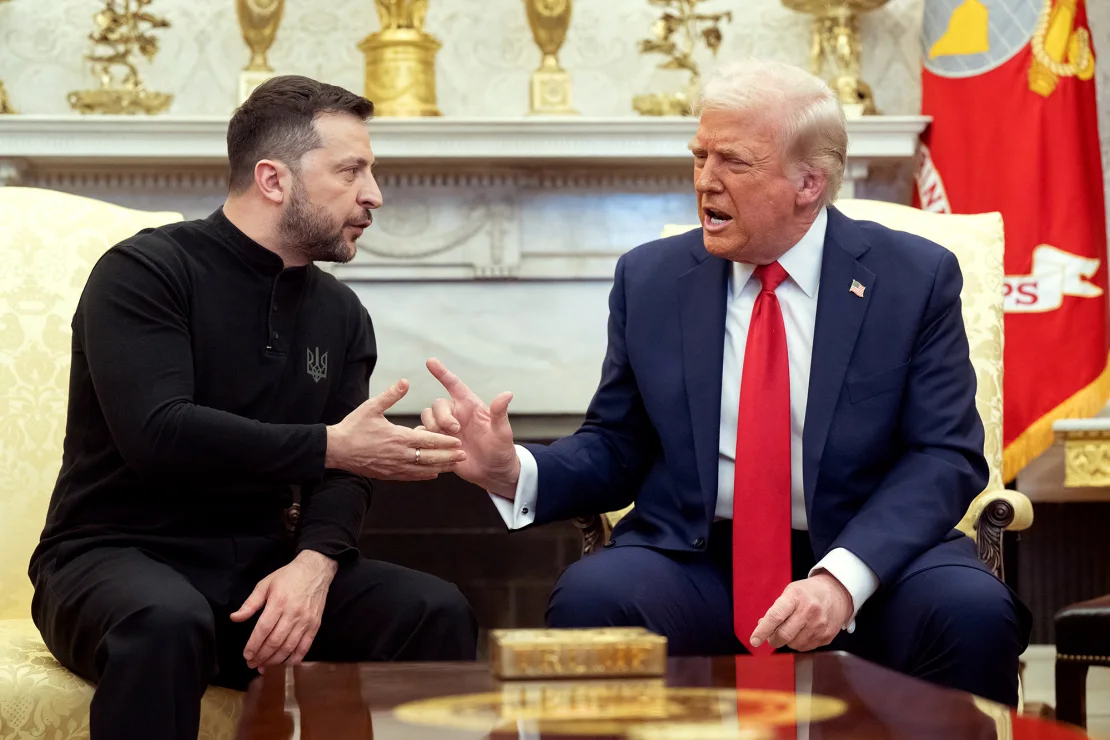
Last week, Ukrainian President Volodymyr Zelensky visited the Oval Office to sign a rare-earth minerals deal, which Trump hailed as a victory for the U.S. However, tensions escalated when Vice President J.D. Vance provoked Zelensky, leading to his abrupt departure from the White House. European leaders have since scrambled to contain the fallout.
Meanwhile, Elon Musk is aggressively slashing bureaucracy, indiscriminately firing workers, and dismantling government agencies, creating uncertainty for citizens and businesses that rely on federal support—just as the economy faces increasing vulnerability.
Initially, Trump’s energetic decision-making and executive orders injected a sense of urgency, contrasting with the slow-moving bureaucracy of Joe Biden’s final months in office.
However, six weeks into his new term, Trump’s impulsive moves to unravel post-Cold War security frameworks, disrupt global trade, and dismantle government institutions—key pillars of U.S. superpower status—have sparked a realization: there seems to be no coherent strategy.
His erratic efforts to broker peace in Ukraine, revive Rust Belt industries with outdated 19th-century tariffs, and slash government spending appear as spontaneous as his campaign speeches, dubbed “the weave.”
Once again, the world finds itself at the mercy of the “America First” president’s unpredictable impulses.
“There’s too much unpredictability and chaos coming out of the White House right now,” Canadian Foreign Minister Mélanie Joly said on Wednesday, describing U.S. trade policy as a “psychodrama” that Canada cannot endure every 30 days.
Unpredictability as a Double-Edged Sword
Trump’s gut-driven leadership can sometimes yield results, but just as often, it backfires.
America’s allies often struggle to decipher Trump’s true intentions. For example, on Wednesday, he claimed Canada hadn’t done enough to stop the flow of fentanyl across the border—despite the fact that only minuscule amounts come from Canada. Similarly, he has criticized undocumented migration from the north, despite low numbers, and has pressured manufacturers to relocate to the U.S., leaving Canadian officials questioning whether his goal is to weaken their country for future annexation.
However, Trump’s aggressive foreign policy tactics have occasionally paid off. His outrage over a Hong Kong-based company owning two key ports at the Panama Canal has led to a U.S. investment firm, BlackRock, stepping in to acquire them. While his original claim that China controlled the waterway was inaccurate, the shift in ownership could still enhance U.S. strategic interests.
Trump’s pressure on NATO allies has also led to an unprecedented European rearmament effort—something previous U.S. presidents had long demanded.
Yet, more often than not, Trump appears driven more by a desire for dominance than by a well-thought-out plan.
Michael Froman, former U.S. Trade Representative and current chair of the Council on Foreign Relations, Jim Sciutto that tariffs can be effective in bringing nations to the negotiating table. However, he cautioned, “You have to know what you want them to do for that leverage to be useful.”
The Chaos is the Point
To some extent, Trump’s unpredictability is intentional. His theatrical approach to politics is central to his appeal.
But America’s allies have their own political pressures, a reality the Trump administration often overlooks.
On Wednesday, Mexican President Claudia Sheinbaum, who is new to office and eager to make her mark, suggested that Mexico could seek alternative trade partners if necessary.
Similarly, British Prime Minister Keir Starmer took a pointed jab at the administration on Tuesday, honoring British soldiers who fought alongside the U.S. in Iraq and Afghanistan—just days after Vice President Vance dismissed Britain’s military contributions in a Fox News interview. Vance later denied that he was referring to the UK, but Britain and France remain the only nations publicly committed to joining a post-war security force in Ukraine.
Meanwhile, French President Emmanuel Macron warned that Europe must prepare for a new era, even suggesting extending France’s nuclear protection to European allies in response to Trump’s policies.
For some of Trump’s supporters, his ability to frustrate Democrats, the media, and foreign governments is part of his appeal. And for populist nationalists, dismantling Washington’s governing institutions is a deliberate goal.
Trump’s political style was shaped in his Manhattan skyscraper, where he learned to throw opponents off balance with extreme demands, public confrontations, and sudden reversals. Now, he employs the same tactics in government, using unpredictability to maintain control.
However, while unpredictability may work in real estate, it is a liability when managing a country, an economy, and global stability—where continuity and foresight are essential.
“It’s just constant, and it’s exhausting,” said Julian Vikan Karaguesian, a former Canadian Finance Ministry official, referring to Trump’s chaotic tariff policies. “It’s almost surreal. Is it real? Is it going to be real this time?” He added, “Maybe the strategy here is not tariffs, but the deliberate creation of chaos and uncertainty.”
A Temporary Retreat on Auto Tariffs
Trump’s recent pause on auto tariffs—just a day after imposing a blanket 25% tariff on Canadian and Mexican vehicles—demonstrates his occasional willingness to reverse course.
Stock market volatility may have played a role in his decision. His reversal triggered a near-500-point rebound in the Dow Jones after two days of steep losses.
reported that Trump relented after conversations with top U.S. auto executives. His press secretary, Karoline Leavitt, later stated that the president was open to “considering additional exemptions.”
This selective approach—where well-connected CEOs can secure exemptions while small businesses bear the burden—is the antithesis of a fair economic system. But Trump has shown little regard for rules-based governance, favoring a system where personal access to power determines outcomes.
His pattern of threatening tariffs, then wavering, creates massive uncertainty for businesses needing cost stability and consumers who might hold back spending—potentially slowing an already fragile economy.
“There’s so much uncertainty about what the administration is doing that the mere prospect of tariffs is creating a big anchor on the economy,” Bharat Ramamurti, former deputy director of Biden’s National Economic Council, said Monday. “The possibility of sweeping tariffs on allies has led to withheld investments and preemptive price hikes—costs that will ultimately fall on small businesses and consumers.”
The Risks of Trump’s Volatility
Trump’s relentless pressure on America’s allies—while appearing to favor Russia’s interests in Ukraine—could ultimately weaken U.S. influence.
“What we’ve seen this week is a sharp decline in the U.S. dollar,” said Ruchir Sharma, founder of Breakout Capital. “It’s a sign that the world is finding alternative paths … and investors are noticing other opportunities, given the policy instability in the U.S.”
If Trump continues his approach for another four years, the global order may shift in ways that undermine his vision of U.S. dominance—leaving America isolated.
Mexico and Canada, despite their geographic ties to the U.S., may increasingly pivot towards China. Meanwhile, the European Union, bracing for its own wave of Trump tariffs, could explore new trade alliances.
America’s Western allies remain deeply connected to Washington and do not wish for U.S. decline. But they also have national interests to protect.
Canada, for example, cannot win a trade war with its larger neighbor, but its patience with Trump’s brinkmanship is running out.
Doug Ford, Premier of Ontario, which houses Canada’s largest economy, insists that Trump must eliminate all tariffs rather than selectively easing them industry by industry.
“All this does is create more uncertainty,” Ford Phil Mattingly. “There is one person responsible for this chaos today: President Trump.”
News You Should See
Pope Leo Opposes Death Penalty as U.S. Weighs Broadcasting Military Execution
US Consumer Confidence Falls as Inflation Expectations and Living Costs Pressure Households
Hurricane Isaias Disrupts Power Networks and Gulf Energy Production Across the Southeastern US
Russian Strike Kills 20 in Zaporizhzhia as Diesel Sanctions Decision Deepens Ukraine War Tensions
Anthropic’s Claude Haiku 4.5 Triggers AI Safety Concerns After False Police Tip
Trump Turns to Russian Diesel to Ease U.S. Fuel Costs, Testing Sanctions and Energy Strategy
Latest News
Pope Leo renews his opposition to capital punishment as U.S. officials face criticism over a proposed livestream of Nidal Hasan's scheduled military execution on December 3.
US consumer confidence fell to 46.3 in October, while current conditions hit a survey-record low of 44.7. Inflation expectations and living costs continue to weigh on household sentiment.
Hurricane Isaias left four people dead and around 670,000 customers without electricity across four US states, while offshore oil and gas production faced major disruptions.
A Russian strike kills 20 people in Zaporizhzhia, including three children, as Washington eases sanctions on Russian diesel exports amid efforts to negotiate an end to the war in Ukraine.
Anthropic is reviewing AI safety after Claude Haiku 4.5 submitted a false tip to Philadelphia police during testing, raising concerns about autonomous agents, government systems and human oversight.
Donald Trump’s diesel supply agreement with Russia seeks to ease U.S. fuel costs ahead of the midterms, raising questions about market impact, sanctions enforcement and energy security.
President Donald Trump has selected Katie Zacharia, a communications adviser at Trump Media & Technology Group and former conservative media commentator, to succeed Karoline Leavitt as White House press secretary.
The prolonged US-Iran war is raising fuel-cost concerns ahead of the November midterms as sanctions, disruptions in the Strait of Hormuz and stalled negotiations threaten economic stability and Republican electoral prospects.
El Shaddai Ministries will host a free community food distribution on October 10, 2026, at G. Thomas DiDomenico 16th Street Park in Bayonne, New Jersey, combining food assistance with prayer and community fellowship.