The UN’s Next Leader Must Be Chosen for Independence, Not Convenience
The 2026 succession is more than a leadership contest; it is a test of whether the United Nations can restore confidence in multilateralism.
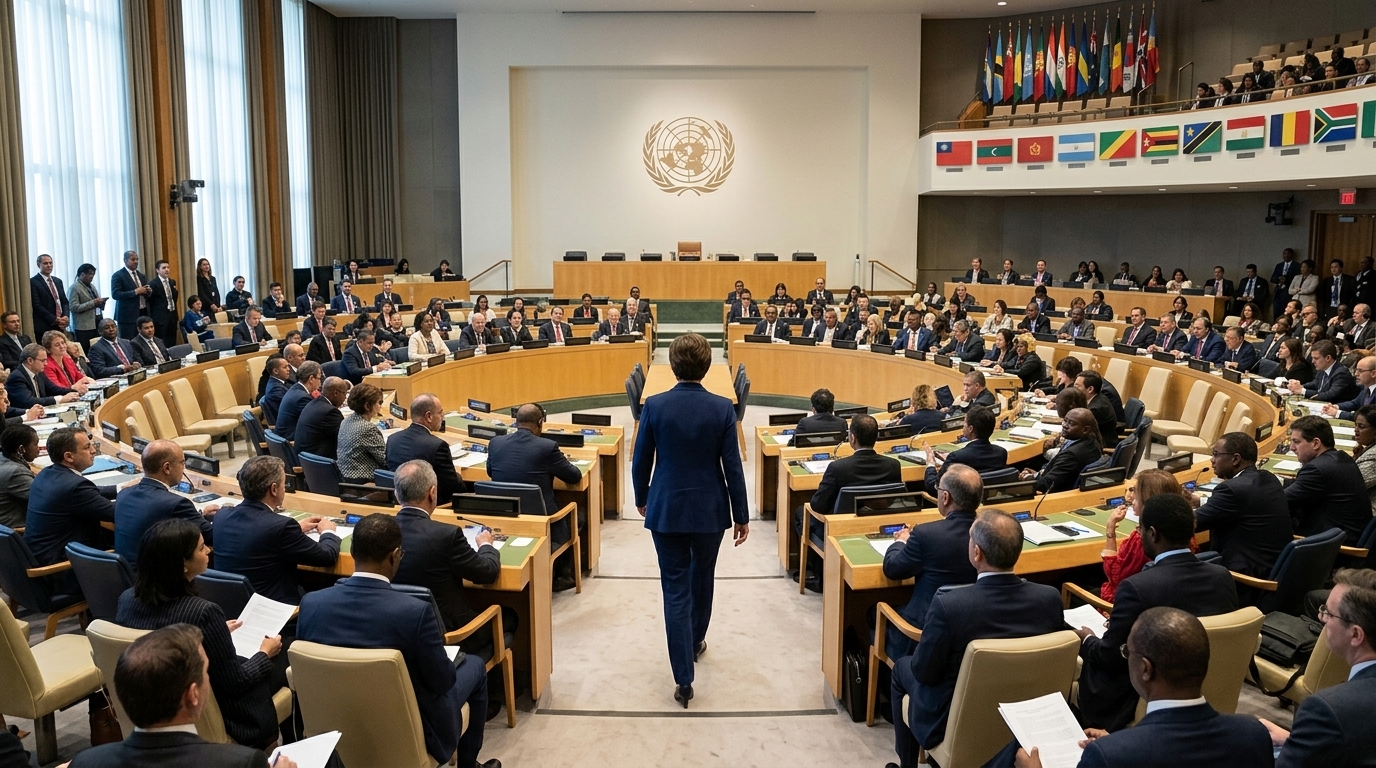
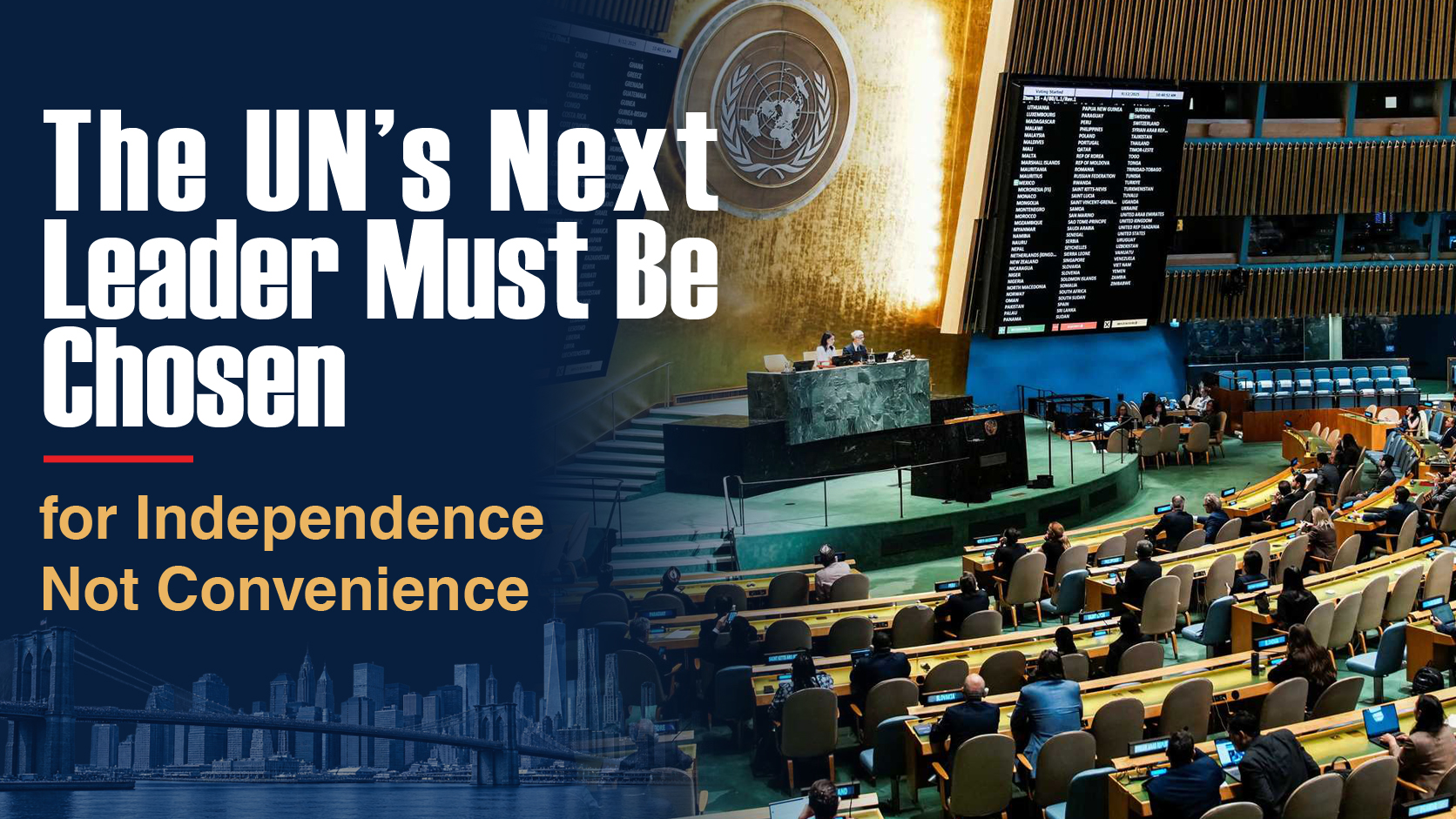
The contest over who will become the next secretary-general of the United Nations is often presented as a question of personalities: Which candidate has the diplomatic experience, political connections and international profile required to occupy one of the world’s most difficult offices? But that framing misses the larger issue. The real test is whether the United Nations can choose its next leader through a process that reflects the principles the organization claims to defend.
The timing could hardly be more consequential. The UN is approaching its 81st General Assembly session while wars, geopolitical rivalry, attacks on international norms and growing distrust in multilateral institutions are placing unprecedented pressure on the international system. In such an environment, the appointment of the next secretary-general will not simply determine who manages the organization. It will send a signal about whether the UN remains capable of acting as a credible institution above narrow national calculations.
For decades, the practical influence of the Security Council’s five permanent members has made the secretary-general selection appear largely dependent on the preferences of Britain, China, France, Russia and the United States. Yet the institutional balance is more complicated than that. The Security Council recommends a candidate, while the General Assembly formally appoints the secretary-general. That distinction matters because it gives the wider membership a meaningful responsibility in determining whether the proposed candidate is genuinely suitable for the office.
This is where the current selection process deserves greater scrutiny.
The secretary-general cannot be reduced to an administrator whose principal task is to preserve whatever consensus happens to exist among powerful governments. In a period when consensus itself can be blocked by geopolitical divisions, the office requires something more difficult: independence, political judgment, credibility and the ability to confront governments when international principles are at stake.
That does not mean turning the secretary-general into an activist detached from diplomatic realities. Quite the opposite. The most effective UN leader must understand power while remaining sufficiently independent of it. The position demands someone capable of speaking publicly when necessary, negotiating quietly when useful and maintaining the confidence of countries that may disagree sharply with one another.
That balance is particularly important because the challenges facing the international community increasingly overlap. Armed conflicts are connected to humanitarian crises and displacement. Climate pressures interact with economic instability. Pandemics expose weaknesses in international cooperation. Nuclear risks remain tied to geopolitical confrontation. Artificial intelligence is creating new questions about security, governance and accountability.
None of these problems can be managed effectively by individual countries acting alone. Their scale requires cooperation, and cooperation requires institutions that governments and societies still regard as legitimate.
That is why the credibility of the next secretary-general may depend almost as much on how the person is selected as on the individual who eventually takes the job.
If the process is perceived as a closed negotiation among the most powerful states, the appointment could reinforce the very distrust that has weakened multilateralism. If, instead, the General Assembly membership insists on transparency, merit and broad confidence, the selection could become an opportunity to demonstrate that the UN is capable of renewing itself.
There is another dimension that can no longer be treated as secondary: gender.
After more than eight decades and nine male secretaries-general, the United Nations has never been led by a woman. The absence is difficult to reconcile with an institution that has repeatedly placed gender equality and women's participation at the center of its international agenda.
Appointing a woman would not, by itself, make the UN more effective. Nor should gender ever replace competence, integrity or diplomatic ability. But the continued absence of a woman from the organization's highest office raises a legitimate question about whether the selection system has fully reflected the talent available across the international community.
The argument for a female secretary-general, therefore, should not be reduced to symbolism. It is also about whether the organization is willing to challenge a leadership pattern that has remained unchanged for generations.
The larger question is what kind of leader the UN needs now.
The next secretary-general will inherit an institution operating in a world where international rules are increasingly contested and where major powers do not always agree on what those rules mean. A leader who depends excessively on the approval of powerful governments may find it difficult to defend the independence of the organization. A leader who ignores political realities, however, may also struggle to convert principles into practical diplomacy.
The challenge is to find someone who can occupy the difficult space between those extremes.
That requires the 193 members of the General Assembly to treat the selection as more than a procedural exercise. They have a stake in the credibility of the result. Governments should be asking not simply which candidate is acceptable to the most influential capitals, but which candidate can command sufficient confidence across the broader UN membership and demonstrate the independence required to act in the organization's interest.
Civil society also has a role. Transparency cannot be created by governments alone. Public scrutiny can help ensure that the process does not disappear behind diplomatic bargaining that leaves the wider international community with little understanding of how the decision was reached.
Ultimately, the choice of the next secretary-general is a test of institutional credibility.
The United Nations cannot ask states to respect multilateral rules while allowing its own most important leadership decision to be defined primarily by power politics. Nor can it convincingly promote equality while continuing to exclude women from its highest office.
The opportunity in 2026 is therefore larger than selecting a successor. It is an opportunity to demonstrate that the UN can still adapt to a changing world without abandoning the principles on which it was founded.
The most convenient candidate for powerful governments may not necessarily be the strongest leader for the United Nations. The more important question is whether the person chosen possesses the independence, integrity, judgment and courage to serve an international community whose interests are far broader than those of any individual state.
At a moment when confidence in multilateralism is under pressure, that distinction could define the credibility of the United Nations for years to come.
Maged Amin
News You Should See
2026 Nobel Medicine Prize Honors Scientists Behind Optogenetics Breakthrough
Oil Prices Edge Lower as Stronger Middle East Exports and G7 Reserves Ease Supply Concerns
Trump Offers U.S. Assistance to Russia After Death at Siberian Plague Research Institute
Trump Takes Economic Message to Nebraska as GOP Faces Rising Cost-of-Living Pressure
U.S. Appeals Court Weighs Trump Administration’s $2.6 Billion Harvard Funding Fight
U.S. Midterm Elections Begin With Resilient Jobs Market and Persistent Cost Pressures
Latest News
The 2026 Nobel Prize in Physiology or Medicine honors Karl Deisseroth, Peter Hegemann and Georg Nagel for pioneering research behind optogenetics and its impact on neuroscience.
Oil prices edged lower as stronger Middle Eastern exports and a planned G7 release of 100 million barrels eased immediate supply concerns, while Gulf security risks and the Strait of Hormuz kept markets alert.
President Donald Trump said the United States would help Russia if needed after a laboratory worker died at a Siberian plague research institute, as Russian authorities imposed precautionary quarantine measures.
Trump’s Nebraska campaign stop highlights rising fuel and grocery costs, beef prices and growing economic pressure on Republicans ahead of the November midterm elections.
A U.S. appeals court is reviewing the Trump administration’s effort to cut Harvard’s federal research funding, with more than $2.6 billion at stake.
The U.S. enters the 2026 midterm elections with unemployment at 4.2%, while higher living and energy costs create economic pressure for households and businesses.
US services growth eased in September as input prices climbed to their highest level since July 2022, with fuel costs, supply-chain disruptions and strong demand increasing pressure on businesses.
Rising Treasury yields are increasing U.S. borrowing costs as Washington manages record debt, persistent inflation and strong economic demand, narrowing its policy options.
A EGP 16 million corporate partnership will establish and equip a bone marrow transplant unit at Cairo’s Coptic Hospital, supporting access to specialized treatment for patients.