The UN at a Crossroads: Can Multilateralism Keep Pace With a Fragmenting World?
The latest UN General Assembly exposes a widening gap between the need for global cooperation and the competing national priorities shaping wars, technology, climate and the world economy.

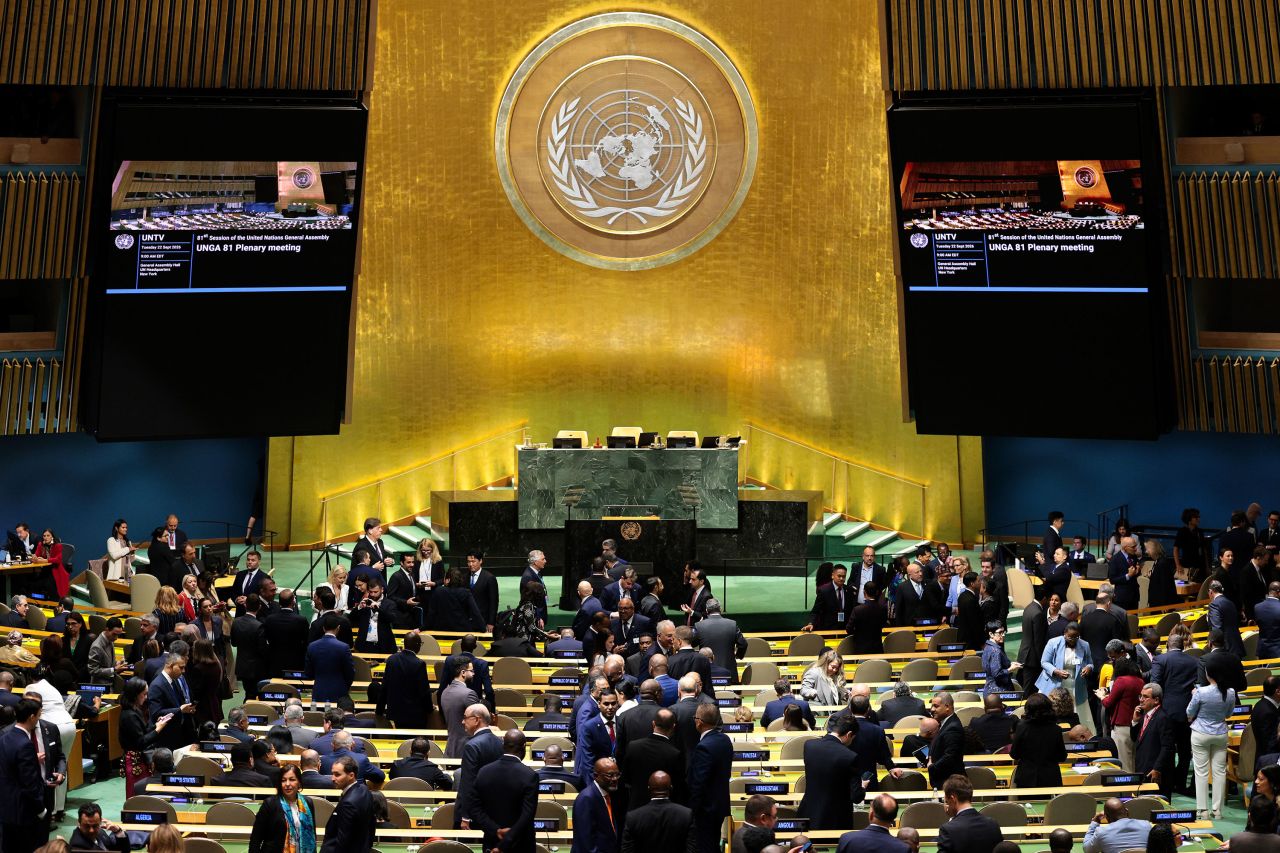
The most important question emerging from the latest United Nations General Assembly is not whether the world still needs the United Nations. It clearly does. The more difficult question is whether the institution can adapt quickly enough to a world in which cooperation is increasingly competing with geopolitical rivalry, national interests and a growing preference for unilateral action.
That tension was visible from the opening of the high-level gathering. Secretary-General Antonio Guterres used his final address to the General Assembly before leaving office at the end of the year to argue for a world built on interdependence. His message was built around a simple reality: wars, climate change, inequality, technological disruption and economic shocks do not respect national borders, yet the political mechanisms designed to address them remain heavily dependent on governments whose priorities often diverge.
This is where the current debate over the UN becomes more complicated than a discussion about whether the organization is effective or ineffective. The institution is being asked to manage problems that have become increasingly interconnected while operating within a political structure that reflects a very different balance of power.
The contrast between Guterres’ message and U.S. President Donald Trump’s approach during the same General Assembly session illustrates that divide. Guterres emphasized cooperation, shared decision-making and the limits of military power. Trump, while acknowledging the UN’s potential, emphasized U.S. economic, technological and military strength and sharply criticized what he described as the organization’s ideological direction.
Neither position changes the underlying challenge facing the international system. The UN cannot resolve major conflicts without the cooperation of powerful states, but the stronger those states become in pursuing their own strategic interests, the harder it becomes to build common positions on wars, security and international rules.
The consequences extend beyond diplomacy. Global instability increasingly carries an economic price. Conflicts can disrupt shipping routes and supply chains, raise the cost of living and create uncertainty for businesses and governments. Climate pressures add another layer of economic risk, while inequality continues to expose differences in the ability of countries to absorb global shocks.
The rise of artificial intelligence adds an entirely different dimension. Unlike conventional geopolitical disputes, AI is developing through commercial competition as well as government policy. Its impact crosses borders almost instantly, while the rules governing its development remain fragmented. The fact that AI has moved onto the UN Security Council’s agenda reflects how quickly a technological issue has become a matter of international security.
That shift matters because the traditional tools of international governance were largely designed around states, borders and military capabilities. AI challenges that framework by giving private companies, researchers and technology ecosystems a much larger role in shaping an issue with potential consequences for security, employment, information and economic competitiveness.
The same structural problem appears in the UN’s approach to war. The General Assembly is being consumed by conflicts involving Iran, Gaza, Ukraine, Sudan, Congo and Myanmar, yet the ability of the international system to stop wars remains constrained by political divisions among major powers. Guterres’ warning that military power alone cannot secure peace therefore goes beyond rhetoric. It reflects a practical limitation: military capability can alter conditions on the ground, but durable political settlements require negotiation, institutions and agreements that can survive changing strategic interests.
The organization is also confronting an institutional credibility problem. The UN has been under pressure over its ability to influence major conflicts, while financial difficulties have further complicated its operations. At the same time, member states have agreed to reforms that include changes to key institutions such as the Security Council. The difficulty is that reform itself depends on the agreement of the very powers whose influence is at the center of the debate.
That creates a paradox. The UN is being asked to become more representative and more effective at precisely the moment when the major powers have strong incentives to preserve their influence over the international system.
The attendance patterns at the General Assembly add another layer to this debate. Around 130 heads of state and government are expected to address the gathering, demonstrating that the UN remains an essential diplomatic meeting point. Yet the absence of several major leaders also shows that participation in multilateral institutions does not necessarily mean agreement with their direction.
The future of the UN will therefore depend less on speeches than on whether governments are prepared to use the organization when cooperation serves their interests, even when compromise is politically difficult.
For businesses and markets, this question is becoming increasingly relevant. Geopolitical fragmentation is no longer confined to foreign-policy departments. It affects supply chains, energy security, investment decisions, technology regulation and the cost of moving goods across borders. For governments, the challenge is equally direct: managing domestic priorities while operating in an international economy that remains deeply interconnected.
This is why the debate over the UN should not be reduced to a contest between multilateralism and national sovereignty. The more practical issue is whether the two can coexist in a system capable of responding to problems that no single country can solve alone.
The General Assembly has once again demonstrated that the world remains highly dependent on international cooperation while becoming increasingly divided over how that cooperation should work. The departure of Guterres at the end of the year adds a leadership transition to an already difficult institutional moment.
The next phase will test whether the UN can convert its broad diplomatic legitimacy into practical mechanisms capable of dealing with war, economic disruption, climate pressure and technological change. The institution may not control the direction of global politics, but the problems gathering around it are making the need for a functioning international framework harder to ignore.
News You Should See
2026 Nobel Medicine Prize Honors Scientists Behind Optogenetics Breakthrough
Oil Prices Edge Lower as Stronger Middle East Exports and G7 Reserves Ease Supply Concerns
Trump Offers U.S. Assistance to Russia After Death at Siberian Plague Research Institute
Trump Takes Economic Message to Nebraska as GOP Faces Rising Cost-of-Living Pressure
U.S. Appeals Court Weighs Trump Administration’s $2.6 Billion Harvard Funding Fight
U.S. Midterm Elections Begin With Resilient Jobs Market and Persistent Cost Pressures
Latest News
The 2026 Nobel Prize in Physiology or Medicine honors Karl Deisseroth, Peter Hegemann and Georg Nagel for pioneering research behind optogenetics and its impact on neuroscience.
Oil prices edged lower as stronger Middle Eastern exports and a planned G7 release of 100 million barrels eased immediate supply concerns, while Gulf security risks and the Strait of Hormuz kept markets alert.
President Donald Trump said the United States would help Russia if needed after a laboratory worker died at a Siberian plague research institute, as Russian authorities imposed precautionary quarantine measures.
Trump’s Nebraska campaign stop highlights rising fuel and grocery costs, beef prices and growing economic pressure on Republicans ahead of the November midterm elections.
A U.S. appeals court is reviewing the Trump administration’s effort to cut Harvard’s federal research funding, with more than $2.6 billion at stake.
The U.S. enters the 2026 midterm elections with unemployment at 4.2%, while higher living and energy costs create economic pressure for households and businesses.
US services growth eased in September as input prices climbed to their highest level since July 2022, with fuel costs, supply-chain disruptions and strong demand increasing pressure on businesses.
Rising Treasury yields are increasing U.S. borrowing costs as Washington manages record debt, persistent inflation and strong economic demand, narrowing its policy options.
A EGP 16 million corporate partnership will establish and equip a bone marrow transplant unit at Cairo’s Coptic Hospital, supporting access to specialized treatment for patients.