The PROTECT USA Act: Defending American Businesses from EU Overreach
How the PROTECT USA Act Can Safeguard U.S. Economic Freedom from the EU's Radical ESG Policies

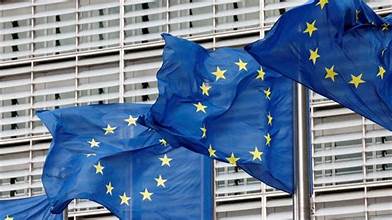
In the name of “sustainability” and “corporate responsibility”, the European Union (EU) has launched a significant attack on American sovereignty and economic freedom. Their new policy, the Corporate Sustainability Due Diligence Directive (CSDDD), threatens to undermine U.S. businesses, innovation, and the economic well-being of millions of American workers and consumers.
Fortunately, there is a solution in the form of the PROTECT USA Act, recently introduced by Tennessee Republican Senator Bill Hagerty. This crucial legislation could help protect the United States from this foreign overreach and safeguard its free-market system from globalist climate policies that have not been approved by Congress.
The CSDDD: A Power Grab by the EU
The CSDDD, passed by the EU in 2024, is a radical environmental and social governance (ESG) mandate that extends to any company—no matter its country of origin—that does significant business in the European Union. Major American corporations such as Apple, Amazon, Ford, and McDonald's are among those affected. The CSDDD requires these companies, if they generate over €450 million in revenue from EU operations, to comply with strict sustainability guidelines. These include:
Restricting land development.
Implementing vague social justice goals.
Limiting water usage.
Mitigating biodiversity loss.
Transitioning to green energy, even when it’s economically unfeasible.
Failure to comply could result in fines of up to 5% of a company's global revenue. Worse still, activists or third parties could file lawsuits against businesses, leading to what has been described as endless "lawfare" aimed at undermining companies that don't comply.
The Ripple Effect on Small and Medium-Sized U.S. Businesses
The danger isn’t confined to large multinationals. The CSDDD also mandates that companies impose these ESG rules on their suppliers. This means that small and mid-sized U.S. manufacturers, farmers, service providers, and other businesses will also be caught in the web of the CSDDD, often being pressured to adopt EU-aligned ESG policies through contractual obligations.
While not all suppliers may be directly regulated by the EU, the pressure to comply will be felt across industries, making it increasingly difficult for smaller businesses to maintain autonomy without conforming to EU standards.
The PROTECT USA Act: A Shield for American Interests
The PROTECT USA Act (Prevent Regulatory Overreach from Turning Essential Companies into Targets Act) is a direct response to this foreign overreach. The bill would prohibit businesses integral to U.S. national interests from complying with any foreign sustainability due diligence regulations, including the CSDDD. This includes companies that work with the federal government or operate in key industries such as fossil fuels and mining.
The bill gives the President the power to designate entities as "integral" to America's national interests, thus protecting them from the harmful effects of foreign regulations. Additionally, it would allow the President to take decisive action to protect U.S. businesses from the adverse effects of the CSDDD, whether diplomatically or economically.
Legal Protections for U.S. Businesses
One of the most significant provisions of the PROTECT USA Act is its ability to empower U.S. businesses and individuals to take legal action if they are harmed by foreign regulations like the CSDDD. U.S. companies could bring civil suits against foreign entities enforcing these regulations, providing them with a legal avenue to defend their operations and seek damages for any harm caused by the foreign laws.
Why Immediate Action is Crucial
While the CSDDD is set to be phased in by 2028, the machinery to enforce it is already in motion. U.S. companies are beginning to review contracts, revise compliance strategies, and—most worryingly—pressure their suppliers to adopt EU-aligned ESG practices preemptively. If Congress does not act quickly, the economic consequences will be severe. Small U.S. businesses could be driven out of business or forced to conform to stringent ESG policies that are not suited to the American marketplace. This would result in higher costs for consumers and fewer choices for the American people.
Moreover, the American economy would become increasingly subservient to unelected Brussels bureaucrats and their radical climate policies, which have never been approved by the U.S. Congress.
A Bipartisan Call to Protect U.S. Sovereignty
The PROTECT USA Act is not just about protecting U.S. businesses—it’s about defending the Constitution and ensuring that American law governs American industries. This is not a debate about climate change or corporate ethics; it’s about who holds the power to regulate American businesses. Should it be elected representatives in Congress, or should foreign entities have the authority to impose their will on American industries?
Conclusion: Time to Act
Senator Bill Hagerty deserves credit for drawing a clear line in the sand against the EU’s overreach. His PROTECT USA Act offers Congress an opportunity to stand firm against a globalist agenda that threatens to undermine U.S. sovereignty and economic freedom. The stakes couldn’t be higher. If Congress fails to act now, the American economy and American liberty will face long-lasting harm.
News You Should See
Federal Lawsuit Over California Voter Rolls Intensifies Election Dispute Ahead of Midterms
Egyptian Healthcare Leader Dr. Hossam Abdel Maksoud Honored by The New York Foundling
U.S. Producer Prices Surge as Fuel Costs Intensify Inflation Concerns
IMF Calls for Stronger China Stimulus as Growth Slows and Deflation Risks Persist
AI Infrastructure Investment Faces Rising Costs and Greater Investor Scrutiny
Brewers Move Within One Win of World Series as Dodgers Face Elimination
Latest News
The Justice Department is suing California over mail-in ballots linked to about 20,000 suspected noncitizens ahead of the November 3 midterms.
Dr. Hossam Abdel Maksoud, founder of Dawah Pharma and CEO of Community Care Rx, receives recognition from The New York Foundling for his contributions to healthcare access and community service.
U.S. producer prices rose 1.3% in September and 6.3% year over year as gasoline and diesel costs surged, complicating the inflation outlook and Federal Reserve rate expectations.
The IMF urges China to expand fiscal stimulus, strengthen household demand and address its prolonged property crisis as growth is forecast to slow to 4.5% in 2026 and 4.0% in 2027.
Rising borrowing costs and investor caution are reshaping AI infrastructure investment, putting data center debt, project economics and long-term returns under closer scrutiny.
The Milwaukee Brewers beat the Los Angeles Dodgers 6-2 to take a 3-0 NLCS lead. Jake Bauers, Garrett Mitchell and Jackson Chourio powered Milwaukee to the brink of its first World Series appearance since 1982.
Trump campaigned in Arizona and Montana for Republicans as Democrats promoted affordability, healthcare and congressional oversight ahead of the 2026 midterms.
Trump campaigns for Alaska Sen. Dan Sullivan as Democrat Mary Peltola mounts a challenge ahead of the November 3 midterms, with inflation and fuel prices shaping the race.
Aberdeen police urge Heritage Square residents to check for missing valuables after superintendent Nicholas Brent’s arrest. The investigation continues, and the allegations remain unproven.