The Hunger Crisis Is Becoming a Test of the World’s Political Will
Rising famine risks across 13 global hotspots show how conflict, shrinking aid budgets and climate pressures are turning food insecurity into a deeper international crisis.

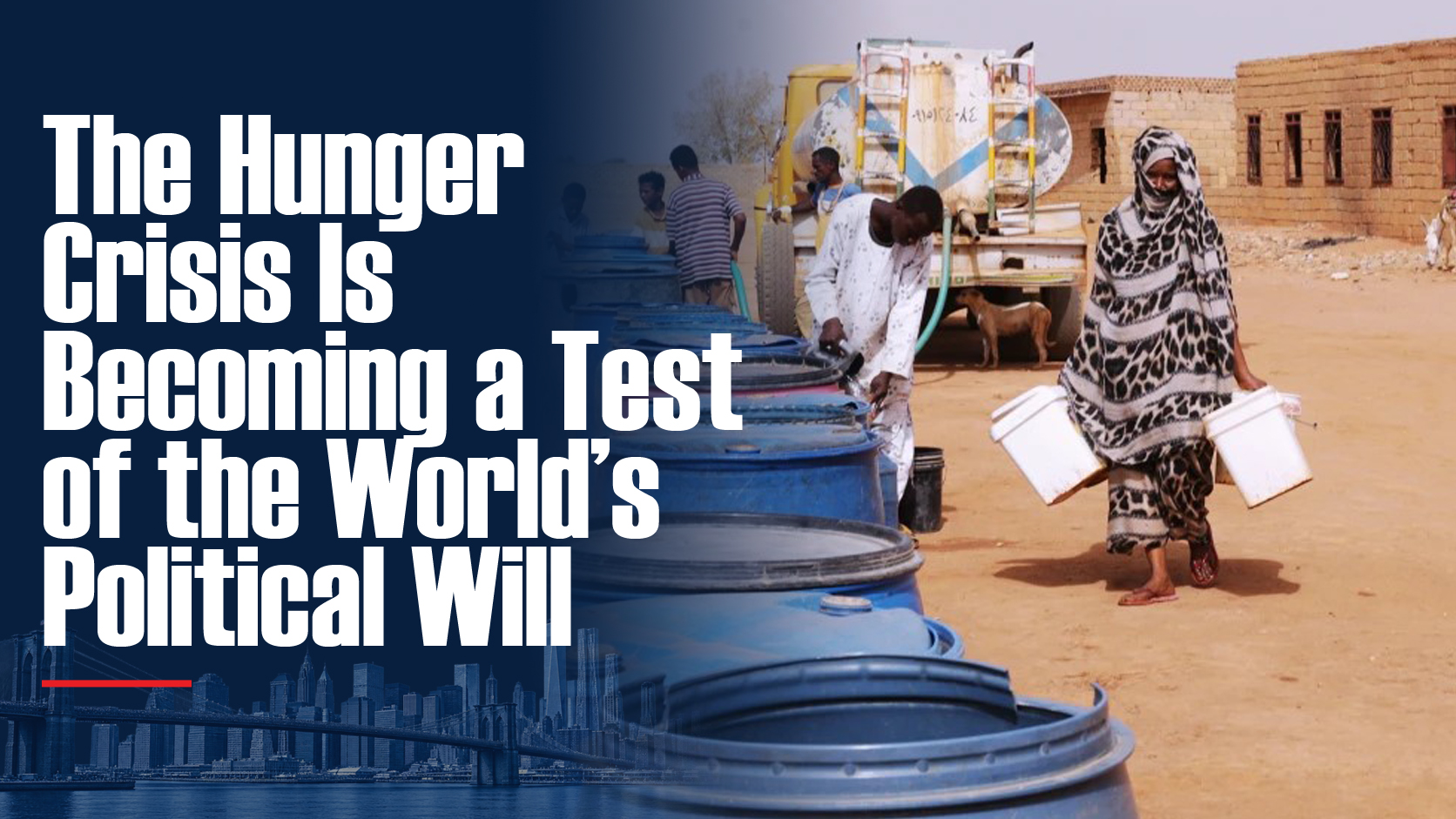
The most alarming feature of the latest global hunger warning is not simply the number of people facing acute food insecurity. It is the growing gap between the scale of the crisis and the international system’s ability to respond.
The Food and Agriculture Organization and the World Food Program have warned that hunger conditions are expected to deteriorate across 13 global hotspots between June and November 2026. Around 266 million people are already facing high levels of acute food insecurity, while Sudan, South Sudan, Yemen and the Gaza Strip remain among the areas of greatest concern. Nigeria and Somalia have also moved into the highest-risk category as famine threats intensify.
What makes this warning particularly significant is that hunger is increasingly becoming an indicator of wider international instability. In most of these hotspots, conflict and violence are not secondary factors; they are central drivers of food insecurity. Fighting disrupts agricultural production, damages infrastructure, limits movement and makes it harder for humanitarian agencies to reach people who need assistance. Economic shocks then deepen the damage by weakening purchasing power and disrupting local markets.
This means that food insecurity cannot be treated simply as a humanitarian problem. It is also a consequence of political failure, economic disruption and prolonged insecurity.
Sudan illustrates the danger clearly. The country remains one of the principal areas of concern, alongside South Sudan, Yemen and Gaza. The warning extends to specific areas where famine could become a reality between now and November, including parts of Darfur and South Kordofan in Sudan and Jonglei and Upper Nile in South Sudan.
The Gaza situation offers another important lesson. Conditions have improved from their previous extreme levels following the October 2025 ceasefire, but the improvement remains fragile. About 1.6 million people, or roughly 77% of the population analyzed, were experiencing acute food insecurity earlier in 2026 and still required urgent assistance.
The wider message is that temporary improvement should not be mistaken for structural recovery. A reduction in immediate hunger levels does not automatically restore livelihoods, markets, infrastructure or household resilience. Where the underlying political and economic conditions remain unstable, food insecurity can return rapidly.
Yemen remains another stark example. The country continues to host one of the world’s most severe food-security crises, with the largest population facing emergency or catastrophic levels of food insecurity among the hotspots identified in the report.
Yet perhaps the most consequential element of the warning is financial. Funding for food assistance and related programs has fallen by about 59% since 2022, even as humanitarian needs have increased. The United States has pledged $800 million to the World Food Program, a contribution expected to help more than 38 million people across at least 37 countries. But the WFP’s 2026 appeal of more than $10 billion remains severely underfunded.
This exposes a structural contradiction in the international humanitarian system. The world is confronting more complex emergencies at the same time that the financial capacity available to address them is shrinking.
The problem is therefore not only whether governments are willing to provide aid. It is whether international institutions can maintain predictable and sufficiently large funding streams when crises overlap and compete for attention.
Climate pressure adds another layer of uncertainty. The agencies warn that the expected impact of an El Niño weather pattern could produce droughts and floods in vulnerable regions. At the same time, the spillover effects of conflict in the Middle East and health emergencies such as Ebola in eastern Congo could further disrupt markets, livelihoods and humanitarian access.
The result is a new form of humanitarian risk in which crises no longer operate in isolation. Conflict can destroy food systems; climate shocks can damage production; economic instability can make food unaffordable; and funding shortages can prevent relief agencies from responding at the necessary scale. Each pressure reinforces the others.
From a policy perspective, this should change the way the international community measures success. Delivering emergency food today is essential, but preventing the next emergency is equally important. Protecting livelihoods, maintaining market access and supporting local resilience can reduce the likelihood that temporary food insecurity develops into a prolonged catastrophe.
The central warning from the latest assessment is therefore political as much as humanitarian: the world still has opportunities to prevent some of the worst outcomes, but those opportunities are narrowing.
The international response will be judged not only by the amount of food delivered after famine emerges, but by whether governments act early enough to prevent vulnerable populations from reaching that point.
In the end, famine is rarely the result of one shock. It is usually the final stage of accumulated failures — conflict without resolution, markets without stability, communities without livelihoods and humanitarian systems without sufficient resources.
The coming months will show whether the international community treats the latest warning as another report to be acknowledged, or as an early signal requiring decisions before the cost of inaction becomes much higher.
News You Should See
2026 Nobel Medicine Prize Honors Scientists Behind Optogenetics Breakthrough
Oil Prices Edge Lower as Stronger Middle East Exports and G7 Reserves Ease Supply Concerns
Trump Offers U.S. Assistance to Russia After Death at Siberian Plague Research Institute
Trump Takes Economic Message to Nebraska as GOP Faces Rising Cost-of-Living Pressure
U.S. Appeals Court Weighs Trump Administration’s $2.6 Billion Harvard Funding Fight
U.S. Midterm Elections Begin With Resilient Jobs Market and Persistent Cost Pressures
Latest News
The 2026 Nobel Prize in Physiology or Medicine honors Karl Deisseroth, Peter Hegemann and Georg Nagel for pioneering research behind optogenetics and its impact on neuroscience.
Oil prices edged lower as stronger Middle Eastern exports and a planned G7 release of 100 million barrels eased immediate supply concerns, while Gulf security risks and the Strait of Hormuz kept markets alert.
President Donald Trump said the United States would help Russia if needed after a laboratory worker died at a Siberian plague research institute, as Russian authorities imposed precautionary quarantine measures.
Trump’s Nebraska campaign stop highlights rising fuel and grocery costs, beef prices and growing economic pressure on Republicans ahead of the November midterm elections.
A U.S. appeals court is reviewing the Trump administration’s effort to cut Harvard’s federal research funding, with more than $2.6 billion at stake.
The U.S. enters the 2026 midterm elections with unemployment at 4.2%, while higher living and energy costs create economic pressure for households and businesses.
US services growth eased in September as input prices climbed to their highest level since July 2022, with fuel costs, supply-chain disruptions and strong demand increasing pressure on businesses.
Rising Treasury yields are increasing U.S. borrowing costs as Washington manages record debt, persistent inflation and strong economic demand, narrowing its policy options.
A EGP 16 million corporate partnership will establish and equip a bone marrow transplant unit at Cairo’s Coptic Hospital, supporting access to specialized treatment for patients.