The Bond Market's Unsettling Shift That Alarmed Trump
The Bond Market's Unsettling Shift That Alarmed Trump

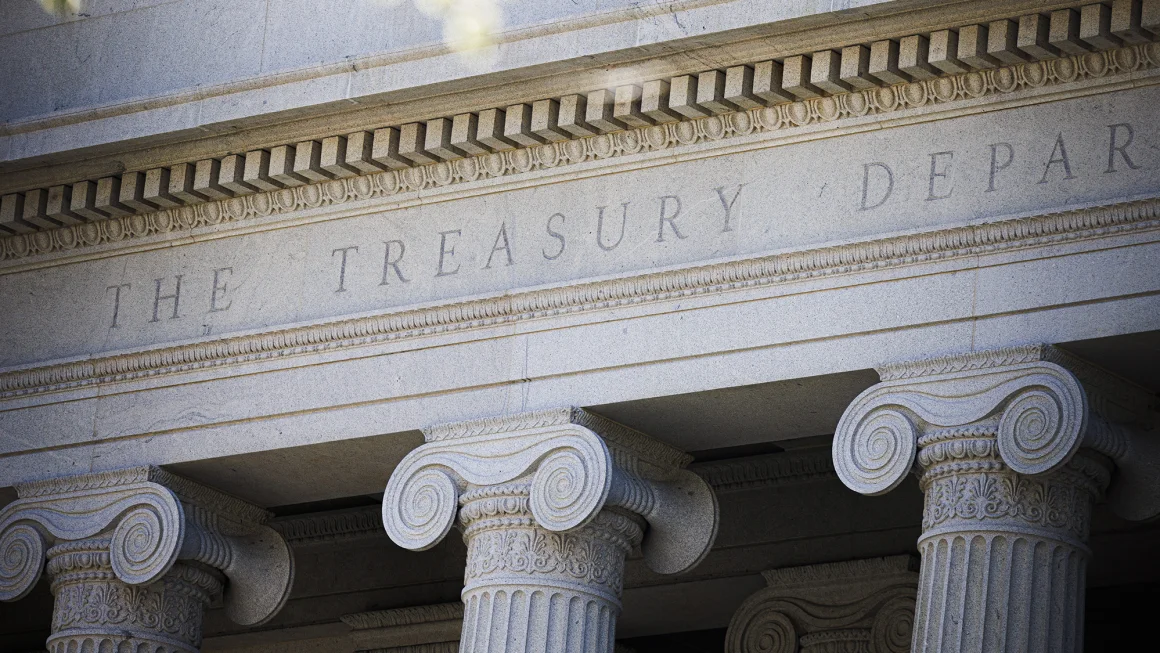
Global markets are on edge due to President Donald Trump’s unpredictable handling of tariffs and the escalating trade war with China. Stock prices have been volatile, and a concerning trend has emerged in the bond market.
Earlier this week, as global stock markets faced declines, US Treasuries also sold off. This simultaneous drop in both stocks and bonds raised concerns.
Typically, when stocks fall during times of crisis, investors flock to US Treasuries for safety, as they are backed by the full faith and credit of the US government. However, this time, as stock prices dropped, investors unexpectedly sold off US Treasuries, casting doubt on how much confidence they have in the US government's ability to honor its debts amidst fears of tariffs undermining economic growth.
The bond market’s turmoil was so unsettling that it caught the attention of the White House.
“People were getting a little queasy,” Trump said on Wednesday, commenting on his observation of the bond market.
He added, “The bond market is very tricky.”
Although previous criticisms from Wall Street, economists, and lawmakers had not made Trump reconsider his stance on tariffs, it was the chaos in the bond market that led him to pause many of the proposed tariff increases.
“The ‘blink’ came sooner than we expected, probably forced by the markets,” said Mohit Kumar, Chief Economist and Strategist for Europe at Jefferies. “This reversal sharply contrasts with the bold manner in which Trump had unveiled his tariff policy just a week ago.”
The yield on the benchmark 10-year US Treasury note spiked to 4.5% on Wednesday, a sharp reversal from a recent dip below 4%. Yields and bond prices move in opposite directions.
US Treasuries are considered one of the safest assets, often used by investors seeking refuge during economic uncertainty. When both stocks and bonds fall simultaneously, it signals heightened concerns about economic stability, a rare event usually seen during crises such as the 2008 financial crash or the pandemic.
Wall Street experts were direct in attributing Trump’s decision to the bond market’s warning.
“The bond market spooked the president,” said Ed Yardeni, president of Yardeni Research. “Bond vigilantes were making their displeasure known, signaling a potential recession.”
Bond vigilantes, a term for investors who sell off government bonds to protest policies, were instrumental in forcing Trump’s hand. When demand for bonds decreases, prices fall, and yields rise, increasing the government's borrowing costs. This market response serves as a message to policymakers about the need to adjust their approach.
The bond market's influence on Trump’s tariff strategy is a stark reminder of its power, which often goes underappreciated compared to the stock market. Despite stock market declines, it was the bond sell-off that ultimately prompted the tariff delay.
“The Bond Vigilantes have struck again,” Yardeni remarked.
Bond vigilantes are investors who attempt to sway government policy by threatening to sell or not purchase bonds. Their actions can push up borrowing costs for governments, making it a potent tool for influencing fiscal strategies. A recent example of this was former UK Prime Minister Liz Truss, who faced similar pressure.
Political strategist James Carville once said, “I used to think that if there was reincarnation, I wanted to come back as the president or the pope or as a .400 baseball hitter.
News You Should See
Trump Heads to Alaska to Bolster Dan Sullivan as Senate Race Draws National Attention
Aberdeen Police Urge Heritage Square Residents to Check Valuables After Superintendent’s Arrest
Law Offices of Marc S. Albert Announces Six Personal Injury and Medical Malpractice Settlements Totaling More Than $7.4 Million
S&P 500 Rally Masks Market Weakness as AI Chipmakers Drive 2026 Gains
Dollar Holds Near 18-Month High as Middle East Tensions Put Inflation and Fed Policy in Focus
New State Voting Rules Complicate Election Preparations Ahead of 2026 Midterms
Latest News
Trump campaigns for Alaska Sen. Dan Sullivan as Democrat Mary Peltola mounts a challenge ahead of the November 3 midterms, with inflation and fuel prices shaping the race.
Aberdeen police urge Heritage Square residents to check for missing valuables after superintendent Nicholas Brent’s arrest. The investigation continues, and the allegations remain unproven.
The Law Offices of Marc S. Albert announced six personal injury and medical malpractice settlements totaling $7.446 million, including cases involving a hospital respiratory emergency, vehicle crashes, a fall and a bicyclist.
The S&P 500 has gained 14% in 2026, but more than 40% of its stocks are down. AI chipmakers dominate returns as higher interest rates pressure other sectors.
The dollar nears an 18-month high amid Middle East tensions, oil volatility, and awaited US inflation data.
Several Republican-led US states have changed voter ID and mail-ballot rules ahead of the November 2026 midterms, creating new challenges for election officials and renewing debate over ballot access and election safeguards.
Brent crude climbed to $105.74 a barrel as President Donald Trump announced plans to buy Russian diesel. Investors are watching inflation expectations, retail sales, geopolitical risks and quarterly results from major US banks.
IMF chief Kristalina Georgieva says AI infrastructure investment is supporting global growth near 3%, with gains for Asian economies despite energy pressures.
A New York federal judge temporarily blocks taxpayer-funded television ads featuring Donald Trump amid legal concerns over public spending, political messaging and the upcoming US midterm elections.