Thailand and Cambodia Turn to UN Maritime Conciliation as Resource Dispute Tests Regional Stability
Singapore talks under the UN Convention on the Law of the Sea open a new diplomatic channel over disputed waters believed to contain significant hydrocarbon resources.

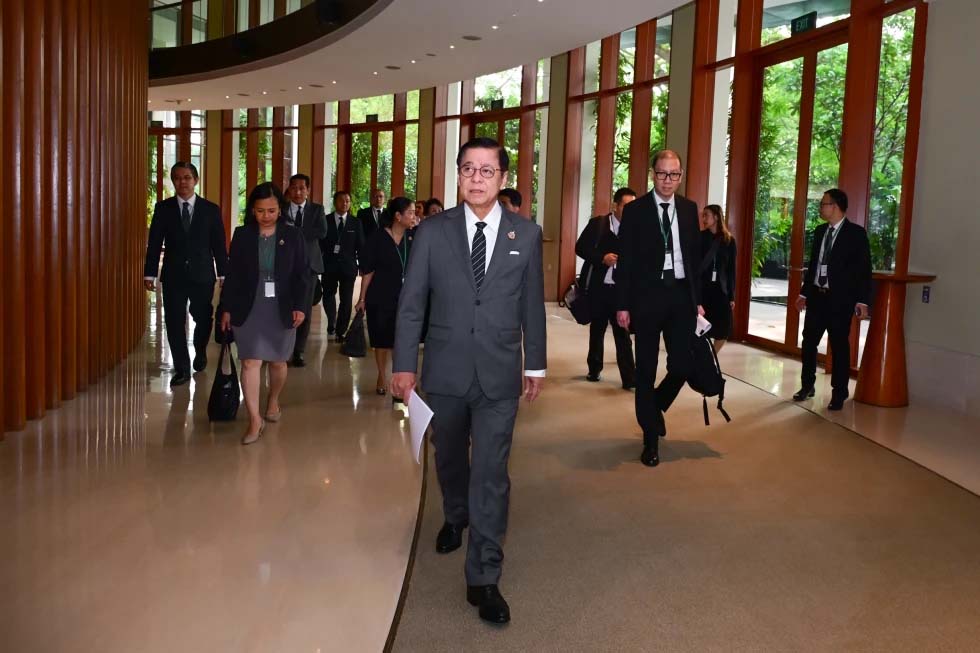
Thailand and Cambodia have moved their maritime dispute into a new diplomatic phase, opening formal conciliation talks under the United Nations Convention on the Law of the Sea, or UNCLOS. The three-day meeting in Singapore brings the foreign ministers of both countries together with a five-member UNCLOS commission, creating a structured forum for a disagreement that has resisted resolution for decades.
The dispute extends beyond questions of sovereignty and maritime boundaries. The contested waters are believed to contain potentially significant deposits of natural gas and other hydrocarbons, giving the negotiations a direct economic dimension. Any future agreement could therefore influence not only the two governments' territorial positions but also the commercial prospects associated with offshore energy resources.
The timing of the talks is particularly significant because relations between Bangkok and Phnom Penh have deteriorated sharply. Cambodia initiated the UNCLOS process in June after Thailand unilaterally ended a 25-year-old memorandum of understanding designed to address overlapping maritime claims. The decision followed a period of severe political and security tensions, including armed clashes along the countries' land border last year that killed civilians and soldiers and displaced hundreds of thousands of people.
From an economic perspective, the maritime dispute represents a classic conflict between resource potential and political risk. Hydrocarbon reserves can create a powerful incentive for governments to reach a negotiated framework, but they can also make territorial disagreements more sensitive because control over maritime areas may eventually determine who can explore, develop and benefit from valuable offshore assets.
Thailand's decision to abandon the previous memorandum reflected frustration with what its foreign minister described as a lack of tangible progress. Over 25 years, the two countries held only two meetings under the arrangement, according to the Thai side. Bangkok has also historically preferred bilateral negotiations and has been reluctant to allow third parties to determine territorial questions. Cambodia, however, has chosen the UNCLOS mechanism as a peaceful legal avenue after concluding that other options were necessary.
The contrasting approaches illustrate the strategic challenge facing both governments. Thailand is seeking to preserve direct control over negotiations while avoiding arrangements that could constrain its position. Cambodia is using an international legal framework to place the dispute within a rules-based process. Neither approach automatically guarantees a settlement, but the Singapore meeting gives both sides an opportunity to reduce uncertainty and establish a more predictable negotiating environment.
The commercial implications extend beyond energy. Prolonged maritime uncertainty can complicate long-term investment decisions, raise political and regulatory risks for potential offshore projects and make companies more cautious about committing capital to disputed areas. Conversely, a negotiated settlement could provide greater clarity for future exploration and potentially create a framework for resource development that benefits both economies.
The talks also carry a broader regional significance. Thailand and Cambodia agreed to a fragile ceasefire in late December, but military deployments and sporadic incidents have continued. The maritime negotiations therefore represent more than a technical legal exercise: they offer another channel through which the two countries can prevent disputes from becoming further militarized.
Historical grievances remain an important obstacle. Thailand continues to view a 1962 International Court of Justice ruling that awarded Cambodia the Preah Vihear temple as unfair, reinforcing Bangkok's longstanding caution toward international adjudication of territorial matters. That history helps explain why the current UNCLOS process is politically sensitive even though any ruling resulting from the conciliation process would not be binding on the two countries.
For businesses and investors watching Southeast Asia, the outcome will be measured not only by whether the two governments settle their maritime claims but also by whether they establish enough political certainty to support future economic cooperation. The Singapore process may not produce an immediate breakthrough, but it creates an institutional path away from confrontation and toward negotiated management of a dispute with potentially substantial economic value.
The broader test is whether Thailand and Cambodia can separate the economic opportunity represented by offshore resources from the historical and political disputes that have repeatedly complicated their relationship. If the two sides can build a workable framework for maritime cooperation, the process could eventually transform a source of strategic tension into an opportunity for shared economic interests.
News You Should See
2026 Nobel Medicine Prize Honors Scientists Behind Optogenetics Breakthrough
Oil Prices Edge Lower as Stronger Middle East Exports and G7 Reserves Ease Supply Concerns
Trump Offers U.S. Assistance to Russia After Death at Siberian Plague Research Institute
Trump Takes Economic Message to Nebraska as GOP Faces Rising Cost-of-Living Pressure
U.S. Appeals Court Weighs Trump Administration’s $2.6 Billion Harvard Funding Fight
U.S. Midterm Elections Begin With Resilient Jobs Market and Persistent Cost Pressures
Latest News
The 2026 Nobel Prize in Physiology or Medicine honors Karl Deisseroth, Peter Hegemann and Georg Nagel for pioneering research behind optogenetics and its impact on neuroscience.
Oil prices edged lower as stronger Middle Eastern exports and a planned G7 release of 100 million barrels eased immediate supply concerns, while Gulf security risks and the Strait of Hormuz kept markets alert.
President Donald Trump said the United States would help Russia if needed after a laboratory worker died at a Siberian plague research institute, as Russian authorities imposed precautionary quarantine measures.
Trump’s Nebraska campaign stop highlights rising fuel and grocery costs, beef prices and growing economic pressure on Republicans ahead of the November midterm elections.
A U.S. appeals court is reviewing the Trump administration’s effort to cut Harvard’s federal research funding, with more than $2.6 billion at stake.
The U.S. enters the 2026 midterm elections with unemployment at 4.2%, while higher living and energy costs create economic pressure for households and businesses.
US services growth eased in September as input prices climbed to their highest level since July 2022, with fuel costs, supply-chain disruptions and strong demand increasing pressure on businesses.
Rising Treasury yields are increasing U.S. borrowing costs as Washington manages record debt, persistent inflation and strong economic demand, narrowing its policy options.
A EGP 16 million corporate partnership will establish and equip a bone marrow transplant unit at Cairo’s Coptic Hospital, supporting access to specialized treatment for patients.