Tampa Bay Rays Advance to World Series After Clinching AL Pennant Against Cleveland
A 7-3 Game 6 victory, powered by key home runs and Freddy Peralta’s pitching, sends Tampa Bay into a historic championship showdown with Milwaukee.

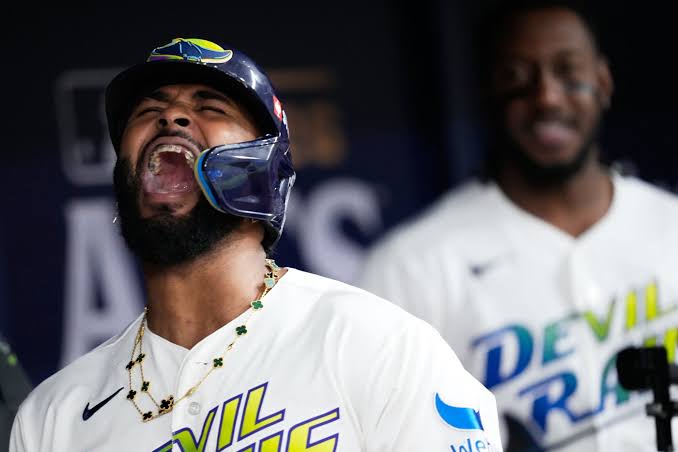
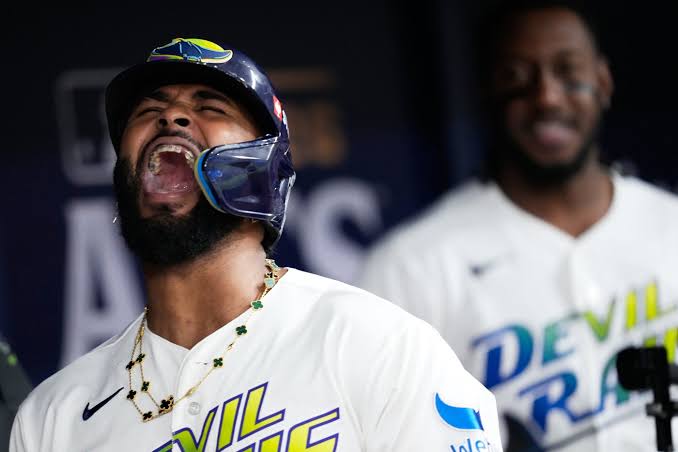
The Tampa Bay Rays have earned another opportunity to compete for baseball’s biggest prize, defeating the Cleveland Guardians 7-3 in Game 6 of the American League Championship Series on October 19. The result secured Tampa Bay’s third American League pennant in the franchise’s 29-season history and its first World Series appearance since 2020. The team will open the championship series against the Milwaukee Brewers on Friday in Milwaukee.
The victory was built on timely hitting, effective pitching and an ability to respond when Cleveland threatened to change the course of the game. Junior Caminero and Yandy Díaz each delivered a two-run home run, while Freddy Peralta provided the stability needed to protect Tampa Bay’s advantage. The result also creates a significant opportunity for a franchise that has reached the final stage twice before without winning the championship.
A decisive performance built around key moments
Tampa Bay’s offensive approach proved effective because its biggest contributions arrived at critical points in the game. Richie Palacios opened the scoring with a two-run double in the second inning, and Jonny DeLuca added a sacrifice fly in the third to establish a 3-0 lead.
Cleveland reduced the deficit through Nathaniel Lowe’s run-scoring single in the sixth. Caminero then extended Tampa Bay’s advantage with his first career postseason home run in the seventh inning. The two-run drive made the score 5-1 and gave the Rays additional breathing room.
The Guardians mounted a late challenge in the eighth, loading the bases and scoring twice through a walk and a hit batter. Tampa Bay responded by bringing in Kevin Kelly, who struck out Brayan Rocchio to end the threat. Díaz subsequently restored the four-run margin with a home run estimated at 416 feet, and Bryan Baker closed the game in the ninth.
The sequence illustrates an important competitive distinction: a team can face pressure without losing control of a contest if its players execute in high-leverage situations. Tampa Bay’s ability to halt Cleveland’s rally and immediately re-establish a comfortable lead proved decisive.
Peralta’s consistency rewards Tampa Bay’s roster strategy
Freddy Peralta’s performance was central to the series victory. The pitcher allowed one run on five hits over 5 1/3 innings in Game 6, recording three strikeouts and issuing three walks. His contribution across the series earned him American League Championship Series Most Valuable Player recognition.
Peralta had already delivered six scoreless innings in Game 2 and recorded two important outs in relief during Game 4. Across three appearances, including two starts, he allowed only one run over 12 innings while striking out nine batters.
Tampa Bay acquired Peralta from the New York Mets shortly before the early-August trade deadline. His subsequent postseason impact demonstrates the potential value of targeted roster changes when a team identifies a player whose skills fit its immediate competitive requirements.
For baseball organizations, such decisions involve more than adding a recognizable name. The objective is to improve performance in specific situations while maintaining balance across the roster. Peralta’s contribution shows how an acquisition can become especially valuable when a team reaches the stage of the season where individual innings carry outsized consequences.
His award also strengthens the story of Tampa Bay’s collective effort. Rather than relying exclusively on one offensive star, the Rays advanced through a combination of pitching reliability, contributions from several hitters and effective management of late-game pressure.
Young talent and veteran production strengthen the franchise
Caminero’s home run was particularly significant because it marked his first in the postseason. The two-time All-Star had hit 42 home runs during the regular season, but needed 33 at-bats in October before recording his first postseason homer.
That contrast underscores the different demands of playoff baseball. Regular-season production establishes a player’s capabilities, but postseason success often depends on adjusting to stronger opposition, tighter pitching decisions and more consequential individual at-bats.
Díaz provided a complementary example of experience under pressure. After predicting a Game 6 victory following the previous contest, he delivered the home run that restored Tampa Bay’s four-run lead. His performance turned a public declaration into a meaningful contribution at a decisive moment.
The careers of both players also reflect the importance of player evaluation and development. Díaz originally signed with Cleveland in 2013 before being traded to Tampa Bay in 2018. Caminero was signed by Cleveland in 2019 and moved to the Rays in 2021. Palacios, who opened the scoring in Game 6, also began his career with Cleveland.
These connections highlight how talent can develop across different organizational environments. A franchise’s competitive identity is shaped not only by the players it recruits directly but also by its ability to recognize potential, acquire the right assets and put them in positions where their abilities can influence results.
Stadium recovery and ownership changes shape the broader story
The Rays’ return to the World Series comes after a period of disruption away from their usual home venue. Hurricane Milton caused extensive damage to Tropicana Field in 2024, including major roof damage that required substantial repairs. Tampa Bay played its 2025 home games across the bay at the New York Yankees’ spring training complex before returning to Tropicana Field for the 2026 season.
The team recorded 55 home victories during the 2026 regular season, matching Milwaukee’s total for the most home wins in the league. Game 6 drew a sellout crowd of 40,230, with supporters filling the stadium for the pennant-clinching victory.
The wider organizational backdrop includes a change in ownership before the 2026 season and a stadium agreement for a new ballpark expected to be ready in 2029 near the home of the NFL’s Tampa Bay Buccaneers.
These developments matter because a professional sports franchise is both a competitive operation and a long-term business. Venue reliability, ownership decisions, local support and future infrastructure all influence the environment in which a team operates. A successful season cannot by itself resolve every commercial or operational challenge, but a deep playoff run can strengthen the organization’s connection with its community and increase its visibility.
The return to a renovated home stadium also provides a powerful institutional narrative: the club has resumed its usual operations after disruption and reached the championship stage in the same season.
Milwaukee matchup offers a rare championship opportunity
The upcoming World Series will pair the Rays with the National League champion Brewers. Neither franchise has previously won a World Series title, ensuring that the series will produce a first-time champion. Game 1 is scheduled for Friday night in Milwaukee.
Tampa Bay’s previous World Series appearances came in 2008, when it lost to Philadelphia in five games, and 2020, when the Los Angeles Dodgers defeated the Rays in six games. The latest qualification therefore offers another opportunity to convert sustained competitiveness into the franchise’s first championship.
The Brewers present a different challenge from Cleveland, and Tampa Bay will need to maintain its offensive efficiency while adapting to a new opponent. Peralta’s ability to continue delivering quality innings, Caminero’s power and Díaz’s experience will be important elements of the Rays’ prospects.
The commercial significance of the series should also be considered carefully. A championship appearance creates additional exposure for the team, its players and its home market, potentially supporting ticket demand, merchandise sales and sponsorship interest. Those effects are opportunities rather than guaranteed financial outcomes, and their scale depends on audience engagement and the organization’s ability to sustain attention beyond the final game.
For both franchises, the series represents an opportunity to redefine their place in baseball history. For Tampa Bay, the immediate objective is clear: build on the performance against Cleveland and secure the first World Series title in the organization’s history.
Cleveland must turn regular-season success into postseason results
Cleveland’s elimination extends its World Series championship drought to 78 years, ending a campaign in which the Guardians had once again reached the American League Championship Series.
The defeat does not erase the team’s competitive achievements, but it highlights the gap between maintaining a strong position throughout the season and delivering the consistency required in elimination games. Cleveland’s late rally showed resilience, yet Tampa Bay’s ability to respond prevented the comeback from changing the result.
For the Guardians, the offseason presents an opportunity to examine offensive production, pitching deployment and the depth needed to compete against elite postseason opponents. The key question is not simply whether the team can return to the playoffs, but whether it can generate enough timely offense and limit costly situations when the margin for error narrows.
The Rays, meanwhile, have earned the chance to address a different question: whether a team built around timely contributions, effective pitching and carefully managed resources can complete its journey with a championship.
The answer will emerge in Milwaukee, where the 2026 season reaches its final and most consequential stage.
News You Should See
P&G Raises Fiscal 2027 Cost Warning as Oil and Freight Expenses Threaten Profits
Chemical Tank Leak in Toledo Triggers Evacuations and Industrial Disruptions
Judge Sets December 11 Deadline for Trump Deposition in BBC Defamation Case
Iowa Senate Race Tests How Far Republicans Can Separate Themselves From Trump
California State Workers Strike Over Pay, Healthcare and Return-to-Office Rules
Streaming’s October Showdown: How Disney, Netflix and Major Entertainment Brands Compete for Audiences
Latest News
Procter & Gamble expects commodity, energy and transportation costs to reduce fiscal 2027 profit by $1.4 billion. Quarterly sales rose 4% to $23.28 billion, beating analyst expectations.
A ruptured chemical tank in Toledo, Ohio, prompted evacuations, school closures and an industrial shutdown. Authorities have reduced the restricted zone as the release slows and cleanup preparations continue.
A federal judge has ordered Donald Trump to give a deposition by December 11, 2026, in his $10 billion lawsuit against the BBC, with possible sanctions for noncompliance as the discovery deadline approaches.
Iowa’s 2026 Senate race pits Republican Ashley Hinson, balancing Trump support with economic concerns, against Democrat Josh Turek, who emphasizes bipartisanship amid rising campaign spending.
Thousands of California state workers struck on October 21 over a proposed three-year pay increase, healthcare costs and a four-day office attendance requirement as contract negotiations continued.
October 2026 brings major entertainment releases across Disney+, Netflix, HBO Max, Hulu, Prime Video and Peacock. Explore how familiar franchises, exclusive programming, new music and video games shape competition for streaming audiences.
Saudia advises travelers to book flights through Al Qassim Airport for Riyadh connections, offering free hourly shuttle buses in both directions until further notice.
An AP-NORC poll shows Democratic confidence in accurate vote counting falling to 55%, while Republican confidence rises to 38%, highlighting election integrity concerns ahead of the 2026 US midterms.
Donald Trump campaigns in North Carolina ahead of the November 2026 midterms as low approval ratings, rising fuel costs, Democratic early-voting gains and funding disparities challenge Republican efforts to retain control of Congress.